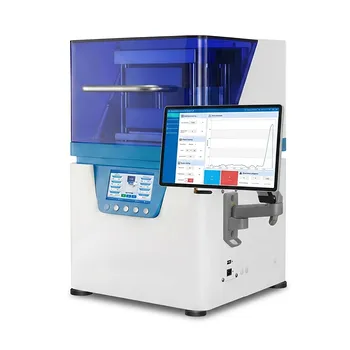
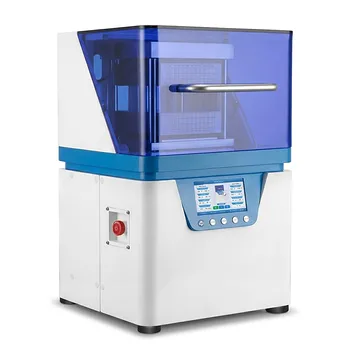
The high-pressure vessel is the fundamental driver of densification and structural integrity in Ni-20Cr deposits.
By simultaneously applying temperatures of 900 °C and isostatic pressures of 104 N/mm², the vessel creates an environment where internal micropores are physically collapsed. This process triggers microscopic plastic flow, creep, and diffusion, reducing porosity to approximately 2.43% and elevating material density to near-theoretical values of 8.14 g/cc.
Core Takeaway: The high-pressure vessel facilitates the transition from a porous cold-spray deposit to a high-density component by using isostatic force to eliminate internal voids and forge metallurgical bonds at the molecular level.
The Mechanics of Densification and Microstructural Reform
Elimination of Internal Micropores
In cold-sprayed Ni-20Cr deposits, internal voids or "micropores" are common defects that compromise material strength. The high-pressure vessel exerts isotropic pressure, meaning force is applied equally from all directions, which physically forces these pores to close.
Achieving Near-Theoretical Density
By combining high heat with extreme pressure, the vessel enables the material to reach a density of 8.14 g/cc. This near-theoretical density is critical for ensuring the deposit performs like a wrought or cast material rather than a fragile, porous coating.
Facilitating Diffusion and Plastic Flow
Under the intense conditions within the vessel, the Ni-20Cr atoms undergo diffusion and plastic deformation. This allows the material to heal interfaces between particles, creating a continuous, cohesive metallic structure rather than a collection of mechanical bonds.
Enhancing Material Performance and Longevity
Improving Fatigue and Tensile Strength
The removal of internal defects through HIP significantly improves the material's fatigue resistance, sometimes by as much as 10 times compared to untreated parts. By eliminating the "stress concentrators" (pores) where cracks typically begin, the vessel ensures higher static and dynamic strength.
Optimizing Microstructural Homogeneity
The process results in a homogeneous annealed microstructure that is free from segregation. This uniformity ensures that the Ni-20Cr deposit has consistent mechanical properties throughout its entire volume, regardless of the part's complexity.
Strengthening via Diffusion Bonding
If the Ni-20Cr is being applied to a substrate, the pressure vessel facilitates diffusion bonding at the interface. This creates a metallurgical bond that is significantly stronger than a simple mechanical interlocking, reducing the risk of delamination under thermal or mechanical stress.
Understanding the Trade-offs and Constraints
Thermal Cycles and Grain Coarsening
While high temperatures are necessary for diffusion, prolonged exposure can lead to grain growth, which may soften the material. Modern high-pressure vessels often incorporate rapid quenching to cool the material quickly, preserving the desired sub-micron strengthening phases.
Equipment and Operational Costs
The use of a high-pressure vessel is a specialized, capital-intensive process that increases the overall manufacturing cost. However, these costs are often offset by a reduction in scrap material and the ability to produce "near-net-shape" parts that require minimal final machining.
Processing Time vs. Material Stability
Maintaining 104 N/mm² at 900 °C requires precise control and significant time for the vessel to reach equilibrium. While this ensures a high-quality finish, it results in longer production lead times compared to simple atmospheric heat treatments.
How to Apply This to Your Project
Recommendations Based on Technical Goals
- If your primary focus is Maximum Durability: Utilize the high-pressure vessel to eliminate all internal microshrinkage, as this will maximize the fatigue life and toughness of your Ni-20Cr components.
- If your primary focus is Precision Bonding: Leverage the isostatic pressure to create a seamless metallurgical bond between the Ni-20Cr and dissimilar substrates, effectively mitigating issues caused by thermal expansion mismatches.
- If your primary focus is Material Purity: Use the HIP process to "squeeze out" gaseous impurities and collapse voids, ensuring the highest possible corrosion resistance in harsh environments.
The technical advantages provided by the high-pressure vessel transform Ni-20Cr deposits from mere surface layers into high-performance, structurally sound engineering materials.
Summary Table:
| Technical Feature | Mechanism in Ni-20Cr HIP | Material Performance Impact |
|---|---|---|
| Isostatic Pressure | 104 N/mm² isotropic force | Eliminates internal micropores & voids |
| High Temperature | 900 °C thermal energy | Triggers plastic flow & atomic diffusion |
| Densification | Porosity reduced to ~2.43% | Reaches near-theoretical density (8.14 g/cc) |
| Microstructure | Annealing & diffusion bonding | 10x fatigue resistance & superior bond strength |
Elevate Your Material Integrity with KINTEK Precision
Unlock the full potential of your Ni-20Cr deposits and advanced alloys with KINTEK’s industry-leading thermal and pressure solutions. We specialize in high-performance isostatic presses (HIP/CIP), vacuum furnaces, and hydraulic presses designed to eliminate defects and achieve near-theoretical material density.
Why partner with KINTEK?
- Comprehensive Range: From high-temperature reactors and CVD systems to precision pellet presses and specialized ceramics.
- Unmatched Reliability: Our equipment ensures the microstructural homogeneity and diffusion bonding required for mission-critical components.
- Expertise in Innovation: Supporting battery research, metallurgy, and advanced manufacturing with cutting-edge laboratory consumables.
Ready to optimize your post-treatment process? Contact our technical specialists today to find the ideal high-pressure solution for your project!
References
- Parminder Singh, Anand Krishnamurthy. Characterization and High-Temperature Oxidation Behavior of Ni–20Cr Deposits Fabricated by Cold Spray-Based Additive Manufacturing. DOI: 10.3390/coatings13050904
This article is also based on technical information from Kintek Solution Knowledge Base .
Related Products
- Electric Split Lab Cold Isostatic Press CIP Machine for Cold Isostatic Pressing
- Warm Isostatic Press for Solid State Battery Research
- Customizable High Pressure Reactors for Advanced Scientific and Industrial Applications
- Stainless High Pressure Autoclave Reactor Laboratory Pressure Reactor
- Automatic High Temperature Heated Hydraulic Press Machine with Heated Plates for Lab
People Also Ask
- How is isostatic pressing equipment utilized to integrate lithium metal anodes during solid-state battery assembly?
- How does isostatic pressing equipment enhance lithium metal anode contact? Optimize Your Solid-State Battery Assembly
- What is the meaning of isostatic pressing? Achieve Uniform Density in Complex Parts
- What is isostatic pressing method for ceramics? Achieve Uniform Density for Complex Parts
- What role does cold isostatic pressing play in the formation of feed rods for single crystal growth? Ensure Stability.