Knowledge What technical characteristics must high-temperature pressure-resistant molds possess? Key Factors for Vacuum Hot Pressing
Author avatar

Tech Team · Kintek Solution

Updated 1 day ago

What technical characteristics must high-temperature pressure-resistant molds possess? Key Factors for Vacuum Hot Pressing


High-temperature pressure-resistant molds used in vacuum hot pressing must primarily possess exceptional compressive strength and thermal stability. Typically constructed from high-strength graphite, these molds are engineered to withstand pressures up to 120 N/mm² (and potentially higher) at temperatures around 550°C without deforming, ensuring the precise transmission of force to the aluminum matrix composite.

Core Insight The mold in vacuum hot pressing is not merely a passive container; it is an active transmission tool. Its ability to maintain dimensional stability while conducting heat uniformly and transferring immense mechanical pressure is the deciding factor in overcoming the poor wettability of aluminum, directly determining the density and structural integrity of the final composite.

Mechanical Integrity Under Load

High Compressive Strength

The primary function of the mold is to act as a vessel for load transmission. It must possess sufficient mechanical strength to withstand uniaxial pressures that typically exceed 120 N/mm² (120 MPa).

Effective Pressure Transmission

The mold must transfer pressure from the hydraulic system directly to the aluminum matrix composite powder. This transmission forces the powder particles into close contact, which is critical for facilitating plastic deformation and filling microscopic pores between particles.

Dimensional Stability and Creep Resistance

Under these high-load conditions, the mold material must resist creep (gradual deformation under stress). It must maintain its exact shape without fracturing or warping to ensure the final composite meets precise dimensional specifications.

Thermal Properties and Performance

Extreme Thermal Stability

Molds must operate reliably in environments ranging from 550°C to 650°C. The material must remain chemically and physically stable at these temperatures to prevent degradation or contamination of the aluminum matrix.

High Thermal Conductivity

Beyond withstanding heat, the mold must effectively move it. High-purity graphite molds utilize high thermal conductivity to ensure heat is distributed uniformly to the center of the powder sample.

Uniform Microstructure Control

This uniform heat distribution is critical for the material science of the composite. It prevents thermal gradients that could lead to inconsistent microstructures, ensuring uniform mechanical properties throughout the entire specimen.

Understanding the Trade-offs

Brittleness vs. Strength

While high-strength graphite is the material of choice for its thermal and compressive capabilities, it is inherently brittle compared to metals.

The Pressure Limit

There is a critical balance between applying enough pressure to densify the material and exceeding the fracture threshold of the mold. While some processes utilize pressures as high as 245 MPa, pushing a mold beyond its specific rating (often around 120 N/mm² for standard applications) risks catastrophic failure of the mold rather than better compaction of the composite.

Making the Right Choice for Your Goal

To select the correct mold specifications, you must align the material properties with your specific processing objectives.

  • If your primary focus is Maximizing Density: Prioritize molds with the highest possible compressive strength to allow for pressures that overcome frictional resistance and force molten matrix infiltration.
  • If your primary focus is Microstructural Homogeneity: Prioritize molds with verified high thermal conductivity to ensure the core of the sample heats at the exact same rate as the exterior.
  • If your primary focus is Complex Geometry: Prioritize dimensional stability and creep resistance to ensure the mold retains precise tolerances under sustained heat and load.

The quality of your aluminum matrix composite is ultimately limited by the stability and conductivity of the mold that shapes it.

Summary Table:

Characteristic Technical Requirement Importance for Aluminum Matrix Composites
Compressive Strength ≥ 120 N/mm² (MPa) Ensures pressure transmission and prevents mold fracture under load.
Thermal Stability 550°C to 650°C Maintains material integrity and prevents contamination at high temperatures.
Thermal Conductivity High (High-purity graphite) Ensures uniform heat distribution and consistent microstructure.
Dimensional Stability High Creep Resistance Prevents warping or deformation to maintain precise part tolerances.
Pressure Transmission Uniaxial Efficiency Facilitates plastic deformation to eliminate microscopic pores.

Elevate your material research with high-performance laboratory solutions from KINTEK. Whether you are working on advanced aluminum matrix composites or intricate ceramic sintering, we provide the precision tools you need. Our extensive range includes vacuum hot presses, hydraulic pellet presses, and high-strength graphite and ceramic consumables designed to withstand extreme thermal and mechanical loads. Trust KINTEK for durable crushing and milling systems, high-temperature furnaces, and isostatic presses that ensure density and homogeneity in every sample. Contact our technical experts today to find the perfect mold and press configuration for your specific application!

Related Products

People Also Ask

Related Products

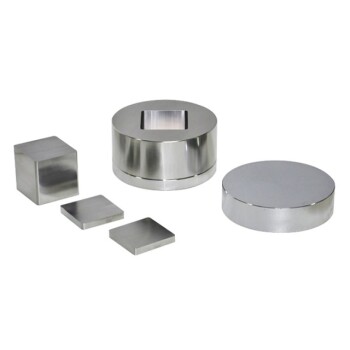
Special Shape Press Mold for Lab

Special Shape Press Mold for Lab

Discover high-pressure special shape press molds for diverse applications, from ceramics to automotive parts. Ideal for precise, efficient molding of various shapes and sizes.

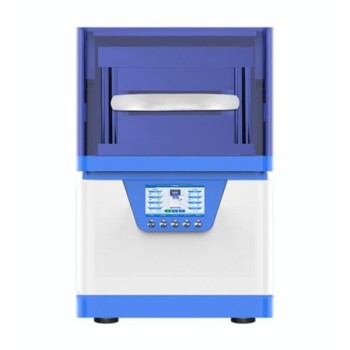
Heated Hydraulic Press Machine with Heated Plates for Vacuum Box Laboratory Hot Press

Heated Hydraulic Press Machine with Heated Plates for Vacuum Box Laboratory Hot Press

The lab press for vacuum box is a specialized piece of equipment designed for laboratory use. Its main purpose is to press pills and powders according to specific requirements.

Vacuum Hot Press Furnace Machine for Lamination and Heating

Vacuum Hot Press Furnace Machine for Lamination and Heating

Experience clean and precise lamination with Vacuum Lamination Press. Perfect for wafer bonding, thin-film transformations, and LCP lamination. Order now!

30T 40T Split Automatic Heated Hydraulic Press Machine with Heated Plates for Laboratory Hot Press

30T 40T Split Automatic Heated Hydraulic Press Machine with Heated Plates for Laboratory Hot Press

Discover our split automatic heated lab press 30T/40T for precise sample preparation in material research, pharmacy, ceramics, and electronics industries. With a small footprint and heating up to 300°C, it's perfect for processing under vacuum environment.

Molybdenum Vacuum Heat Treat Furnace

Molybdenum Vacuum Heat Treat Furnace

Discover the benefits of a high-configuration molybdenum vacuum furnace with heat shield insulation. Ideal for high-purity, vacuum environments like sapphire crystal growth and heat treatment.

Vacuum Cold Trap Direct Cold Trap Chiller

Vacuum Cold Trap Direct Cold Trap Chiller

Improve vacuum system efficiency and extend pump life with our Direct Cold Trap. No chilling fluid required, compact design with swivel casters. Stainless steel and glass options available.

Vacuum Cold Trap Chiller Indirect Cold Trap Chiller

Vacuum Cold Trap Chiller Indirect Cold Trap Chiller

Boost vacuum system efficiency and prolong pump life with our Indirect Cold Trap. Built-in chilling system with no need for fluid or dry ice. Compact design and easy to use.

Ultra-High Vacuum Flange Aviation Plug Glass Sintered Airtight Circular Connector for KF ISO CF

Ultra-High Vacuum Flange Aviation Plug Glass Sintered Airtight Circular Connector for KF ISO CF

Discover the Ultra-High Vacuum CF Knife-Edge Flange Aviation Plug, engineered for superior airtightness and durability in aerospace and semiconductor applications.

Custom PTFE Teflon Parts Manufacturer for Acid and Alkali Resistant Chemical Powder Material Scoops

Custom PTFE Teflon Parts Manufacturer for Acid and Alkali Resistant Chemical Powder Material Scoops

Known for its excellent thermal stability, chemical resistance and electrical insulating properties, PTFE is a versatile thermoplastic material.

Laboratory Hydraulic Press Lab Pellet Press for Button Battery

Laboratory Hydraulic Press Lab Pellet Press for Button Battery

Efficiently prepare samples with our 2T Button Battery Press. Ideal for material research labs and small-scale production. Small footprint, lightweight, and vacuum-compatible.

Vacuum Cold Mounting Machine for Sample Preparation

Vacuum Cold Mounting Machine for Sample Preparation

Vacuum Cold Mounting Machine for precise sample prep. Handles porous, fragile materials with -0.08MPa vacuum. Ideal for electronics, metallurgy, and failure analysis.

Graphite Vacuum Furnace Bottom Discharge Graphitization Furnace for Carbon Materials

Graphite Vacuum Furnace Bottom Discharge Graphitization Furnace for Carbon Materials

Bottom-out graphitization furnace for carbon materials, ultra-high temperature furnace up to 3100°C, suitable for graphitization and sintering of carbon rods and carbon blocks. Vertical design, bottom discharging, convenient feeding and discharging, high temperature uniformity, low energy consumption, good stability, hydraulic lifting system, convenient loading and unloading.

Custom PTFE Teflon Parts Manufacturer for Centrifuge Tube Racks

Custom PTFE Teflon Parts Manufacturer for Centrifuge Tube Racks

The precision-made PTFE test tube racks are completely inert and, due to the high temperature properties of PTFE, these test tube racks can be sterilized (autoclaved) without any problems.

1400℃ Laboratory High Temperature Tube Furnace with Alumina Tube

1400℃ Laboratory High Temperature Tube Furnace with Alumina Tube

Looking for a tube furnace for high-temperature applications? Our 1400℃ Tube Furnace with Alumina Tube is perfect for research and industrial use.

Ultra-High Temperature Graphite Vacuum Graphitization Furnace

Ultra-High Temperature Graphite Vacuum Graphitization Furnace

The ultra-high temperature graphitization furnace utilizes medium frequency induction heating in a vacuum or inert gas environment. The induction coil generates an alternating magnetic field, inducing eddy currents in the graphite crucible, which heats up and radiates heat to the workpiece, bringing it to the desired temperature. This furnace is primarily used for graphitization and sintering of carbon materials, carbon fiber materials, and other composite materials.

Vacuum Heat Treat Furnace with Ceramic Fiber Liner

Vacuum Heat Treat Furnace with Ceramic Fiber Liner

Vacuum furnace with polycrystalline ceramic fiber insulation liner for excellent heat insulation and uniform temperature field. Choose from 1200℃ or 1700℃ max. working temperature with high vacuum performance and precise temperature control.

Dental Porcelain Zirconia Sintering Ceramic Vacuum Press Furnace

Dental Porcelain Zirconia Sintering Ceramic Vacuum Press Furnace

Get precise dental results with Dental Vacuum Press Furnace. Automatic temperature calibration, low noise tray, and touch screen operation. Order now!

Laboratory manual slicer

Laboratory manual slicer

Manual microtome is a high-precision cutting device designed for laboratories, industry and medical fields. It is suitable for the preparation of thin slices of various materials such as paraffin samples, biological tissues, battery materials, food, etc.

Twin Screw Extruder Plastic Granulation Machine

Twin Screw Extruder Plastic Granulation Machine

Twin screw extruder plastic granulation machine is designed for the mixing and processing experiments of engineering plastics, modified plastics, waste plastics and masterbatches.

Graphite Vacuum Continuous Graphitization Furnace

Graphite Vacuum Continuous Graphitization Furnace

High-temperature graphitization furnace is a professional equipment for graphitization treatment of carbon materials. It is a key equipment for the production of high-quality graphite products. It has high temperature, high efficiency and uniform heating. It is suitable for various high-temperature treatments and graphitization treatments. It is widely used in metallurgy, electronics, aerospace, etc. industry.


Leave Your Message