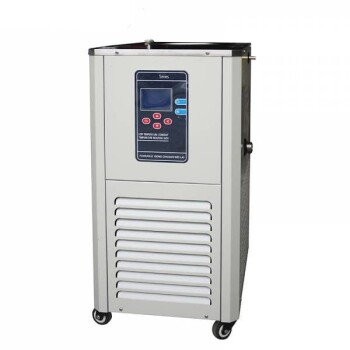
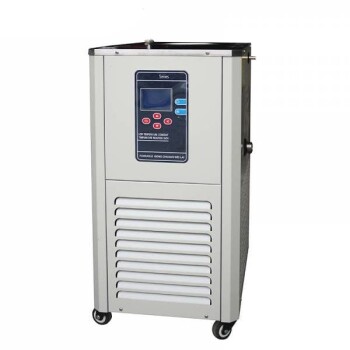
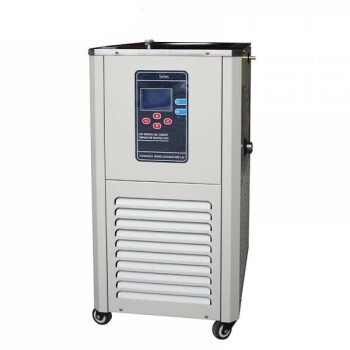
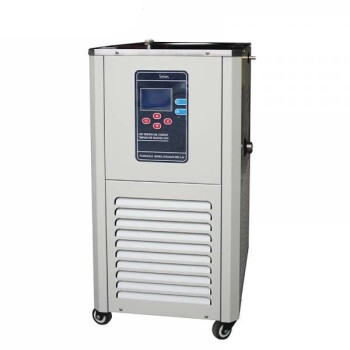
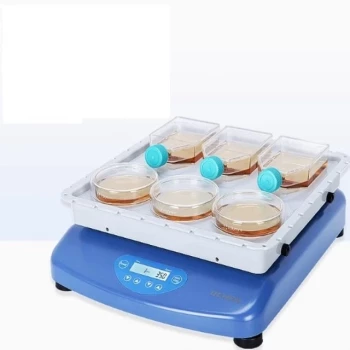
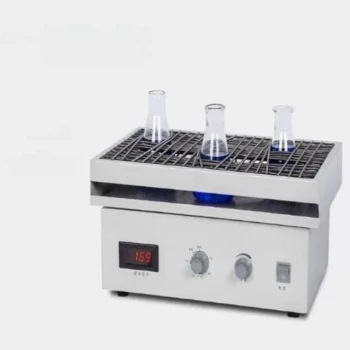
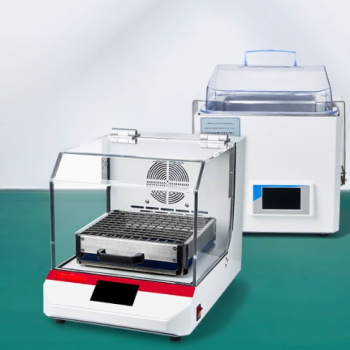
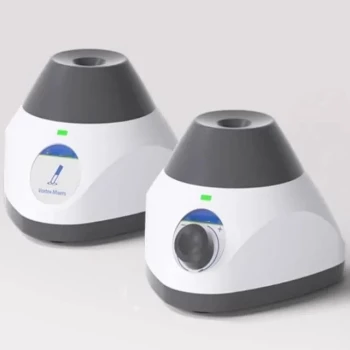
Batch test equipment, such as constant temperature shakers, serves as the fundamental mechanism for establishing precise, reproducible adsorption baselines. These devices address the critical technical objective of ensuring thorough contact between heavy metal solutions and nano-adsorbents to determine optimal operational parameters, including pH, temperature, initial concentration, and contact time.
Core Takeaway By strictly controlling mechanical kinetics and thermal conditions, batch test setups eliminate external variables like liquid film mass transfer resistance. This isolation allows researchers to accurately calculate maximum adsorption capacity ($q_{max}$) and validate nanomaterials for potential industrial wastewater treatment applications.
Optimizing Critical Process Parameters
Determining Optimal Operating Conditions
The primary technical function of batch equipment is to systematically isolate variables. By maintaining constant agitation, researchers can vary a single factor—such as pH value, initial metal concentration, or contact time—to identify the specific environment where adsorption is most efficient.
Screening for Material Efficacy
Batch tests act as a filter for identifying viable commercial adsorbents. By evaluating the maximum adsorption capacity ($q_{max}$) under controlled settings, you can distinguish high-performance nano-consumables from less effective materials before attempting expensive large-scale trials.
Overcoming Physical Barriers to Adsorption
Eliminating Mass Transfer Resistance
A major technical hurdle in adsorption is the "water film" that surrounds solid particles. The mechanical force generated by the specific rotation speed of a shaker overcomes this liquid film mass transfer resistance.
Facilitating Internal Pore Diffusion
Beyond surface contact, the controlled mechanical power promotes the diffusion of heavy metal ions (such as Ni(II)) into the internal pores of the adsorbent. This ensures that the adsorptive capacity is fully utilized rather than just coating the exterior surface.
Establishing Data Integrity for Scale-Up
Ensuring Thermodynamic Accuracy
Precise temperature management is not merely about stability; it is essential for calculating adsorption thermodynamic parameters. A constant-temperature environment allows for the simulation of pollutant removal efficiency across different thermal conditions found in real-world environments.
Generating Reliable Kinetic Models
To design an industrial water purification system, you need accurate kinetic data and adsorption isotherm models. Constant temperature shakers provide the uniform kinetic environment necessary to reach equilibrium, ensuring that the resulting data reflects the chemistry of the material rather than artifacts of poor mixing.
Understanding the Trade-offs
Ideal Conditions vs. Real-world Chaos
While batch tests provide high precision, they represent an idealized environment. The perfectly uniform contact achieved in a shaker may overestimate efficiency compared to the variable flow rates and stagnant zones found in full-scale industrial tanks.
Kinetic Limitation Focus
Batch tests excel at measuring equilibrium capacity, but they do not always perfectly simulate continuous flow dynamics. Relying solely on batch kinetic data without considering column flow tests can lead to sizing errors when designing continuous treatment facilities.
Making the Right Choice for Your Goal
To maximize the utility of your batch test equipment, align your setup with your specific research or engineering objective:
- If your primary focus is Fundamental Research: Prioritize high rotation precision to overcome film diffusion resistance and generate accurate kinetic modeling data.
- If your primary focus is Industrial Material Selection: Focus on determining the maximum adsorption capacity ($q_{max}$) to quickly screen and identify the most cost-effective nano-consumables.
- If your primary focus is Process Design: Ensure strict temperature control to derive accurate thermodynamic parameters that predict performance across varying environmental seasons.
Reliable data in the lab is the only path to predictable performance in the field.
Summary Table:
| Technical Objective | Role of Batch Equipment | Key Metric Addressed |
|---|---|---|
| Parameter Optimization | Isolates variables like pH, concentration, and time | Optimal Operating Environment |
| Kinetics Control | Overcomes liquid film mass transfer resistance | Adsorption Rate & Equilibrium |
| Material Screening | Establishes reproducible adsorption baselines | Maximum Capacity ($q_{max}$) |
| Thermodynamic Study | Maintains precise temperature stability | Adsorption Thermodynamic Parameters |
| Internal Pore Diffusion | Ensures deep penetration of ions into nano-pores | Total Adsorptive Capacity Utilization |
Elevate Your Adsorption Research with KINTEK
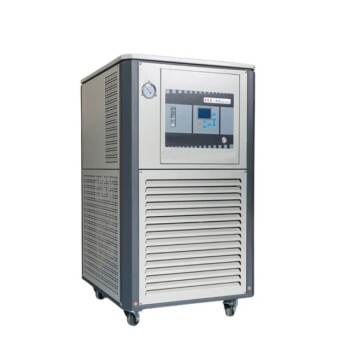
Precision in the lab dictates success in the field. KINTEK provides high-performance laboratory equipment designed to meet the rigorous demands of heavy metal adsorption studies. Whether you are conducting fundamental research or screening materials for industrial wastewater treatment, our comprehensive range of constant temperature shakers, homogenizers, and advanced cooling solutions ensures reproducible results and superior kinetic modeling.
From high-precision shakers and magnetic stirrers to essential PTFE and ceramic consumables, KINTEK is your partner in achieving maximum adsorption efficiency ($q_{max}$). Contact us today to find the perfect equipment for your research goals!
References
- Ramona Kuhn, Jörg Böllmann. Applications of Environmental Nanotechnologies in Remediation, Wastewater Treatment, Drinking Water Treatment, and Agriculture. DOI: 10.3390/applnano3010005
This article is also based on technical information from Kintek Solution Knowledge Base .
Related Products
- Laboratory Small Constant Temperature Heated Magnetic Stirrer Heater and Stirrer
- High Temperature Constant Temperature Heating Circulator Water Bath Chiller Circulator for Reaction Bath
- 40L Chiller Water Bath Cooling Circulator Low Temperature Constant Temperature Reaction Bath
- 50L Chiller Water Bath Cooling Circulator Low Temperature Constant Temperature Reaction Bath
- 5L Chilling Circulator Cooling Water Bath Circulator for Low Temperature Constant Temperature Reaction Bath
People Also Ask
- What role does a magnetic stirrer with heating play in ZnO nanoparticle synthesis? Precision Control for Quality Results
- What role does a constant temperature heating magnetic stirrer play in MFC-HAp synthesis? Achieve Material Homogeneity
- What is the function of a laboratory magnetic stirrer in Ni–Cr–P electrodeposition? Optimize Ion Transport & Coating
- Why is a laboratory magnetic stirrer required for benzoic acid esters? Boost Reaction Speed & Yield with High RPM
- What role does a laboratory magnetic stirrer play in TiO2 and TiO2-Ag sol preparation? Master Chemical Kinetics