The selection of alumina jars and zirconia grinding balls is driven by the critical need for extreme hardness and chemical inertness. This combination is specifically engineered to withstand high-intensity rotational speeds of up to 600 rpm without degrading. By using these ceramic consumables, you effectively eliminate the risk of introducing metallic impurities—specifically iron—into the Li8/7Ti2/7V4/7O2 powder, which would otherwise compromise the battery's electrochemical performance.
Core Takeaway The rigorous demands of high-energy ball milling require consumables that offer a dual defense: mechanical survival and chemical purity. Alumina and zirconia are preferred because they resist wear under intense physical stress and prevent conductive metal contaminants from ruining the cathode material’s specific capacity and stability.
The Physical Requirement: Durability Under Stress
Withstanding Extreme RPM
High-energy mechanical milling subjects materials to intense physical forces. The process utilized for Li8/7Ti2/7V4/7O2 involves rotational speeds reaching 600 rpm.
Standard materials cannot survive this environment. Alumina jars and zirconia balls are chosen for their exceptional hardness, ensuring they remain intact despite the high-velocity impacts generated inside the jar.
Superior Wear Resistance
Wear resistance is not just about the jar surviving; it is about maintaining the integrity of the grinding media over time.
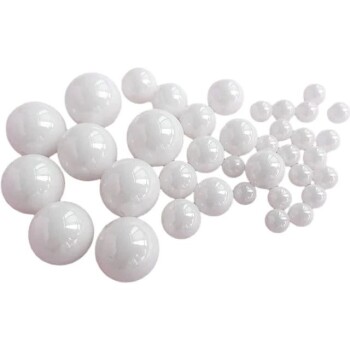
Zirconia balls, in particular, offer high wear resistance. This ensures that the grinding media does not rapidly degrade or lose its spherical shape during long milling durations, maintaining consistent energy transfer to the powder.
The Chemical Requirement: Purity Maintenance
Eliminating Metal Contamination
The most critical reason for avoiding steel or metallic jars is the prevention of iron (Fe) contamination.
During the milling process, microscopic abrasion is inevitable. If metallic jars were used, iron particles would abrade into the mixture. These impurities are detrimental to cathode materials, causing side reactions that degrade the battery's efficiency.
Protecting Electrochemical Performance
The ultimate goal of synthesizing Li8/7Ti2/7V4/7O2 is to achieve specific electrochemical properties.
The chemical inertness of alumina and zirconia ensures that any minimal wear debris that does enter the sample is non-conductive and chemically stable. Unlike metal impurities, these ceramic traces do not actively interfere with the redox reactions during battery cycling.
Understanding the Trade-offs
Ceramic Wear vs. Metal Wear
While alumina and zirconia are harder than steel, they are not immune to abrasion. Cross-contamination from the jar and balls into the powder still occurs.
However, the trade-off is calculated: ceramic impurities (aluminum oxide or zirconium oxide) are generally considered "dead mass" that slightly lowers energy density, whereas metallic impurities act as active poisons that cause short circuits or parasitic reactions.
Media Density and Efficiency
Zirconia balls are significantly denser than alumina balls.
Using zirconia media provides higher impact energy, which improves grinding efficiency. However, this harder, denser media can be aggressive on the alumina jar. This mismatch implies that while you gain efficiency, you may see faster wear on the interior of the alumina jar compared to using a matching zirconia jar.
Making the Right Choice for Your Goal
To ensure the success of your synthesis, align your consumables with your specific experimental priorities:
- If your primary focus is Electrochemical Purity: Prioritize ceramic consumables (Alumina or Zirconia) over metal to strictly prohibit iron contamination.
- If your primary focus is Grinding Efficiency: Utilize Zirconia grinding balls due to their high density, which imparts greater kinetic energy to the powder than lower-density alternatives.
The integrity of your final battery data depends entirely on the cleanliness of your synthesis environment.
Summary Table:
| Feature | Alumina Jars | Zirconia Grinding Balls |
|---|---|---|
| Primary Role | Hardened milling container | High-impact grinding media |
| Max Speed Support | Up to 600 rpm | Up to 600 rpm |
| Key Benefit | Prevents Iron (Fe) contamination | High density for grinding efficiency |
| Material Property | Chemical inertness | Superior wear resistance & hardness |
| Impact on Sample | Minimal non-conductive ceramic traces | High kinetic energy transfer |
Elevate Your Material Synthesis with KINTEK Precision
Don't let metallic impurities compromise your battery research. KINTEK specializes in high-performance laboratory equipment designed for the most demanding applications. Whether you are performing high-energy mechanical milling or advanced thermal processing, our comprehensive portfolio has you covered:
- Grinding Excellence: Premium Alumina and Zirconia jars/balls, crushing and milling systems, and sieving equipment.
- Thermal Processing: High-temperature muffle, tube, vacuum, and CVD/PECVD furnaces.
- Sample Preparation: Advanced hydraulic presses (pellet, hot, isostatic) and high-pressure reactors.
- Specialized Tools: Electrolytic cells, electrodes, and battery research consumables.
Ensure the integrity of your electrochemical data. Contact our technical experts today to find the perfect consumables and equipment for your laboratory.
Related Products
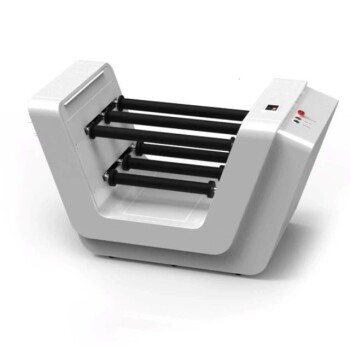
- Laboratory Jar Ball Mill with Alumina Zirconia Grinding Jar and Balls
- Laboratory Jar Mill with Agate Grinding Jar and Balls
- High Energy Planetary Ball Mill Milling Machine for Laboratory
- High Energy Planetary Ball Mill Milling Machine for Laboratory
- Precision Machined Zirconia Ceramic Ball for Engineering Advanced Fine Ceramics
People Also Ask
- What are the primary functions of using a ball mill for BZCY72 powder? Achieve High Purity and Enhanced Sintering
- In what way does a laboratory ball mill affect material properties when modifying PHBV/pulp fiber composites?
- Why is a laboratory ball mill required for ultra-fine fly ash? Unlock Nano-Scale Adsorption Power
- What is the function of a laboratory ball mill in the preparation of AMMCs? Optimize Dispersion & Grain Refinement
- What is the function of a laboratory ball mill in the pretreatment of waste tire char (WTC)? Optimize Material Reactivity