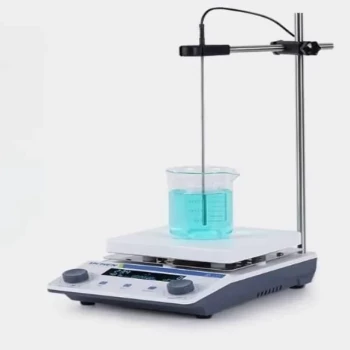
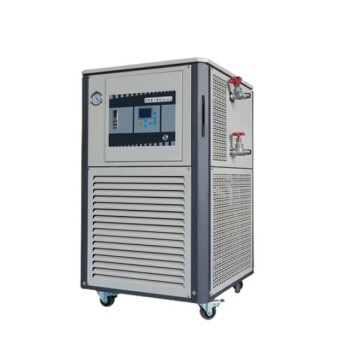
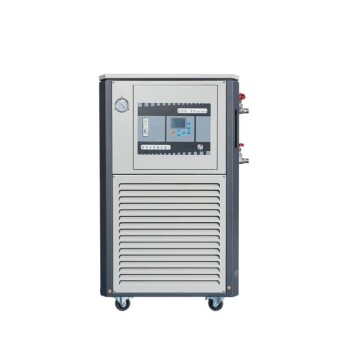
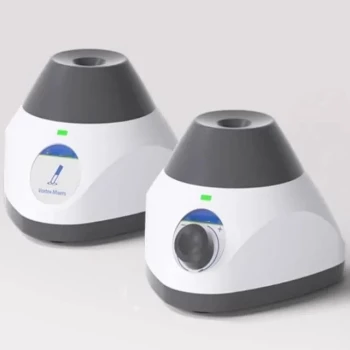
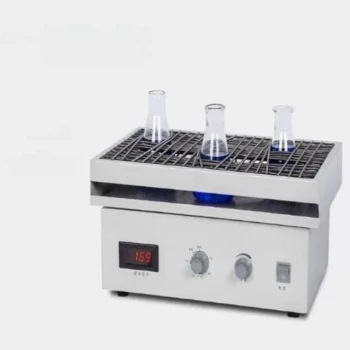
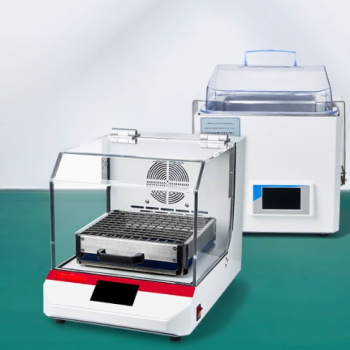
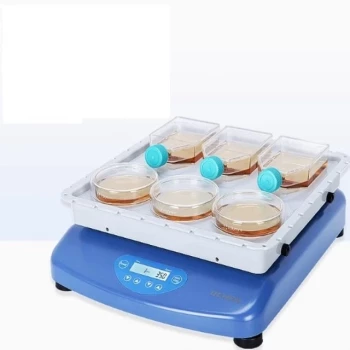
Constant temperature shakers and stirring devices serve two critical functions in Ni(II) adsorption: overcoming mass transfer resistance and ensuring thermodynamic stability. They provide the mechanical energy required to force Nickel(II) ions through the liquid boundary layer onto the adsorbent surface while maintaining a precise thermal environment essential for valid kinetic data.
Core Takeaway These devices are not merely for mixing; they are the primary controls for minimizing external diffusion limitations and isolating temperature as a variable. Without them, adsorption rates are artificially throttled by fluid dynamics, and thermodynamic data becomes unreliable due to environmental thermal fluctuations.
The Mechanics of Mass Transfer
To understand why static experiments fail, you must understand the barriers preventing Ni(II) ions from reaching the adsorbent.
Overcoming Liquid Film Resistance
Surrounding every adsorbent particle in a solution is a stagnant layer of liquid, often called the water film or boundary layer.
Without agitation, ions must slowly diffuse through this film to reach the solid surface.
The mechanical rotation or oscillation from a shaker generates shear forces. These forces disrupt the water film, drastically reducing the mass transfer resistance at the liquid-solid interface.
Promoting Pore Diffusion
Once the ions breach the external film, they must penetrate the adsorbent's internal structure.
Mechanical action facilitates the movement of Ni(II) ions from the surface into the internal pores of the material.
This ensures the entire surface area of the adsorbent is utilized, not just the outer shell.
The Role of Mechanical Agitation
Beyond diffusion, the physical interaction between the pollutant and the solid is dictated by the kinetic environment created by the device.
Maximizing Contact Efficiency
High-speed stirring or shaking generates fluid shear forces that prevent adsorbent particles (especially nano-materials) from clumping.
This keeps particles highly dispersed, maximizing the available surface area.
Increased dispersion leads to a higher collision frequency between the adsorbent and the Ni(II) ions, ensuring thorough contact.
Achieving Kinetic Equilibrium
The enhanced mass transfer reduces the time required to reach adsorption equilibrium.
By removing the physical bottleneck of diffusion, the experiment measures the actual chemical reaction rate of the adsorption, rather than the rate of mixing.
The Criticality of Temperature Control
Adsorption is a thermodynamic process, meaning it is inherently governed by heat and energy.
Ensuring Thermodynamic Accuracy
Adsorption of heavy metals like Ni(II) is accompanied by thermal effects—it is either exothermic (releasing heat) or endothermic (absorbing heat).
A constant temperature unit compensates for these thermal shifts and eliminates interference from environmental temperature fluctuations.
This stability is vital for calculating thermodynamic parameters (such as enthalpy and entropy) and generating accurate adsorption isotherm models.
Industrial Simulation
Reliable industrial design requires data that reflects specific environmental conditions.
By maintaining a stable temperature, researchers can simulate how the material will perform in real-world wastewater treatment scenarios where temperatures may vary.
Understanding the Trade-offs
While agitation and temperature control are necessary, improper application can compromise your data.
Agitation Intensity
Too little agitation results in data that reflects film diffusion rather than the intrinsic adsorption properties of the material.
Too much agitation, particularly with fragile adsorbents, can cause particle attrition (breaking apart), artificially inflating surface area and skewing results.
Thermal Lag
Setting a shaker to a specific temperature does not guarantee the solution is immediately at that temperature.
Always allow for thermal equilibration time before introducing the adsorbent to ensure the kinetics data captures the reaction at the target temperature from the very first second.
Making the Right Choice for Your Goal
Your experimental setup should depend on the specific data you intend to extract.
- If your primary focus is Kinetics: Prioritize stable rotation speeds to ensure you have completely eliminated liquid film mass transfer resistance as a limiting factor.
- If your primary focus is Thermodynamics: Prioritize precise thermal regulation to ensure that calculated activation energy and enthalpy values are not skewed by ambient temperature shifts.
- If your primary focus is Material Screening: Use batch tests to identify the maximum adsorption capacity ($q_{max}$), ensuring the setup allows for full dispersion of nano-adsorbents.
The rigor of your mechanical and thermal control directly dictates the validity of your adsorption model.
Summary Table:
| Feature | Role in Ni(II) Adsorption | Impact on Experimental Data |
|---|---|---|
| Mechanical Agitation | Overcomes liquid film resistance | Reduces mass transfer lag & ensures kinetic accuracy |
| High Dispersion | Prevents particle clumping | Maximizes surface area & collision frequency |
| Thermal Regulation | Maintains thermodynamic stability | Enables valid enthalpy & entropy calculations |
| Controlled Intensity | Minimizes particle attrition | Protects material integrity for consistent results |
Optimize Your Adsorption Research with KINTEK
Precision is paramount in heavy metal recovery and wastewater treatment research. KINTEK specializes in high-performance laboratory equipment designed to eliminate experimental variables. From advanced shakers and homogenizers that ensure perfect dispersion to high-precision temperature control systems, we provide the tools needed for accurate kinetic and thermodynamic modeling.
Whether you are conducting batch tests with high-temperature reactors, scaling up with crushing and milling systems, or requiring specialized PTFE and ceramic consumables, KINTEK delivers the reliability your data demands.
Ready to achieve superior consistency in your Ni(II) adsorption studies?
References
- Sylwia Charazińska, Paweł Lochyński. Recent trends in Ni(II) sorption from aqueous solutions using natural materials. DOI: 10.1007/s11157-021-09599-5
This article is also based on technical information from Kintek Solution Knowledge Base .
Related Products
- Laboratory Small Constant Temperature Heated Magnetic Stirrer Heater and Stirrer
- High Temperature Constant Temperature Heating Circulator Water Bath Chiller Circulator for Reaction Bath
- 5L Heating Chilling Circulator Cooling Water Bath Circulator for High and Low Temperature Constant Temperature Reaction
- 50L Chiller Water Bath Cooling Circulator Low Temperature Constant Temperature Reaction Bath
- 100L Heating Chilling Circulator Cooling Water Bath Circulator for High and Low Temperature Constant Temperature Reaction
People Also Ask
- What role does a magnetic stirrer with heating play in ZnO nanoparticle synthesis? Precision Control for Quality Results
- What role does a constant temperature heating magnetic stirrer play in MFC-HAp synthesis? Achieve Material Homogeneity
- What is the function of a laboratory magnetic stirrer in Ni–Cr–P electrodeposition? Optimize Ion Transport & Coating
- Why is a laboratory magnetic stirrer required for benzoic acid esters? Boost Reaction Speed & Yield with High RPM
- What role does a laboratory magnetic stirrer play in TiO2 and TiO2-Ag sol preparation? Master Chemical Kinetics