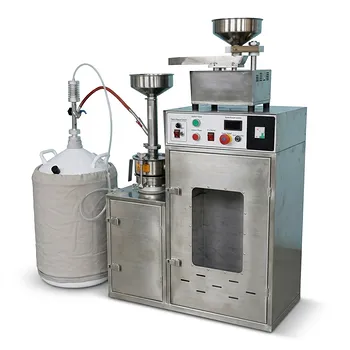
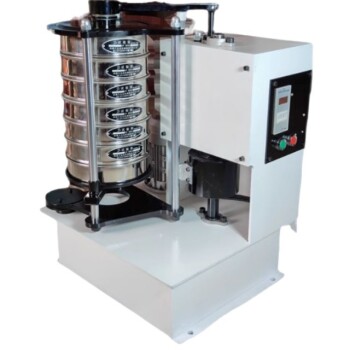
Crushing and sieving are fundamental pre-treatment steps designed to optimize the physical state of wood raw materials before hot water extraction. By mechanically reducing wood into specific grain sizes—such as chips or powders—these systems dramatically increase the material's specific surface area. This physical alteration is the catalyst for ensuring that the subsequent chemical interaction with hot water is both rapid and thorough.
The core purpose of crushing and sieving is to maximize the contact efficiency between the solid wood and the liquid solvent. By regulating particle size, you accelerate mass transfer, ensuring a faster and more complete dissolution of wood components.
The Mechanics of Physical Pre-Treatment
Regulating Geometric Dimensions
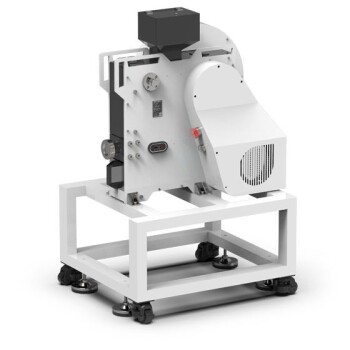
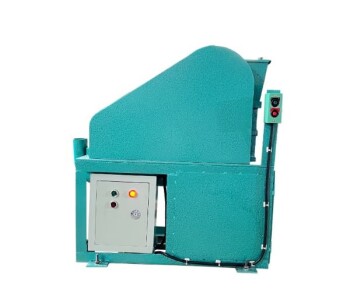
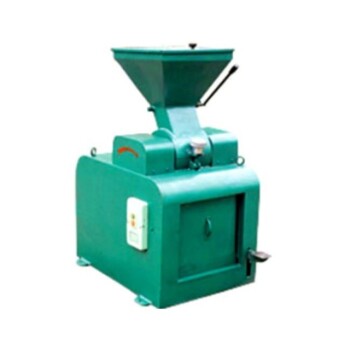
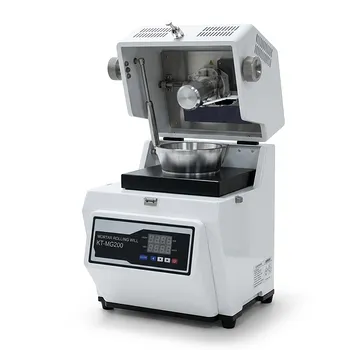
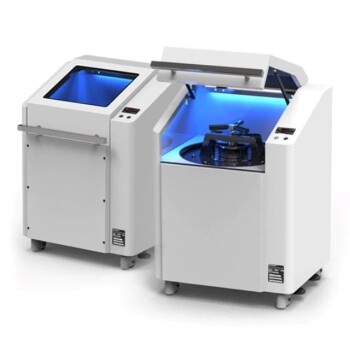
Raw wood materials naturally possess irregular shapes and dimensions that are unsuitable for precise chemical processing. Crushing systems are utilized to mechanically break down this bulk material into manageable forms.
This process transforms raw timber into specific, controlled geometric dimensions. Whether the target is wood chips or fine powder, this initial reduction is the first step toward process control.
Increasing Specific Surface Area
The most critical outcome of the crushing process is the increase in specific surface area.
As particle size decreases, the total surface area available for reaction increases exponentially. This exposes more of the lignocellulosic structure to the external environment, preparing the material for the extraction phase.
Enhancing Contact Efficiency
Hot water extraction relies entirely on the interaction between the solid wood and the liquid solvent.
A larger specific surface area enhances the contact efficiency between these two phases. This ensures that a greater volume of the wood's internal structure is immediately accessible to the hot water.
Impact on Extraction Performance
Accelerating Mass Transfer
The reduction in particle size does more than just expose surface area; it fundamentally alters the kinetics of the extraction.
Smaller particles shorten the solvent penetration path. This reduces the distance hot water must travel to permeate the wood structure, significantly accelerating the mass transfer process.
Improving Dissolution Rates
Because the solvent can penetrate the wood more easily, the chemical reactions required during pre-treatment occur faster.
This leads to a more complete reaction, thereby significantly improving the dissolution rate of the desired wood components. Without this step, the extraction would likely be sluggish and yield lower quantities of the target compounds.
Understanding the Role of Consistency
The Necessity of Sieving
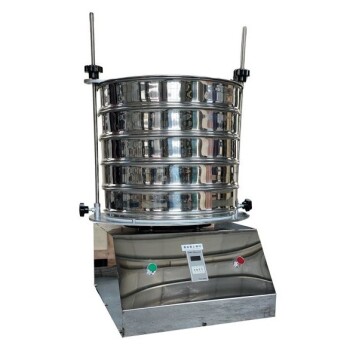
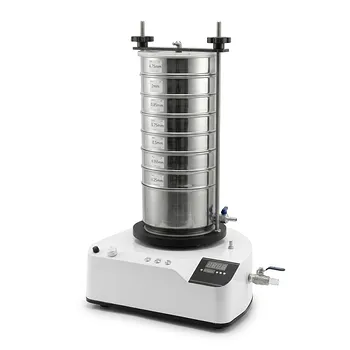
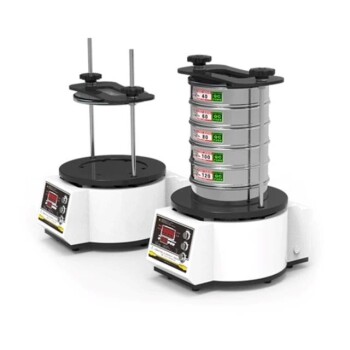
While crushing reduces size, sieving regulates uniformity.
Using a crushing system without sieving results in a wide distribution of particle sizes. Sieving filters these particles to ensure they fall within a specific range (e.g., 0.43 mm to 1.02 mm).
Ensuring Uniform Penetration
Uniformity is vital for consistent results. If particle sizes vary too widely, the extraction will be uneven—small particles may over-extract while large particles remain under-utilized.
A standardized particle size facilitates uniform penetration of chemical reagents. This ensures that the chemical reactions are consistent throughout the entire batch of raw material.
Making the Right Choice for Your Goal
To maximize the efficiency of your hot water extraction process, you must view crushing and sieving as precision tools rather than just bulk handling steps.
- If your primary focus is Process Speed: Prioritize reducing particle size to the smallest viable dimension to maximize surface area and accelerate mass transfer.
- If your primary focus is Product Consistency: Place heavy emphasis on the sieving stage to ensure a narrow particle size distribution, guaranteeing uniform solvent penetration and reproducible yields.
By precisely controlling the geometric dimensions of your raw material, you transform a variable biological input into a predictable chemical reactant.
Summary Table:
| Process Step | Primary Function | Impact on Extraction |
|---|---|---|
| Crushing | Geometric dimension reduction | Increases specific surface area and contact efficiency |
| Sieving | Particle size regulation | Ensures uniform solvent penetration and consistent yields |
| Size Control | Shortens penetration paths | Accelerates mass transfer and improves dissolution rates |
Maximize Your Extraction Yields with KINTEK Precision Equipment
Are you looking to transform variable raw materials into predictable chemical reactants? KINTEK specializes in advanced crushing and milling systems and high-precision sieving equipment designed to optimize your laboratory workflows.
Our comprehensive portfolio supports every stage of material processing—from initial size reduction to high-temperature reaction—featuring high-performance hot water extraction reactors, vacuum and atmosphere furnaces, and durable lab consumables.
Take control of your extraction kinetics today. Contact our technical specialists to discover how our tailored solutions for laboratory equipment and consumables can enhance your research efficiency and product consistency.
References
- Jasmina Popović. Application of liquid hot water pretreatment in wood biorefining processing. DOI: 10.62638/zasmat1238
This article is also based on technical information from Kintek Solution Knowledge Base .
Related Products
- Three-dimensional electromagnetic sieving instrument
- Laboratory Test Sieves and Sieving Machines
- Laboratory Vibratory Sieve Shaker Machine for Dry and Wet Three-Dimensional Sieving
- Laboratory Jaw Crusher
- Sealed Jaw Crusher High Efficiency Environmental Protection Safe and Reliable
People Also Ask
- Why is sieving equipment essential for the classification of processed bio-activated carbon? Optimize Performance
- What are the limitations of sieving? Understanding the Constraints of Particle Size Analysis
- What are advantages and disadvantages of sieving method? A Guide to Reliable & Cost-Effective Particle Sizing
- How is sieving important? The Critical Role of Particle Size Analysis in Quality Control
- What is sieving and how does it work? A Guide to Accurate Particle Size Analysis