Fluororesin-lined (PTFE) vessels are strictly required to ensure the validity of corrosion data. In hydrogen production research, specifically involving HIx solutions (mixtures of HI, I2, and H2O), the environment is so aggressive that it will dissolve standard metal container substrates. Using a PTFE lining provides a chemically inert barrier that prevents the vessel itself from corroding and contaminating the test solution with foreign metal ions.
The critical value of a fluororesin lining is its ability to isolate the test environment. By preventing the dissolution of the container walls, it ensures that any measured corrosion is attributed solely to the material being tested, rather than interactions with the containment vessel.
Preserving Experimental Integrity
Preventing Solution Contamination
The primary challenge in testing materials for hydrogen production is the corrosive nature of the media, such as HIx solutions.
If a standard metal vessel were used, the vessel walls would begin to dissolve. This releases metal ions into the solution, altering its chemical composition and compromising the accuracy of the experiment.
Ensuring Accurate Corrosion Rates
To obtain valid data on materials like glass-lined steel, the testing environment must remain pure.
A PTFE lining acts as a non-reactive shield. This allows researchers to measure the true corrosion rate of the sample without interference from the degradation of the reactor itself.
The Principles of Chemical Inertness
Resistance to Aggressive Acids
Hydrogen production cycles, such as the Bunsen reaction, utilize highly corrosive substances like hydriodic acid (HI) and sulfuric acid (H2SO4).
Fluororesin possesses exceptional chemical inertness. It remains stable in these environments, protecting the structural metal substrate of the reactor from acid attack.
Electrical Insulation and Precision
Beyond chemical resistance, PTFE offers excellent electrical insulation.
In electrochemical testing, this insulation helps define the specific working area (e.g., 1 cm²) and eliminates current interference from non-test regions. This is vital for obtaining accurate polarization curve measurements.
Understanding the Limitations
Thermal Constraints
While chemically robust, fluororesin linings have specific temperature limits.
References indicate these linings are most effective in reaction environments below 100 degrees Celsius. Exceeding thermal limits can cause the lining to soften, deform, or lose its protective barrier properties.
Structural Dependence
It is important to remember that the PTFE is a lining, not a structural material.
It relies on the outer metal substrate for mechanical strength and pressure retention. If the lining is breached or permeated, the underlying metal is immediately vulnerable to rapid corrosion.
Making the Right Choice for Your Goal
To ensure your corrosion testing yields actionable data, consider the following parameters:
- If your primary focus is Data Purity: Utilize PTFE-lined vessels to prevent vessel dissolution from altering the chemistry of HIx or H2SO4 solutions.
- If your primary focus is Electrochemical Analysis: Rely on the insulating properties of PTFE to eliminate current noise and strictly define the sample surface area.
- If your primary focus is High-Temperature Testing: Verify that your operating conditions remain below the thermal degradation point of the specific fluororesin used (typically <100°C for standard applications).
By prioritizing the inertness of your containment vessel, you transform corrosion testing from a variable-filled estimation into a precise science.
Summary Table:
| Feature | Benefit in Hydrogen Production Testing | Limitation/Requirement |
|---|---|---|
| Chemical Inertness | Prevents vessel dissolution and ion contamination in HIx/H2SO4 | Required for experimental integrity |
| Electrical Insulation | Eliminates current interference; strictly defines test area | Essential for electrochemical analysis |
| Material Shielding | Protects metal substrate from aggressive acid attack | Lining must remain unbreached |
| Thermal Stability | Maintains barrier properties in moderate temperatures | Generally restricted to <100°C |
Elevate Your Corrosion Research with KINTEK Precision
Maximize the accuracy of your hydrogen production experiments with KINTEK’s premium PTFE-lined reaction vessels and consumables. As specialists in laboratory equipment, we understand that even minor contamination can compromise months of research.
Our extensive portfolio includes:
- High-performance PTFE-lined reactors and autoclaves for superior chemical resistance.
- Specialized electrolytic cells and electrodes for precise electrochemical analysis.
- A full range of high-temperature furnaces, crushing systems, and hydraulic presses to support your material synthesis and testing.
Don't let vessel degradation skew your data. Contact KINTEK today to consult with our experts on the ideal containment solutions and high-purity consumables for your specific lab requirements.
References
- Yu Kamiji, Shinji Kubo. Reliability improvements of corrosion-resistant equipment for thermochemical water splitting hydrogen production iodine-sulfur process. DOI: 10.1016/j.nucengdes.2020.110573
This article is also based on technical information from Kintek Solution Knowledge Base .
Related Products
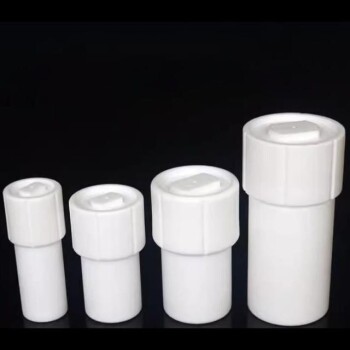
- Custom PTFE Teflon Parts Manufacturer for Microwave Digestion Tank
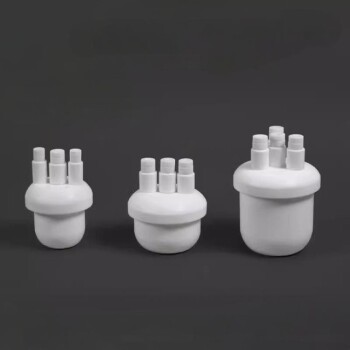
- Custom PTFE Teflon Parts Manufacturer for Three-Necked Round Bottom Flask
- Custom PTFE Teflon Parts Manufacturer F4 Conical Flask Triangular Flask 50 100 250ml
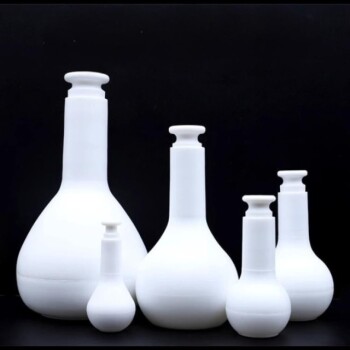
- Custom PTFE Teflon Parts Manufacturer for F4 PTFE Volumetric Bottle
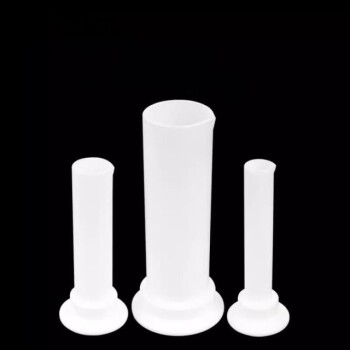
- Custom PTFE Teflon Parts Manufacturer for PTFE Measuring Cylinder 10/50/100ml
People Also Ask
- Why are PTFE containers required for PCT leaching tests? Ensure Chemical Inertness and Analytical Precision
- Why use high-quality PTFE containers for CO2 reduction electrolytes? Eliminate silicon contamination and ensure data.
- Why is PTFE Mandatory for Hydrofluoric Acid (HF) Handling? Ensure Safety and Data Integrity in Corrosion Testing
- Why is a PTFE container required for acid leaching of silicon nanosheets? Ensure High Purity and Safety
- Why are polytetrafluoroethylene (PTFE) containers essential for assessing the corrosion resistance of glassified waste?