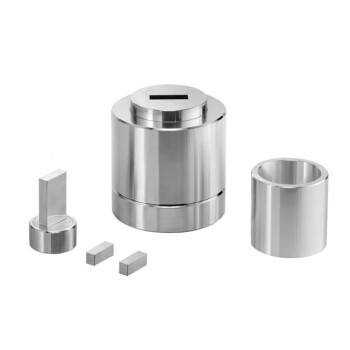
Gloveboxes and hydraulic pellet presses are non-negotiable requirements for lithium-sulfur battery assembly because they mitigate the two primary causes of cell failure: chemical degradation and poor electrical contact. The glovebox creates an inert environment to protect highly reactive lithium components, while the hydraulic press provides the physical force necessary to integrate insulating sulfur into the conductive carbon matrix.
Success in lithium-sulfur battery fabrication relies on strictly controlling both the chemical environment and the physical electrode structure. The glovebox eliminates moisture and oxygen to prevent immediate material failure, while the hydraulic press densifies the cathode to ensure the electrical connectivity required for high performance.
The Critical Role of Environmental Control
Maintaining Material Integrity
Lithium-sulfur batteries utilize materials that are chemically unstable in ambient air. Lithium metal anodes and certain electrolyte salts (such as LiClO4) are highly hygroscopic and reactive.
A glovebox provides a hermetically sealed, inert atmosphere—typically argon—where oxygen and moisture levels are kept below 0.1 ppm. This prevents the active materials from oxidizing or degrading before the battery is even sealed.
Safety and Toxicology
Beyond performance, environmental control is a critical safety measure. Many solid-state electrolytes, particularly sulfide-based variations, are extremely sensitive to humidity.
If these materials encounter moisture in the air, they can decompose and release toxic gases. Conducting the entire assembly process—from weighing to pelletizing—inside a glovebox safeguards the researcher and maintains the chemical purity of the components.
The Necessity of Mechanical Densification
Ensuring Conduction in Sulfur-HPC Cathodes
Sulfur is naturally insulating, meaning it cannot conduct electricity effectively on its own. To function in a battery, it must be in intimate physical contact with a conductive material, such as Hierarchical Porous Carbon (HPC).
A high-precision hydraulic pellet press applies constant pressure to force the sulfur into the pores of the HPC. This ensures a robust conductive network is formed, allowing electrons to move freely during charge and discharge cycles.
Reducing Interface Resistance
In battery assembly, particularly with solid-state designs, the "contact" between particles is often the bottleneck for ion transport. Loose powders create voids that impede the flow of lithium ions.
The hydraulic press compresses electrode and electrolyte powders—often up to 360 MPa—to eliminate these pores. This densification significantly reduces solid-solid interface resistance, facilitating efficient ion transport between the active material and the electrolyte.
Optimizing Volumetric Energy Density
A loose powder mixture occupies a large volume relative to the energy it stores. To make a practical battery, this volume must be minimized.
The press allows for precise control over electrode thickness and density. By compacting the material, you maximize the amount of active energy storage material per unit of volume, which is essential for achieving a high-performance battery system.
Understanding the Trade-offs
The Risk of Improper Pressure
While high pressure is necessary for contact, it must be applied with precision. The goal is to maximize density without crushing the structural integrity of the porous carbon host.
If the pressure is inconsistent, the electrode may suffer from uneven thickness. This leads to localized hotspots of current density, which can degrade the battery faster during operation.
Glovebox Atmosphere Management
A glovebox is only effective if its regeneration system is functioning correctly. Even a minor spike in moisture levels (above 1 ppm) can irreversibly damage lithium metal surfaces.
Operators must continuously monitor the atmosphere. The "inert" environment is not static; it requires active maintenance to ensure it remains free of contaminants that could trigger side reactions.
Making the Right Choice for Your Goal
To maximize the success of your lithium-sulfur assembly, prioritize your equipment usage based on your specific research targets:
- If your primary focus is Cycle Life and Safety: Prioritize the glovebox integrity; ensure oxygen and moisture levels remain strictly below 0.1 ppm to prevent side reactions and electrolyte decomposition.
- If your primary focus is Energy Density and Power: Focus on the hydraulic press parameters; optimize the pressure magnitude and dwell time to achieve maximum electrode density without damaging the HPC structure.
Mastering the interaction between chemical protection and mechanical compression is the key to unlocking the theoretical potential of lithium-sulfur chemistries.
Summary Table:
| Equipment | Primary Function | Impact on Battery Performance |
|---|---|---|
| Glovebox | Maintains inert atmosphere (<0.1 ppm O2/H2O) | Prevents oxidation of Li-metal and electrolyte degradation. |
| Hydraulic Press | Mechanical densification of sulfur-HPC | Ensures electrical contact and reduces interface resistance. |
| Argon Gas | Inert protective medium | Eliminates chemical side reactions during assembly. |
| High Pressure | Eliminates voids in electrode powders | Increases volumetric energy density and ion transport. |
Elevate Your Battery Research with KINTEK
Precision is the foundation of high-performance lithium-sulfur batteries. KINTEK specializes in providing the mission-critical laboratory equipment you need to ensure material purity and structural integrity.
Our range includes:
- High-Performance Gloveboxes: Maintain ultra-low oxygen and moisture levels for sensitive lithium components.
- Precision Hydraulic Presses: Achieve optimal cathode densification and pelletizing with consistent pressure.
- Advanced Milling & Consumables: From crushing systems to high-purity ceramics and crucibles.
Don't let contamination or poor contact compromise your research. Contact KINTEK experts today to discover how our high-temperature furnaces, autoclaves, and specialized battery research tools can accelerate your breakthroughs.
References
- Yinyu Xiang, Yutao Pei. Status and perspectives of hierarchical porous carbon materials in terms of high‐performance lithium–sulfur batteries. DOI: 10.1002/cey2.185
This article is also based on technical information from Kintek Solution Knowledge Base .
Related Products
- Laboratory Hydraulic Pellet Press for XRF KBR FTIR Lab Applications
- Automatic Laboratory Hydraulic Pellet Press Machine for Lab Use
- Automatic Laboratory Hydraulic Press for XRF & KBR Pellet Press
- Laboratory Manual Hydraulic Pellet Press for Lab Use
- Laboratory Manual Hydraulic Pellet Press for Lab Use
People Also Ask
- What is the role of a laboratory hydraulic pellet press and stainless steel molds in the fabrication of RuO2/NbC anodes?
- How does a laboratory hydraulic pellet press contribute to SiCw/2024 aluminum composite preforms? Optimize Densification
- What is the necessity of using a laboratory hydraulic pellet press in the preparation of biomass fuel pellets? Guide
- What is the significance of applying 200 MPa of pressure with a laboratory hydraulic pellet press for composite ceramics?
- What function does a laboratory pellet press or rolling mill serve? Enhance Electrode Density and Performance