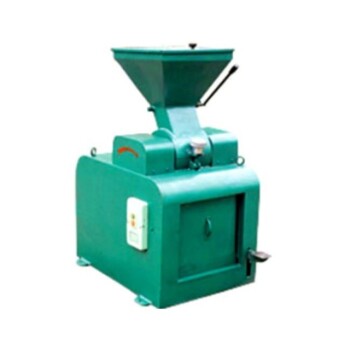
High-precision crushing and sieving are critical because they are the only way to refine raw alloy materials and dopants into strictly controlled particle sizes. This mechanical precision is the prerequisite for achieving molecular-level uniform mixing before the materials are melted, directly influencing the validity of subsequent fusion experiments.
Core Takeaway: The reliability of fusion material data hinges on homogeneity. Precision crushing ensures that isotopes are evenly distributed, guaranteeing that irradiation generates consistent helium/hydrogen bubbles and displacement damage, rather than random, localized anomalies.
Achieving Molecular-Level Homogeneity
Controlling Particle Size
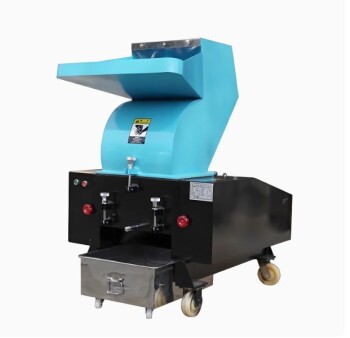
To study fusion materials accurately, researchers must introduce specific dopants, such as Isotopes 10B or 54Fe, into the alloy matrix. High-precision crushing systems reduce these raw materials to exact, uniform dimensions.
Ensuring Uniform Mixing
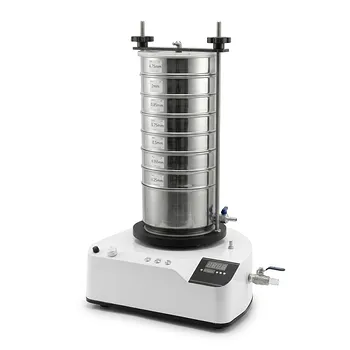
Sieving systems categorize these refined particles to ensure they fall within specific size ranges. This standardization allows different components to mix thoroughly at the molecular level prior to the melting process.
Impact on Irradiation Experiments
Consistent Bubble Formation
The primary goal of these studies is to observe neutron transmutation effects, specifically the formation of helium and hydrogen bubbles. If the raw materials are mixed uniformly, these bubbles form consistently throughout the sample during irradiation.
Standardizing Displacement Damage
Uniform material composition ensures that displacement damage (dpa) is distributed evenly across the sample. This allows researchers to attribute material changes to the irradiation itself, rather than pre-existing inconsistencies in the alloy's makeup.
The Consequence of Imprecision
The Risk of Unreliable Data
If crushing and sieving are not precise, the alloy will suffer from local variations in composition. This leads to erratic experimental outcomes where data points fluctuate due to sample flaws rather than actual material performance.
Compromising Scientific Reliability
The ultimate purpose of these systems is to increase the scientific reliability of experimental data. Without high-precision preparation, reproducibility becomes impossible, rendering complex fusion simulations ineffective.
Making the Right Choice for Your Research
To ensure your fusion material studies yield publication-grade data, prioritize the preparation phase:
- If your primary focus is Data Consistency: Invest in sieving systems that offer narrow particle size distribution to minimize local compositional variances.
- If your primary focus is Material Performance: Ensure your crushing protocol specifically targets the efficient refinement of hard dopants like 10B to guarantee uniform transmutation effects.
Precision in preparation is the foundation of accuracy in observation.
Summary Table:
| Preparation Factor | Impact on Fusion Material Study | Research Benefit |
|---|---|---|
| Particle Size Control | Refines alloys/dopants (10B, 54Fe) to exact dimensions | Enables molecular-level uniform mixing |
| Precision Sieving | Standardizes particle size distribution | Minimizes localized compositional anomalies |
| Homogeneity | Ensures uniform helium/hydrogen bubble formation | Guarantees consistent displacement damage (dpa) |
| Mechanical Precision | Eliminates pre-existing sample flaws | Increases scientific reliability & reproducibility |
Elevate Your Fusion Material Research with KINTEK Precision
Don’t let preparation inconsistencies compromise your experimental data. KINTEK specializes in providing high-performance laboratory solutions, including advanced crushing and milling systems, precision sieving equipment, and hydraulic presses, specifically designed to meet the rigorous demands of material science.
Whether you are refining isotopes like 10B for transmutation studies or require high-temperature furnaces and vacuum systems for material melting, our comprehensive portfolio ensures your samples achieve the molecular homogeneity required for publication-grade results. Our expertise extends to high-pressure reactors, electrolytic cells, and specialized ceramics to support every stage of your fusion research.
Ready to ensure the reliability of your scientific data?
Contact KINTEK today for a consultation and discover how our precision tools can streamline your research workflow.
References
- G. Federici, R. Wenninger. European DEMO design strategy and consequences for materials. DOI: 10.1088/1741-4326/57/9/092002
This article is also based on technical information from Kintek Solution Knowledge Base .
Related Products
- Laboratory Test Sieves and Sieving Machines
- Three-dimensional electromagnetic sieving instrument
- Laboratory Vibratory Sieve Shaker Machine for Dry and Wet Three-Dimensional Sieving
- Powerful Plastic Crusher Machine
- Laboratory Jaw Crusher
People Also Ask
- What are laboratory test sieves used for? A Guide to Particle Size Analysis
- How do you calculate the sieve test? Master Particle Size Distribution for Quality Control
- How does a lab test sieve contribute to biomass charcoal powder preparation? Achieve Uniform Particle Size
- What are the specifications for test sieves? A Guide to ASTM & ISO Standards for Accurate Particle Analysis
- What materials are required for sieving? Achieve Accurate Particle Size Analysis