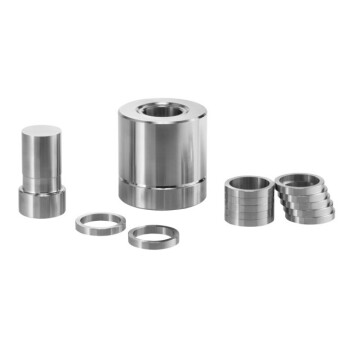
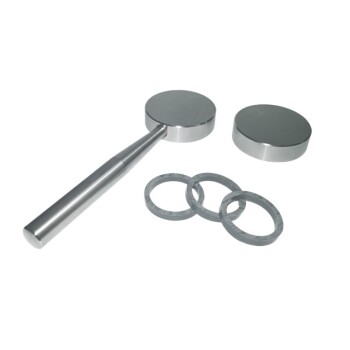
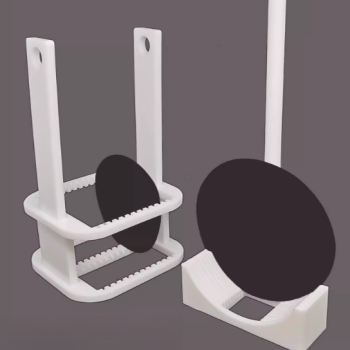
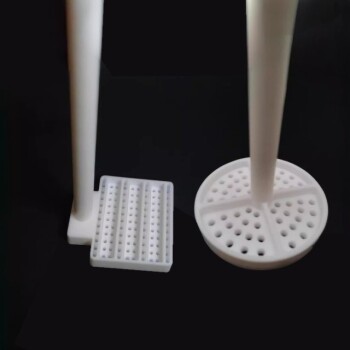
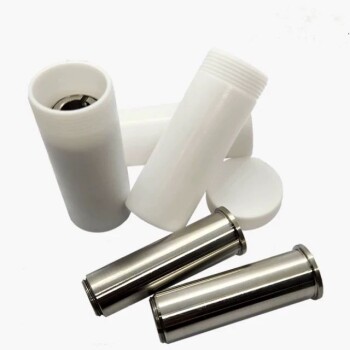
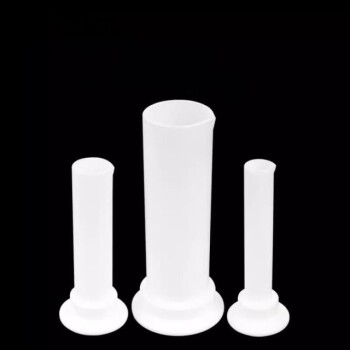
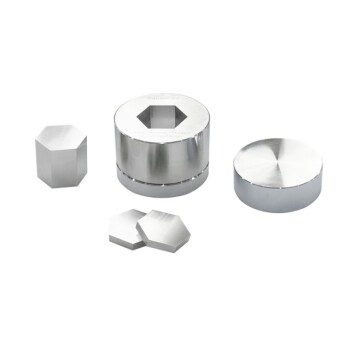
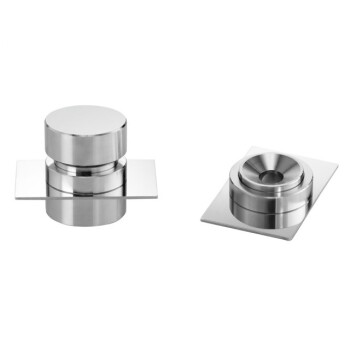
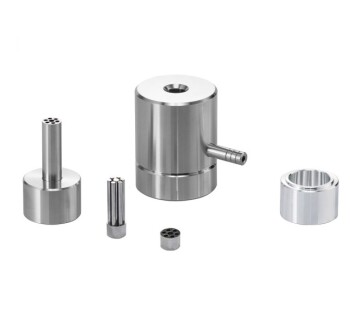
High-precision molds are the fundamental enablers of structural integrity in solid-state batteries. They are necessary to constrain loose powder materials and facilitate even pressure transfer during the hydraulic pressing process. By ensuring uniform distribution of double-layer solid electrolytes and cathode powders, these molds produce disk-shaped components with consistent thickness, preventing the interlayer cracking and structural defects caused by uneven stress.
The primary function of high-precision molds is to convert loose powder into a coherent, defect-free solid structure. By ensuring uniform pressure distribution and electrical isolation, they prevent internal short circuits and mechanical failures that compromise battery performance.
The Critical Role of Mechanical Precision
Facilitating Even Pressure Transfer
The assembly of all-solid-state batteries relies on hydraulic pressing to bond materials together. High-precision molds are essential to ensure that this pressure is transmitted evenly across the entire surface of the battery cell.
Constraining Powder Shape
Before pressing, the battery components exist as loose powders (electrolytes and cathodes). The mold acts as a strict container, constraining the powder to define the final geometric shape of the compressed unit.
Ensuring Uniform Distribution
Precision tooling ensures that the double-layer solid electrolytes and cathode powders are distributed uniformly within the mold cavity. This results in disk-shaped components with consistent thickness, which is vital for reliable electrochemical performance.
Why PTFE and Specific Materials Matter
Electrical Insulation
In addition to shaping the powder, PTFE (Teflon) sleeves serve a critical safety function. They provide electrical isolation between the positive and negative current collectors, effectively preventing internal short circuits during assembly and operation.
Chemical Inertness
Solid-state battery materials, particularly sulfides, can be chemically reactive. PTFE is chosen for its chemical stability and inertness, ensuring the mold does not corrode or react with the active materials it holds.
Dual-Function Components
In sophisticated setups, the mold system works in tandem with other components, such as Titanium rods. While the PTFE sleeve molds the powder and insulates, the rods act as both current collectors and pressure plungers, ensuring the internal layers maintain tight physical contact.
Common Pitfalls and Risks
The Consequence of Uneven Stress
If a mold lacks precision, pressure will not be applied uniformly. This leads to uneven stress within the battery pellet, which is a primary cause of structural failure.
Interlayer Cracking and Defects
When stress is uneven or powder distribution is poor, the battery is prone to interlayer cracking and irregular edges. These physical defects disrupt the ion path and can render the battery non-functional before testing even begins.
Making the Right Choice for Your Goal
To ensure successful assembly, align your tooling choices with your specific objectives:
- If your primary focus is structural integrity: Prioritize molds with tight tolerances to ensure even pressure transfer and prevent interlayer cracking.
- If your primary focus is safety and longevity: Ensure your mold material (like PTFE) offers high chemical inertness and reliable electrical insulation to prevent shorts.
Precision tooling is not just a manufacturing detail; it is a prerequisite for functional solid-state electrochemistry.
Summary Table:
| Feature | Role in Battery Assembly | Benefit for Li-S Cells |
|---|---|---|
| Pressure Transfer | Facilitates even hydraulic force | Prevents interlayer cracking |
| Powder Constraint | Defines final geometric shape | Ensures consistent disk thickness |
| PTFE Material | Provides electrical insulation | Prevents internal short circuits |
| Chemical Inertness | Resists reaction with sulfides | Maintains purity of battery materials |
| Precision Tolerance | Uniform powder distribution | Reliable electrochemical performance |
Elevate Your Solid-State Research with KINTEK Precision Tooling
At KINTEK, we understand that high-performance battery research starts with flawless structural integrity. Our specialized PTFE molds, high-precision hydraulic presses, and titanium current collectors are engineered to eliminate interlayer defects and ensure uniform pressure distribution for your all-solid-state cells.
Whether you need robust milling systems for powder preparation or advanced electrolytic cells for testing, our comprehensive portfolio provides the reliability your lab demands. Contact us today to find the perfect precision equipment for your next innovation!
Related Products
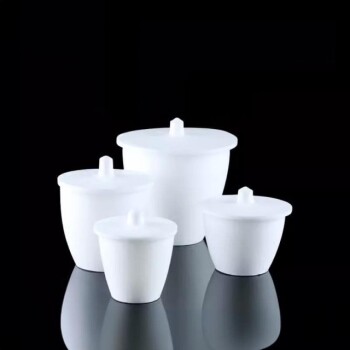
- Custom Machined and Molded PTFE Teflon Parts Manufacturer with PTFE Crucible and Lid
- Custom PTFE Teflon Parts Manufacturer for Hydrothermal Synthesis Reactor Polytetrafluoroethylene Carbon Paper and Carbon Cloth Nano-growth
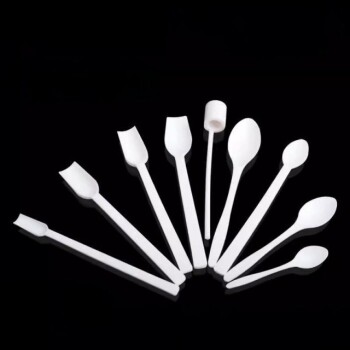
- Custom PTFE Teflon Parts Manufacturer for Sampling Solution Sample and Dry Powder Spoons
- Custom PTFE Teflon Parts Manufacturer for Non-Standard Insulator Customization
- Custom PTFE Teflon Parts Manufacturer for PTFE Mesh F4 Sieve
People Also Ask
- Why is a PTFE crucible preferred for plasma etching? Ensure Chemical Integrity and Targeted Action
- What essential consumables are required for laboratory processes? Expert Guide to PTFE, Ceramics, and Crucibles
- Why are PTFE molds used for dental resin specimens? Ensure Pure Samples and Accurate Testing
- What are the advantages of using PTFE molds for preparing PUA hybrid films? Ensure High Purity and Easy Demolding
- What advantages do PTFE molds offer for composite polymer electrolyte casting? Ensure Defect-Free Membrane Fabrication