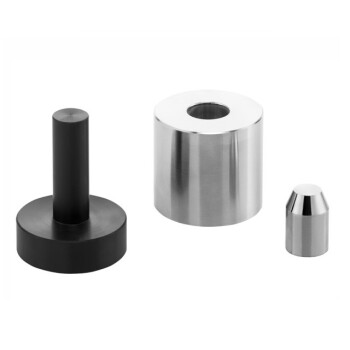
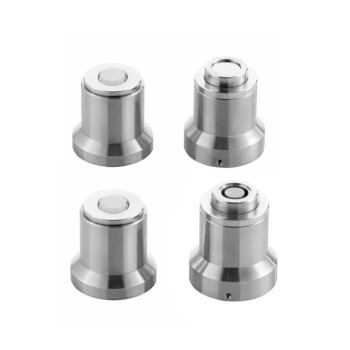
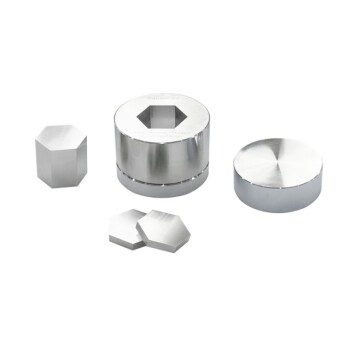
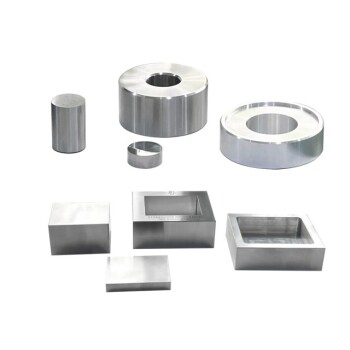
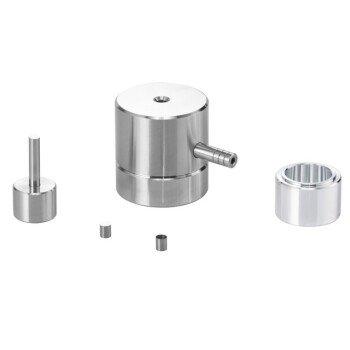
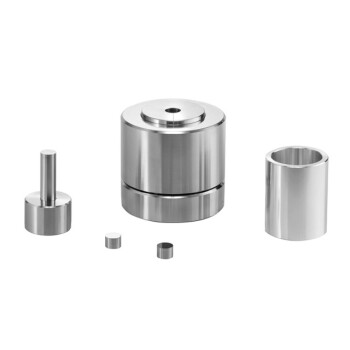
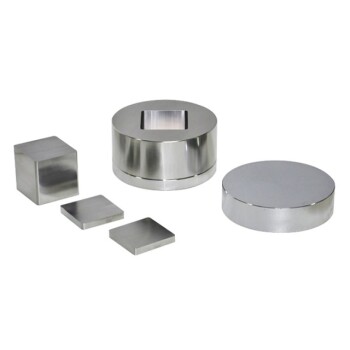
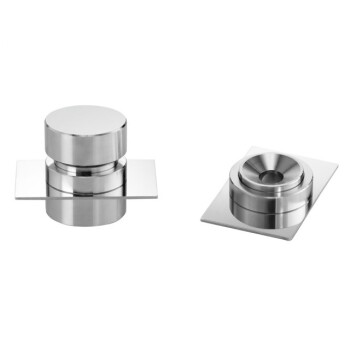
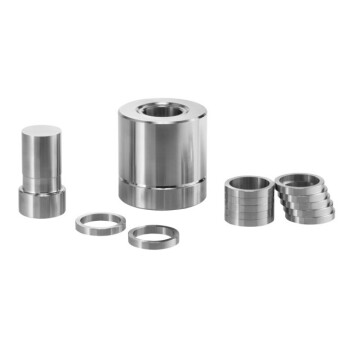
Specialized pressure molds serve as the essential geometric framework needed to transform loose powder into a viable solid-state battery component. By acting as a rigid containment vessel, these molds constrain the powder laterally, forcing the vertical energy from a hydraulic press to translate into multidirectional densification throughout the material. This process ensures the resulting electrode film possesses the necessary density for ion transport while preventing structural collapse or edge damage during removal.
The hydraulic press provides the raw power, but the specialized mold dictates the structural quality. By preventing elastic deformation under massive loads, the mold ensures uniform density and precise geometry, which are absolute prerequisites for preventing short circuits and ensuring interface stability in all-solid-state batteries.
The Mechanics of Densification
Lateral Confinement and Force Redistribution
The primary function of the mold is to provide absolute lateral confinement. When vertical pressure is applied to a powder, it naturally seeks to expand outward.
A specialized mold resists this expansion, converting simple downward force into internal compressive stress from all sides. This multidirectional force is what binds the powder particles into a cohesive, dense solid.
Achieving Uniform Density
Without a specialized mold, pressure gradients would form, leading to soft spots or cracks in the electrode. The mold ensures that pressure is transmitted uniformly to every part of the powder sample.
This uniformity is critical for creating a defect-free lattice. It prevents delamination and ensures the solid electrolyte layer is dense enough to inhibit the nucleation of lithium dendrites.
Precision and Structural Integrity
Defining Geometry and Surface Flatness
The mold is responsible for the "fit and clearance" of the final product. It strictly defines the geometric dimensions of the electrolyte pellets and battery units.
High-quality molds guarantee excellent surface flatness. A flat surface is required to maintain tight solid-solid contact between layers, which minimizes interface impedance and improves cycling stability.
Preventing Demolding Defects
The most dangerous moment for a green (unfired) electrode film is ejection from the press. Specialized molds feature precision-engineered clearances to facilitate safe demolding.
This precise fit prevents edge breakage and powder leakage. It ensures that the structural integrity achieved during pressing is maintained as the component is removed for assembly or sintering.
Critical Trade-offs: Elastic Deformation
The Risk of Mold Expansion
A common pitfall in high-pressure pressing is the elastic deformation of the mold itself. If the mold expands even microscopically under load, the effective pressure on the powder drops significantly.
This expansion leads to uneven density and potential cracking in the battery cell. The mold absorbs the energy that should have gone into compacting the powder.
Material Selection Necessities
To counter deformation, specialized molds must be constructed from high-strength steel or cemented carbide. Standard metals cannot withstand the hundreds of megapascals required for solid-state battery fabrication.
Using inferior mold materials will result in dimensional inaccuracies. This compromises the stack pressure required to maintain interface stability during the volume changes associated with charge and discharge cycles.
Making the Right Choice for Your Goal
To ensure the success of your all-solid-state battery fabrication, align your tooling choices with your specific processing requirements:
- If your primary focus is preventing short circuits: Prioritize molds made of cemented carbide to eliminate elastic deformation, ensuring the electrolyte layer reaches maximum density to block dendrites.
- If your primary focus is process consistency: Ensure your molds have precision-engineered clearances to prevent edge damage during ejection and guarantee identical dimensions across batches.
The mold is not just a container; it is the active constraints system that dictates the ultimate electrochemical performance of the battery cell.
Summary Table:
| Feature | Role in Battery Fabrication | Material Benefit |
|---|---|---|
| Lateral Confinement | Converts vertical force into multidirectional densification | Ensures particle cohesion and high density |
| Surface Flatness | Minimizes interface impedance between layers | Improves ion transport and cycling stability |
| Precision Clearance | Facilitates safe demolding without edge breakage | Maintains structural integrity of the electrode |
| High-Strength Material | Prevents elastic deformation under massive loads | Eliminates pressure drops and internal cracking |
Elevate Your Battery Research with KINTEK Precision
Precision in the lab translates to performance in the field. At KINTEK, we understand that high-quality electrode films require more than just raw pressure—they require the absolute geometric control provided by our specialized pressure molds.
Whether you are developing next-generation energy storage or optimizing solid-state interfaces, our comprehensive range of hydraulic pellet presses, isostatic presses, and high-strength molds (including cemented carbide options) ensures your materials reach theoretical density without defects. Beyond pressing, KINTEK supports your entire workflow with high-temperature furnaces, battery research tools, and PTFE consumables designed for the rigors of electrochemical innovation.
Ready to eliminate deformation and ensure interface stability? Contact our experts today to find the perfect tooling solution for your laboratory's needs.
Related Products
- Anti-Cracking Press Mold for Lab Use
- Button Battery Tablet Press Sealing Mold for Lab Use
- Button Battery Disassembly and Sealing Mold for Lab Use
- Ring Press Mold for Lab Applications
- Polygon Press Mold for Lab
People Also Ask
- What is the press mould method? A Guide to Consistent, Detailed Ceramic Forms
- How to use a press mold? Master the Art of Creating Consistent Ceramic Forms
- What is the function of press molds during the preparation of SiCf/Ti-43Al-9V composites? Achieve Structural Precision
- What is a press mold used for? Achieve Repeatable Precision and Efficiency
- What is the purpose of specialized pressure devices in sulfide solid-state batteries? Ensure Chemo-Mechanical Stability