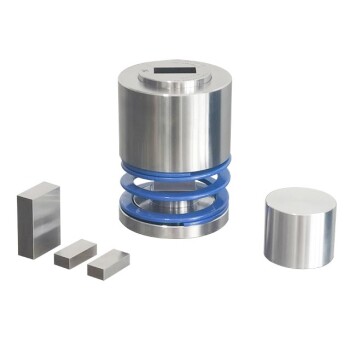
High-pressure reactors are indispensable because they enable anhydrous methanesulfonic acid (MSA) to reach operating temperatures of approximately 200°C without evaporating. This elevated temperature provides the rigorous kinetic energy required to fracture the chemically stable structures of waste lamp phosphors, facilitating the efficient leaching of rare earth elements.
The core challenge in recycling waste lamps is the "refractory" (heat-and-chemical-resistant) nature of the materials. High-pressure reactors overcome this barrier by enabling high-temperature solvometallurgy, unlocking yields of rare earth elements that standard atmospheric leaching cannot access.
Overcoming Chemical Stability
The Challenge of Refractory Materials
Waste lamp phosphors, specifically materials like Lanthanum Phosphate (LAP), are classified as refractory.
This means they possess highly stable mineral structures that are naturally resistant to heat and chemical decomposition. Standard leaching processes often fail to penetrate these structures effectively, leaving valuable elements trapped inside.
The Need for Rigorous Kinetics
To extract elements from these stable compounds, the chemical reaction requires a significant boost in energy.
Simple contact with acid is insufficient; the process demands rigorous kinetic conditions. This usually implies a need for high thermal energy to drive the reaction forward and break the strong chemical bonds within the phosphor lattice.
The Role of High-Pressure Solvometallurgy
Achieving Necessary Temperatures
The primary function of the high-pressure reactor in this context is to allow the system to reach approximately 200°C.
Under normal atmospheric pressure, heating a solvent to this degree might cause it to boil away or decompose. The reactor seals the system, raising the boiling point and keeping the anhydrous MSA in a liquid phase even at extreme heat.
Maintaining High Acid Reactivity
By keeping the MSA in a liquid, anhydrous state at 200°C, the process operates in a solvometallurgical mode.
This state combines high thermal energy with the inherent potency of the acid. This dual-force approach is what finally breaks down the stable mineral structures of the phosphors.
Target Elements for Recovery
When these conditions are met, the leaching process achieves high yields of specific rare earth elements.
The reference specifically notes the successful recovery of terbium, cerium, and lanthanum. Without the high-pressure environment to sustain the temperature, the yields for these valuable elements would likely be negligible.
Understanding the Operational Trade-offs
Equipment Complexity and Cost
Implementing high-pressure reactors introduces significant capital intensity compared to standard atmospheric tanks.
Operators must invest in specialized vessels capable of withstanding both the internal pressure generated at 200°C and the corrosive nature of hot MSA.
Safety Considerations
Operating at high temperatures and pressures with acidic solvents creates a hazardous environment.
Strict safety protocols and robust monitoring systems are required to manage the risks associated with pressurized solvometallurgy, adding to the operational overhead.
Making the Right Choice for Your Goal
To maximize the recovery of rare earth elements from waste lamps, consider the following:
- If your primary focus is Maximum Yield: Prioritize equipment that can safely sustain 200°C, as this thermal threshold is the key to unlocking refractory LAP structures.
- If your primary focus is Process Stability: Ensure your reactor metallurgy is compatible with anhydrous MSA at high temperatures to prevent equipment corrosion and failure.
High-pressure reactors transform MSA from a simple solvent into a high-energy tool capable of cracking the toughest chemical bonds in waste phosphors.
Summary Table:
| Feature | Standard Leaching | High-Pressure Solvometallurgy |
|---|---|---|
| Operating Temp | < 100°C | Approx. 200°C |
| Kinetic Energy | Low | High (Rigorous) |
| Material Access | Surface level only | Breaks refractory structures (LAP) |
| Target Elements | Limited recovery | Terbium, Cerium, Lanthanum |
| Yield Efficiency | Low for refractory phosphors | Maximum extraction yield |
Unlock Rare Earth Recovery with KINTEK Precision
Don't let valuable rare earth elements stay trapped in refractory materials. KINTEK specializes in advanced laboratory solutions designed for the most demanding solvometallurgical processes.
Our high-performance high-temperature high-pressure reactors and autoclaves are engineered to withstand corrosive MSA environments at 200°C, ensuring you achieve the rigorous kinetics necessary for maximum yield. From crushing and milling systems for feedstock preparation to PTFE and ceramic consumables that resist chemical attack, we provide the complete ecosystem for your recycling research.
Ready to elevate your leaching efficiency? Contact KINTEK today to consult with our experts on the right reactor configuration for your laboratory needs.
References
- Koen Binnemans, Peter Tom Jones. Methanesulfonic Acid (MSA) in Hydrometallurgy. DOI: 10.1007/s40831-022-00641-6
This article is also based on technical information from Kintek Solution Knowledge Base .
Related Products
- Customizable Laboratory High Temperature High Pressure Reactors for Diverse Scientific Applications
- Customizable High Pressure Reactors for Advanced Scientific and Industrial Applications
- Stainless High Pressure Autoclave Reactor Laboratory Pressure Reactor
- Mini SS High Pressure Autoclave Reactor for Laboratory Use
- High Pressure Laboratory Autoclave Reactor for Hydrothermal Synthesis
People Also Ask
- How do high-pressure and high-temperature reactors ensure the effective treatment of lignocellulosic wastewater in WAO?
- What equipment is required for high-pressure high-temperature reactions? Master Extreme Chemistry Safely
- How do you control high pressure in a reactor? A Guide to Safe & Stable Operation
- Why is argon better than nitrogen for inert atmosphere? Ensure Absolute Reactivity & Stability
- How does initial oxygen pressure affect the wet oxidation of pharmaceutical sludge? Master Your Oxidation Depth