To extract alumina from bauxite efficiently, you must create an environment that overcomes the natural chemical stability of the ore. High-temperature and high-pressure reaction vessels, specifically autoclaves, are required to force alkaline solvents to dissolve the alumina components rapidly and completely.
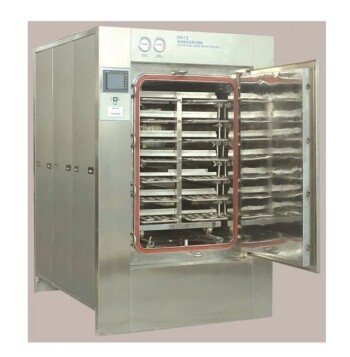
The central role of the autoclave
In the Bayer process, standard atmospheric conditions are insufficient for breaking down bauxite. Reaction vessels provide the necessary "demanding environment"—specifically elevated heat and pressure—to transform a slow, inefficient chemical reaction into a rapid, industrial-scale dissolution process.
The Mechanics of Bauxite Decomposition
To understand why simple tanks are insufficient, one must look at the physical requirements of the chemical reactions involved.
Driving Reaction Kinetics
The extraction of alumina is fundamentally a decomposition process.
Bauxite is a resilient ore that does not willingly separate into its components. The primary reference notes that the "demanding environment" is essential for alkaline chemical reactions to occur.
The Role of High Temperature
Heat is the engine of dissolution.
Elevating the temperature within the vessel significantly increases the kinetic energy of the reaction. This facilitates the rapid dissolution of alumina components into the strong alkaline solution, ensuring the process is fast enough for industrial production.
The Necessity of High Pressure
Pressure is the stabilizing force that makes high temperatures possible in a liquid state.
If you were to heat the alkaline solution to the required temperatures in an open vessel, the liquid would simply boil away. The autoclave acts as a pressure cooker, maintaining the high pressure needed to keep the solvent in a liquid phase despite the extreme heat.
Operational Considerations and Trade-offs
While high-pressure vessels are necessary, they introduce specific engineering challenges that must be managed.
Precise Control vs. Complexity
The primary reference highlights that precise control of temperature and pressure is critical.
This requirement adds complexity to the operation. If the parameters drift too low, decomposition fails; if they drift too high, it may stress the equipment or waste energy without adding value.
Hardware Durability
These vessels must be industrial-grade to withstand the dual stress of physical pressure and chemical corrosion.
Handling strong alkaline solutions at high heat requires robust materials. The vessel must contain the reaction safely while preventing the corrosive slurry from compromising the reactor walls.
Implications for Process Engineering
When designing or evaluating extraction systems, the choice of vessel dictates the efficiency of the entire operation.
- If your primary focus is Production Speed: Prioritize vessels capable of sustaining higher temperatures to maximize the rate of rapid dissolution.
- If your primary focus is Process Efficiency: Ensure the vessel offers advanced control systems to maintain the precise temperature-pressure balance required for optimal decomposition.
Ultimately, the autoclave is the critical hardware that bridges the gap between raw geological ore and refined industrial material.
Summary Table:
| Feature | Role in Alumina Extraction | Impact on Process |
|---|---|---|
| High Temperature | Increases kinetic energy for dissolution | Transforms slow reactions into rapid industrial-scale processes |
| High Pressure | Prevents alkaline solvent from boiling | Maintains liquid phase at temperatures well above boiling point |
| Precise Control | Regulates temperature/pressure balance | Ensures optimal decomposition while preventing equipment stress |
| Vessel Durability | Resists chemical corrosion and physical stress | Ensures safe containment of alkaline slurry under extreme conditions |
Maximize Your Ore Processing Efficiency with KINTEK
To bridge the gap between raw geological ore and refined industrial materials, you need hardware that survives the most demanding environments. KINTEK specializes in precision-engineered high-temperature high-pressure reactors and autoclaves designed specifically to withstand the dual stresses of extreme heat and corrosive alkaline solutions.
Whether you are scaling up bauxite decomposition or refining specialized battery research tools, our industrial-grade solutions—ranging from vacuum and atmosphere furnaces to advanced crushing, milling, and hydraulic presses—ensure your laboratory or production line operates with unmatched reliability.
Ready to optimize your extraction kinetics? Contact our engineering experts today to find the perfect high-pressure reactor for your application.
References
- Ata Akçıl, Seydou Dembele. Overview on Hydrometallurgical Recovery of Rare-Earth Metals from Red Mud. DOI: 10.3390/min14060587
This article is also based on technical information from Kintek Solution Knowledge Base .
Related Products
- Engineering Advanced Fine Alumina Al2O3 Ceramic Crucible for Laboratory Muffle Furnace
- Ceramic Evaporation Boat Set Alumina Crucible for Laboratory Use
- Engineering Advanced Fine Ceramics Alumina Al2O3 Crucible With Lid Cylindrical Laboratory Crucible
- Engineering Advanced Fine Ceramics Aluminium Oxide Al2O3 Ceramic Washer for Wear-Resistant Applications
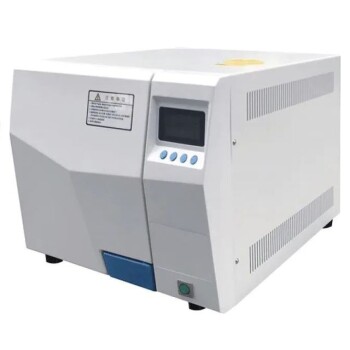
- Desktop Fast Laboratory Autoclave Sterilizer 35L 50L 90L for Lab Use
People Also Ask
- What crucible is used in muffle furnace? Select the Right Material for Your Application
- Why are alumina crucibles and mother powder essential for LATP sintering? Optimize Your Solid Electrolyte Performance
- Why are high-purity alumina crucibles used for liquid lead corrosion experiments? Ensure Data Accuracy at 550°C
- Why Use Alumina Crucibles & Powder Burial for NaSICON? Ensure Phase Purity and Prevent Elemental Volatilization
- What is the primary purpose of using alumina crucibles for LLTO ceramics? Optimize Your High-Temperature Sintering