Industrial-grade pressure vessels are critical components in simulated space battery testing because they act as robust physical barriers against external environmental stresses. Constructed from high-strength materials like nickel-based alloys or aluminum, these vessels isolate the battery pack to resist extreme pressure differentials and oxidative corrosion, ensuring the testing environment remains stable and controlled.
The primary goal is data isolation. By blocking external physical variables, engineers ensure that calendar aging assessments measure internal electrochemical degradation exclusively, rather than failures caused by external physical damage.
The Necessity of Environmental Isolation
Simulating Harsh Conditions
Space environments subject hardware to extreme pressure differentials and potential oxidative corrosion.
To replicate these conditions on Earth without destroying the test subject immediately, engineers utilize industrial-grade vessels. These chambers allow for the precise simulation of vacuum or high-pressure environments found in aerospace applications.
The Role of Robust Materials
The effectiveness of these vessels relies on their construction materials.
Commonly utilized materials include nickel-based alloys and aluminum. These are selected specifically for their ability to withstand the simulated stresses that would otherwise compromise the integrity of a standard testing rig.
Ensuring Data Integrity in Aging Assessments
Eliminating External Noise
The most critical function of the pressure vessel or vacuum environment is to provide a controlled physical barrier.
In a standard environment, external factors—such as humidity, ambient pressure changes, or physical impact—could damage the battery pack. This external damage creates "noise" in the data, making it difficult to tell if a battery failed due to its chemistry or its casing.
Focusing on Electrochemical Reactions
The ultimate objective of using these vessels is to perform accurate calendar aging assessments.
By removing the possibility of external physical damage, engineers can be certain that any degradation observed is the result of internal electrochemical reactions. This allows for a precise prediction of the battery's lifespan based purely on its internal chemistry.
Understanding the Scope of Testing
Specificity vs. Holistics
It is important to recognize that this testing method is highly specialized.
The use of a pressure vessel allows for deep insight into chemical aging, but it deliberately excludes external mechanical wear. Consequently, this specific setup does not assess how the battery pack's housing withstands physical trauma, but rather how the energy storage chemistry survives the environment.
Making the Right Choice for Your Design
When designing simulation protocols for space-grade energy storage, align your equipment with your data requirements.
- If your primary focus is Calendar Aging: Utilize robust pressure vessels to isolate the battery from external physical damage and focus solely on internal chemistry.
- If your primary focus is Environmental Resistance: Select vessel materials like nickel-based alloys or aluminum to ensure the test rig itself can withstand the pressure differentials and corrosion being simulated.
Accurate space simulation requires strict isolation to distinguish between physical failure and electrochemical exhaustion.
Summary Table:
| Feature | Purpose in Space Battery Simulation | Benefits for Data Integrity |
|---|---|---|
| Physical Barrier | Isolate from humidity & ambient pressure | Eliminates external noise/interference |
| High-Strength Materials | Use of Nickel Alloys or Aluminum | Resists oxidative corrosion and pressure differentials |
| Controlled Environment | Simulation of vacuum conditions | Focuses purely on internal electrochemical reactions |
| Calendar Aging Focus | Measurement of degradation over time | Distinguishes chemical exhaustion from physical damage |
Precision Testing Starts with Reliable Equipment
Elevate your aerospace research and battery development with KINTEK’s high-performance laboratory solutions. We specialize in the precision-engineered equipment needed to simulate the harshest environments, including:
- High-Temperature High-Pressure Reactors & Autoclaves for robust environmental isolation.
- Advanced Battery Research Tools & Consumables to monitor electrochemical degradation.
- High-Temperature Furnaces & Crushing Systems for comprehensive material analysis.
Whether you are conducting calendar aging assessments or testing structural integrity under vacuum, KINTEK provides the expertise and hardware—from electrolytic cells to ceramics—to ensure your data is accurate and reproducible.
Ready to optimize your space simulation protocols? Contact our technical specialists today and let us build the perfect testing environment for your laboratory.
References
- Hayder Ali, Michael Pecht. Assessment of the calendar aging of lithium-ion batteries for a long-term—Space missions. DOI: 10.3389/fenrg.2023.1108269
This article is also based on technical information from Kintek Solution Knowledge Base .
Related Products
- Customizable High Pressure Reactors for Advanced Scientific and Industrial Applications
- Stainless High Pressure Autoclave Reactor Laboratory Pressure Reactor
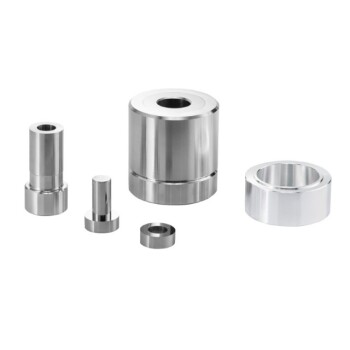
- Ring Press Mold for Lab Applications
- Special Shape Press Mold for Lab
- Laboratory High Pressure Vacuum Tube Furnace
People Also Ask
- What is the function of high-pressure reactors in the synthesis of MFI-type zeolites? Master Dry Gel Conversion.
- Graphene Fiber Synthesis: Key High-Pressure Reactor Processing Conditions Explained
- What reactor is used for high pressure reactions? Select the Right Autoclave for Your Lab
- What is the primary function of a high-pressure reactor in NiMoO4 preparation? Optimize Hydrothermal Catalyst Synthesis
- What are the hazards of high pressure reactors? A Guide to Managing Explosive Risks