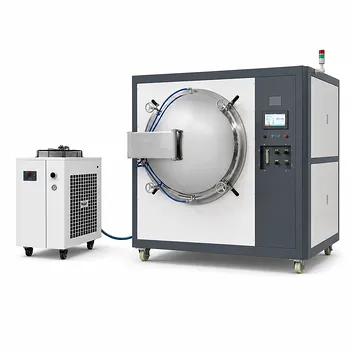
Precision heat treatment furnaces are the driving force behind the material transformation that gives 17-4 PH steel its strength. Specifically during the 540°C ageing process, these furnaces provide the constant thermal activation energy necessary to precipitate a finely dispersed, sub-microscopic copper-rich phase within the steel's matrix. This precise thermal environment is the primary mechanism responsible for increasing the material's hardness.
The temperature uniformity of the furnace directly dictates the size and distribution of copper precipitates. Without this consistency, the stability of the final mechanical properties cannot be guaranteed.
Driving the Precipitation Mechanism
Thermal Activation Energy
The ageing process of 17-4 PH steel relies on a specific chemical reaction that occurs at approximately 540°C.
To trigger this reaction, the material requires a constant supply of thermal activation energy. Precision furnaces maintain this energy input without fluctuation, ensuring the process remains active and continuous throughout the cycle.
The Copper-Rich Phase
The goal of this energy input is to force copper out of the solid solution and into a specific structure.
This results in the formation of a finely dispersed sub-microscopic copper-rich phase. It is the presence of these tiny precipitates within the matrix that impedes dislocation movement, thereby creating the precipitation hardening effect.
The Criticality of Temperature Uniformity
Controlling Precipitate Size
The physical size of the copper precipitates is sensitive to temperature variations.
If the furnace temperature fluctuates, the precipitates may grow unevenly or become too large. Precision furnaces ensure strict temperature uniformity, keeping the precipitates within the optimal sub-microscopic size range for maximum strength.
Ensuring Mechanical Stability
The distribution of these precipitates determines the consistency of the steel's performance.
A furnace with poor uniformity will result in "soft spots" or irregular hardness across the part. By maintaining a uniform thermal environment, the furnace ensures the distribution uniformity of precipitates, leading to stable and predictable mechanical properties.
Context: The Foundation of Solution Treatment
Preparing the Matrix
While the ageing process creates hardness, the potential for that hardness is established earlier during solution treatment.
Performed in high-temperature vacuum or atmosphere furnaces at roughly 1028°C, this step ensures that alloying elements are fully dissolved into the austenite matrix.
Homogenization
This high-temperature phase is critical for eliminating original structural stresses and homogenizing the chemical composition.
This establishes the necessary foundation for the subsequent martensitic transformation. Without this precise pre-treatment, the later ageing process cannot effectively precipitate the copper phase.
Understanding the Risks and Trade-offs
The Risk of Thermal Gradients
Using a standard furnace with wide thermal tolerances introduces thermal gradients across the workload.
This leads to uneven ageing, where outer surfaces may reach optimal hardness while the core remains under-aged, or vice versa. In high-stress applications, this inconsistency can lead to premature component failure.
Process Sensitivity
17-4 PH steel is highly sensitive to the specific ageing temperature used.
Slight deviations from the 540°C target do not just slow the process; they can alter the metallurgical outcome entirely. Precision equipment is an investment in repeatability, ensuring that every batch yields the exact same physical properties.
Making the Right Choice for Your Goal
To maximize the performance of 17-4 PH steel, your equipment choice must align with your specific metallurgical objectives:
- If your primary focus is Maximum Hardness: Prioritize a furnace with tight temperature uniformity at 540°C to ensure the optimal formation of the sub-microscopic copper-rich phase.
- If your primary focus is Structural Homogeneity: Ensure your process includes a precise 1028°C solution treatment to fully dissolve alloying elements before ageing begins.
Precision in heat treatment is not merely a control measure; it is the defining factor in determining the reliability of the final component.
Summary Table:
| Process Stage | Temperature | Primary Objective | Key Transformation |
|---|---|---|---|
| Solution Treatment | ~1028°C | Matrix Homogenization | Dissolving alloying elements into austenite |
| Ageing Process | ~540°C | Precipitation Hardening | Formation of sub-microscopic copper-rich phase |
| Precision Control | Tight Tolerance | Consistency | Uniform precipitate size and distribution |
Elevate Your Material Performance with KINTEK Precision Solutions
Don't let temperature fluctuations compromise the integrity of your 17-4 PH steel components. KINTEK specializes in advanced laboratory equipment designed for the most demanding metallurgical processes. Our high-performance vacuum and atmosphere furnaces deliver the industry-leading temperature uniformity required for precise ageing and solution treatments.
From high-temperature furnaces and crushing systems to isostatic hydraulic presses and ceramic crucibles, KINTEK provides the comprehensive tools necessary for research and industrial excellence. Ensure absolute repeatability and mechanical stability in your laboratory workflows today.
Ready to optimize your heat treatment cycle? Contact our experts now to find the perfect furnace solution for your application.
References
- Roman Sowa, Magdalena Parlińska‐Wojtan. Influence of double solution treatment on hardness in 17-4 pH steel. DOI: 10.5937/zasmat1503261s
This article is also based on technical information from Kintek Solution Knowledge Base .
Related Products
- Vacuum Heat Treat Furnace with Ceramic Fiber Liner
- 600T Vacuum Induction Hot Press Furnace for Heat Treat and Sintering
- Molybdenum Vacuum Heat Treat Furnace
- 2200 ℃ Graphite Vacuum Heat Treat Furnace
- 1400℃ Controlled Atmosphere Furnace with Nitrogen and Inert Atmosphere
People Also Ask
- What is a vacuum heat treatment furnace? The Ultimate Guide to Controlled Atmosphere Processing
- How does a vacuum heat treatment work? Achieve Superior Material Properties in a Pristine Environment
- What is the temperature of vacuum heat treatment? Achieve Superior Material Properties & Pristine Finishes
- What is vacuum heat treatment process? Achieve Superior Control, Cleanliness, and Quality
- What is a vacuum heat treatment furnace? Achieve Unmatched Purity and Control