Titanium-lined or titanium-plated autoclaves are selected primarily for their chemical inertness and exceptional resistance to corrosion in high-temperature water environments. In the demanding context of a Boiling Water Reactor (BWR) simulation, these liners serve as a critical barrier that prevents the stainless steel or alloy body of the autoclave from releasing metal ions into the test solution, thereby guaranteeing the purity of the water chemistry and the validity of the experimental data.
The core utility of titanium is data integrity. By isolating the test environment from the vessel walls, researchers ensure that any corrosion or oxide film formation observed on the test specimen is a result of the simulated reactor conditions, not a side effect of contamination leaching from the equipment itself.
The Critical Role of Chemical Inertness
Preventing Ion Contamination
In a simulated BWR environment, water temperatures can reach 286 degrees Celsius with pressures around 80 bar. Under these conditions, standard autoclave materials can degrade slightly, releasing metal ions into the water.
Titanium linings effectively block this release. By preventing the autoclave body from interacting with the water circuit, the system eliminates the variable of external impurities.
Ensuring Accurate Oxide Film Formation
The presence of foreign metal ions can drastically alter experimental results. For example, when testing Alloy X-750, the goal is often to observe the formation of a specific oxide film.
If the autoclave walls leach contaminants, these impurities can incorporate themselves into the specimen’s surface. Titanium ensures the oxide film develops naturally, strictly in response to the controlled water chemistry.
Withstanding Extreme Physical Conditions
Durability at High Parameters
BWR and Pressurized Water Reactor (PWR) simulations require sustaining extreme physicochemical environments. Systems must operate reliably at temperatures that can extend up to 360°C in some configurations.
Titanium plating maintains its structural and chemical stability under these high thermal and pressure loads. It does not suffer from the accelerated corrosion rates that might affect other liner materials in oxygenated high-temperature water.
Stability for Long-Term Testing
Materials testing often involves evaluating susceptibility to Environmentally Assisted Cracking (EAC) over long periods.
Titanium's resistance ensures that the vessel integrity remains constant throughout the duration of the test. This allows for precise, long-term control over dissolved oxygen and hydrogen levels without the vessel wall consuming these chemicals or altering the balance.
Understanding the Operational Trade-offs
Thermal Expansion Challenges
While titanium provides excellent chemical resistance, lining a steel vessel introduces mechanical complexity.
The base metal of the autoclave and the titanium liner have different coefficients of thermal expansion. Engineers must ensure the bonding or cladding process is robust enough to prevent delamination during the rapid heating and cooling cycles typical of reactor simulations.
Specific Chemical Compatibility
Titanium is generally inert, but it is not universally compatible with every chemical environment.
While ideal for standard BWR water chemistry, researchers must verify that the titanium liner does not react with specific additives (such as high concentrations of certain aggressive species) if the experiment deviates from standard water, boron, and lithium compositions.
Ensuring Experimental Validity
To maximize the reliability of your corrosion data, align your equipment choice with your specific research goals:
- If your primary focus is Surface Analysis (e.g., Oxide Films): Rely on titanium lining to prevent the "doping" of your specimen's surface with iron or nickel ions from the vessel wall.
- If your primary focus is Long-Term Susceptibility (e.g., EAC): distinct chemical stability is required to maintain precise dissolved oxygen levels without drift caused by vessel corrosion.
Ultimately, the choice of a titanium-lined autoclave is an investment in experimental isolation, ensuring the only variables changing in your test are the ones you explicitly control.
Summary Table:
| Feature | Benefit in BWR Simulation | Impact on Research |
|---|---|---|
| Chemical Inertness | Prevents leaching of metal ions (Fe, Ni) | Maintains water chemistry purity |
| Corrosion Resistance | Withstands temperatures up to 360°C | Ensures vessel integrity over long cycles |
| Data Integrity | Isolates specimen from vessel wall reactions | Guarantees accurate oxide film analysis |
| Stability | Resists oxidation in oxygenated water | Enables precise control of dissolved gases |
Elevate Your Material Research with KINTEK
Precision in corrosion testing requires an environment free from interference. KINTEK specializes in advanced laboratory solutions, including high-performance high-temperature high-pressure reactors and autoclaves engineered with titanium linings for superior chemical isolation.
Whether you are conducting BWR simulations or studying long-term environmental cracking, our comprehensive range of high-temperature furnaces, crushing systems, and specialized consumables like ceramics and crucibles ensure your data remains untainted.
Ready to secure the integrity of your experimental results? Contact us today to discuss our custom autoclave solutions and laboratory equipment tailored for your specific research needs.
References
- Silvia Tuzi, Mattias Thuvander. Oxidation of Alloy X-750 with Low Iron Content in Simulated BWR Environment. DOI: 10.3390/jne4040044
This article is also based on technical information from Kintek Solution Knowledge Base .
Related Products
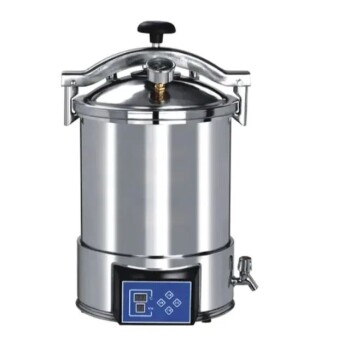
- Laboratory Sterilizer Lab Autoclave Vertical Pressure Steam Sterilizer for Liquid Crystal Display Automatic Type
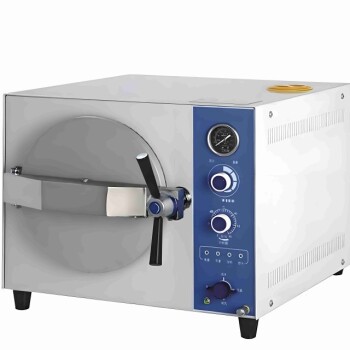
- Laboratory Horizontal Autoclave Steam Sterilizer Lab Microcomputer Sterilizer
- Mini SS High Pressure Autoclave Reactor for Laboratory Use
- Laboratory High Pressure Horizontal Autoclave Steam Sterilizer for Lab Use
- Laboratory High Pressure Steam Sterilizer Vertical Autoclave for Lab Department
People Also Ask
- What is the primary function of a laboratory sterilization autoclave? Master the Physics of Wet Heat Sterilization
- In what industries and applications are steam sterilizers or autoclaves used? Discover Key Uses Across 4 Major Sectors
- What is a laboratory autoclave? A Guide to Sterilization with Pressurized Steam
- What precautions should be taken during autoclave in laboratory? A Complete Safety Guide to Prevent Burns and Explosions
- What extreme conditions does a laboratory autoclave simulate? Testing Wear Resistance of Nuclear Fuel Cladding