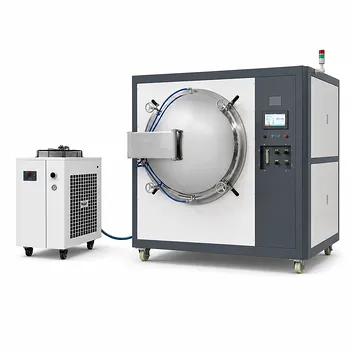
The combination of vacuum induction melting and water atomization is strictly utilized to preserve chemical purity and enhance the sintering capability of Copper-Rare Earth (Cu-Re) alloys. Vacuum induction melting serves as a protective barrier against oxidation for highly reactive elements, while water atomization physically transforms the melt to optimize grain structure and surface energy for final processing.
This dual-stage process solves the fundamental challenge of processing Cu-Re alloys: it protects chemically active rare earth elements from degrading at high temperatures while simultaneously conditioning the powder to ensure high density during subsequent sintering.
Preserving Alloy Integrity During Melting
Preventing Oxidation of Reactive Elements
The primary reason for employing vacuum induction melting (VIM) is the extreme chemical sensitivity of rare earth elements.
Elements such as yttrium (Y), cerium (Ce), and lanthanum (La) are highly active.
If exposed to oxygen during high-temperature processing, these elements would rapidly oxidize, compromising the alloy's composition and performance.
Protecting the Copper Matrix
The vacuum environment also protects the copper base material.
By eliminating the presence of air, VIM ensures that neither the copper nor the alloying additions suffer from oxidation.
This results in a high-purity melt ready for atomization.
Transforming Melt into Functional Powder
Rapid Solidification
Once the alloy is melted, water atomization equipment is used to convert the liquid metal into powder.
This process involves hitting the molten alloy stream with high-pressure water jets.
The force of the water rapidly breaks up the stream and condenses the liquid into fine particles.
Grain Refinement
The speed of this process is critical for the material's microstructure.
The rapid cooling inherent in water atomization significantly refines the grains within the metal.
Finer grain structures generally correlate with improved mechanical properties in the final component.
The Impact on Sintering Performance
Enhancing Surface Energy
The physical characteristics of the powder produced by water atomization are specifically tuned for downstream processing.
The process improves the powder surface energy.
Higher surface energy acts as a driving force during the heating stage, promoting more efficient bonding between particles.
Facilitating Densification
The ultimate goal of producing these powders is usually to create a solid part via sintering.
The combination of refined grains and improved surface energy directly facilitates sintering densification.
This ensures the final component achieves the required structural integrity and density.
Understanding Process Considerations
Powder Morphology
It is important to note that water atomization can produce both spherical and irregular powder shapes.
While spherical powders flow well, irregular powders often provide better "green strength" (holding their shape before firing) due to mechanical interlocking.
The Necessity of Synergy
Neither process would be sufficient on its own for these specific alloys.
Without VIM, the rare earth elements would burn off before becoming powder.
Without water atomization, the alloy might lack the specific grain structure and surface energy required to sinter into a dense, high-performance part.
Making the Right Choice for Your Goal
When evaluating manufacturing processes for Copper-Rare Earth alloys, consider how these steps align with your final requirements:
- If your primary focus is material purity: Rely on the vacuum induction melting stage to ensure chemically active elements like Y, Ce, and La are retained without oxidation.
- If your primary focus is final part density: Leverage the benefits of water atomization, specifically utilizing the refined grains and high surface energy to maximize densification during sintering.
Success in producing Cu-Re alloys lies in balancing the chemical protection of the melt with the physical conditioning of the powder.
Summary Table:
| Process Stage | Equipment Used | Primary Benefit |
|---|---|---|
| Melting & Alloying | Vacuum Induction Melting (VIM) | Prevents oxidation of reactive elements (Y, Ce, La) |
| Powder Production | Water Atomization | Rapid solidification and grain refinement |
| Material Enhancement | High-Pressure Water Jets | Increases surface energy for improved sintering |
| Final Result | Integrated System | High-purity, dense Cu-Re alloy components |
Elevate Your Material Research with KINTEK
Precise control over chemical purity and microstructure is non-negotiable for high-performance Cu-Re alloys. KINTEK specializes in providing the advanced laboratory equipment necessary for these sophisticated workflows. From vacuum induction melting systems that protect your reactive elements to high-precision crushing and milling systems and hydraulic presses for densification, we support every stage of your powder metallurgy process.
Our value to you:
- Comprehensive Range: Access vacuum furnaces, atmosphere-controlled systems, and sintering tools in one place.
- Purity Guaranteed: Utilize our high-quality ceramic crucibles and PTFE consumables to eliminate contamination.
- Expert Support: Our team helps you select the right cooling solutions and atomization accessories to achieve optimal grain refinement.
Ready to optimize your Cu-Re alloy production? Contact us today to explore our specialized laboratory solutions!
Related Products
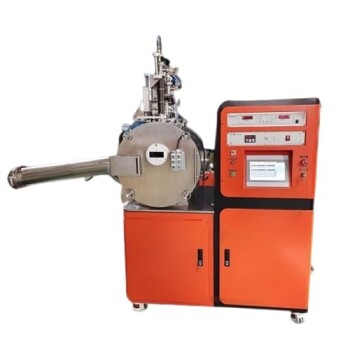
- Lab-Scale Vacuum Induction Melting Furnace
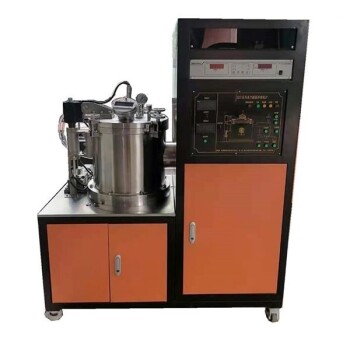
- Vacuum Induction Melting Spinning System Arc Melting Furnace
- Vacuum Arc Induction Melting Furnace
- Non Consumable Vacuum Arc Induction Melting Furnace
- Vacuum Heat Treat Furnace and Levitation Induction Melting Furnace
People Also Ask
- How do vacuum induction or arc melting furnaces facilitate the synthesis of U-Al-C MAX phases? Precision Heat & Purity
- What is the primary function of a vacuum induction melting furnace in Ni-Mo-Cr-Fe master alloy prep? Ensure High Purity
- Why use VIM for rare earth steel? Essential Precision for Melting Reactive Lanthanum and Cerium
- What types of metals are typically processed in a vacuum induction melting furnace? High-Purity Alloys for Critical Applications
- What are the advantages of a vacuum induction melting furnace? Achieve High-Purity Alloys with Precision VIM