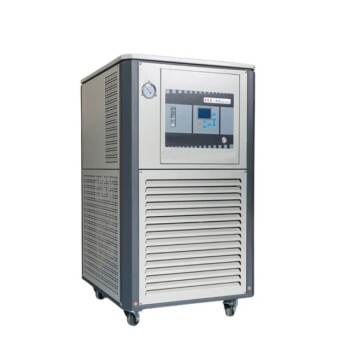
Chemical dehalogenation of PCBs requires a strictly controlled high-energy environment to ensure successful detoxification. High-power heating devices are mandatory to reach the 100°C to 150°C range needed for efficient reaction kinetics, while pressure control systems are critical for maintaining the physical stability of solvents and reagents under these thermal loads.
To neutralize the toxicity of Polychlorinated Biphenyls (PCBs), the process requires a rigorous thermodynamic environment. Heating provides the kinetic energy to accelerate chemical breakdown, while pressure control acts as a containment safeguard to stabilize the reaction medium.
The Role of Thermal Energy in Degradation
Accelerating Reaction Kinetics
The breakdown of PCBs is not a passive process; it requires significant energy to initiate. High-power heating devices are used to drive the temperature of the reaction mixture to between 100°C and 150°C.
At these elevated temperatures, the reaction kinetics improve dramatically. This thermal input ensures the degradation process occurs at an efficient rate, rather than lingering incomplete.
Optimizing Reagent Efficiency
Chemical reagents used in this process, such as metallic calcium or polyethylene glycol, rely on this thermal energy to function effectively.
Without sufficient heat, the interaction between the reagent and the PCB molecules would be too sluggish. The heating devices ensure the reagents can quickly convert toxic compounds into low-toxicity or non-toxic substances.
The Critical Function of Pressure Control
Maintaining Solvent Stability
When liquid solvents are heated to the temperatures required for dehalogenation (up to 150°C), they naturally tend to expand or vaporize.
Pressure control systems are implemented to counteract this physical change. They ensure the solvents remain stable and in the correct phase to facilitate the chemical reaction.
Safeguarding the Reagents
Beyond just the solvents, the reagents themselves must be kept stable during the heating phase.
Pressure regulation prevents the volatilization or destabilization of these critical chemical components. This control is essential for ensuring the safety and consistency of the entire decontamination process.
Understanding the Operational Trade-offs
Energy Consumption and Complexity
While high temperatures facilitate speed, they introduce a significant demand for energy.
The requirement for high-power heating devices increases the operational cost and infrastructure requirements of the treatment facility. This is not a low-resource method; it requires robust power delivery systems.
Equipment Sensitivity
The necessity of a pressure control system adds a layer of mechanical complexity to the reactor design.
Operators must maintain these systems rigorously. If pressure control fails while the system is at high heat, the stability of the solvents could be compromised, potentially halting the reaction or creating safety hazards.
Making the Right Choice for Your Goal
When designing or selecting a PCB treatment process, consider your specific constraints regarding energy and safety.
- If your primary focus is Process Speed: Prioritize systems with high-power heating capacity to sustain the upper limits of the 100°C–150°C range for faster kinetics.
- If your primary focus is Operational Safety: Invest heavily in redundant pressure control systems to ensure solvent stability is never compromised during heating phases.
Successful PCB dehalogenation relies on the precise balance of aggressive thermal energy and disciplined pressure management.
Summary Table:
| Feature | Requirement | Role in PCB Dehalogenation |
|---|---|---|
| Temperature Range | 100°C – 150°C | Accelerates reaction kinetics and activates reagents like metallic calcium. |
| Heating Device | High-Power | Provides the necessary kinetic energy for efficient chemical breakdown. |
| Pressure Control | Precision Systems | Maintains solvent stability and prevents reagent volatilization at high heat. |
| Key Reagents | Ca, PEG | Effectively converts toxic PCBs into non-toxic substances under thermal load. |
Maximize Decontamination Efficiency with KINTEK Precision Solutions
Successful chemical dehalogenation of PCBs demands more than just high temperatures; it requires a perfectly balanced thermodynamic environment. KINTEK specializes in advanced laboratory equipment designed for these rigorous conditions. Our high-performance high-temperature high-pressure reactors and autoclaves provide the precise thermal and pressure management necessary to stabilize solvents and optimize reaction kinetics.
Whether you are conducting environmental remediation research or industrial detoxification, KINTEK offers the robust power delivery and safety-critical control systems your lab needs. Beyond reactors, we provide a full suite of PTFE products, ceramics, and crucibles to withstand aggressive chemical environments.
Ready to upgrade your laboratory’s PCB treatment capabilities?
Contact KINTEK Today for a Tailored Equipment Consultation
References
- Ran Jing, Birthe V. Kjellerup. Remediation of Polychlorinated Biphenyls (PCBs) in Contaminated Soils and Sediment: State of Knowledge and Perspectives. DOI: 10.3389/fenvs.2018.00079
This article is also based on technical information from Kintek Solution Knowledge Base .
Related Products
- Customizable Laboratory High Temperature High Pressure Reactors for Diverse Scientific Applications
- High Pressure Laboratory Autoclave Reactor for Hydrothermal Synthesis
- Stainless High Pressure Autoclave Reactor Laboratory Pressure Reactor
- Mini SS High Pressure Autoclave Reactor for Laboratory Use
- Customizable High Pressure Reactors for Advanced Scientific and Industrial Applications
People Also Ask
- How do high-pressure and high-temperature reactors ensure the effective treatment of lignocellulosic wastewater in WAO?
- What equipment is required for high-pressure high-temperature reactions? Master Extreme Chemistry Safely
- How do you control high pressure in a reactor? A Guide to Safe & Stable Operation
- Why is argon better than nitrogen for inert atmosphere? Ensure Absolute Reactivity & Stability
- How does initial oxygen pressure affect the wet oxidation of pharmaceutical sludge? Master Your Oxidation Depth