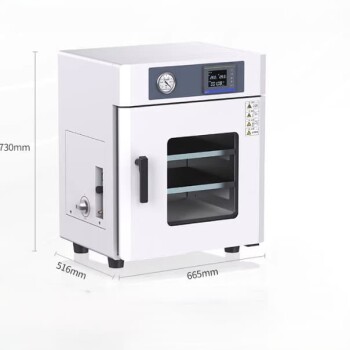
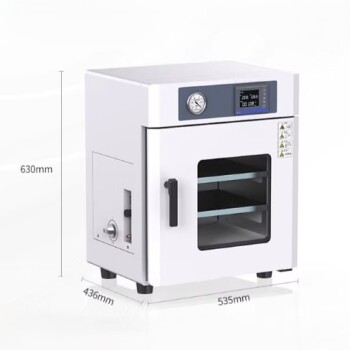
The primary purpose of long-term heating is the controlled removal of volatile solvents, such as ethanol, that are trapped within the material structure during the mixing process. This step acts as a critical stabilization phase, ensuring the structural integrity of the copper and graphite green body before it faces extreme temperatures. Without this slow-drying period, the material is prone to catastrophic structural failure during the subsequent sintering stage.
Drying functions as a necessary "outgassing" phase, gently extracting solvents at low temperatures to prevent internal damage. Omitting this step allows trapped fluids to expand rapidly into high-pressure gas during sintering, inevitably causing physical defects.
The Mechanics of Solvent Removal
Eliminating Volatile Components
During the initial mixing stage, solvents like ethanol are frequently used to ensure a homogeneous blend of copper and graphite particles.
Even after the pre-pressing stage forms the shape, significant traces of these solvents remain trapped within the microscopic voids of the "green" (un-sintered) compact.
Long-term heating, typically performed in a drying oven at a specific temperature such as 80 degrees Celsius, provides the thermal energy required to evaporate these fluids slowly and completely.
The Physics of Evaporation
The goal is to induce evaporation at a rate that allows the gas to escape through the porous structure naturally.
If the temperature is too low or the time is too short, solvent pockets remain deep inside the material.
The 80-degree benchmark is generally effective for ethanol, as it exceeds the boiling point sufficiently to drive off the liquid without thermally shocking the material.
Protecting Structural Integrity
Avoiding Internal Pressure Build-up
The most significant risk occurs if a green body containing residual solvents is subjected to high-temperature sintering.
In a sintering furnace, temperatures rise rapidly; any remaining liquid solvent will flash-boil and expand instantly.
This rapid phase change creates excessive internal pressure that the fragile, un-sintered green body cannot withstand.
Preventing Material Defects
The pressure generated by trapped vapors acts like a small explosion inside the part, forcing the material structure apart.
This manifests as visible cracking on the surface or deep structural fissures.
Even if the part does not fracture, the gas pockets can leave behind internal pore defects, which significantly reduce the final density and mechanical strength of the copper-graphite composite.
Understanding the Trade-offs
Time vs. Quality Assurance
The primary trade-off in this process is production speed; long-term drying extends the manufacturing cycle.
However, attempting to bypass or shorten this stage creates an unacceptably high risk of rejected parts due to irreversible structural damage.
The Risk of Rushing Heat
It is a common pitfall to increase the drying oven temperature in an attempt to speed up evaporation.
Raising the temperature too high during the drying phase can replicate the conditions of sintering, causing the solvent to evaporate too violently.
This defeats the purpose of the drying oven, triggering the exact cracking and pore formation you are trying to prevent.
Ensuring Success in Sintering
To ensure a defect-free final product, you must view the drying oven as a mandatory processing step, not an optional delay.
- If your primary focus is structural integrity: Prioritize a complete drying cycle at 80°C to exhaust all traces of ethanol, ensuring a dense, crack-free matrix.
- If your primary focus is process efficiency: Optimize the drying duration based on the thickness of the green body, but never increase the temperature to rush the solvent evaporation.
By respecting the physics of the drying phase, you transform a fragile mixture into a robust precursor ready for the rigors of sintering.
Summary Table:
| Process Stage | Purpose | Key Parameter | Risk of Omission |
|---|---|---|---|
| Mixing | Homogeneous blend | Use of solvents (e.g., Ethanol) | Poor material distribution |
| Drying Oven | Controlled evaporation | 80°C for extended duration | Internal pressure & cracking |
| Sintering | Material densification | High-temperature heating | Catastrophic structural failure |
Elevate Your Materials Research with KINTEK
Don't let avoidable defects compromise your results. Whether you are working with copper-graphite composites or advanced ceramics, KINTEK provides the precision equipment necessary for every critical stage of your workflow. Our comprehensive range of drying ovens, high-temperature furnaces (muffle, vacuum, and CVD), and high-performance hydraulic presses ensures you achieve maximum density and structural integrity in every sample.
From crushing and milling systems to specialized consumables like crucibles and PTFE products, KINTEK is your partner in laboratory excellence. Contact our technical experts today to find the perfect drying and sintering solution for your specific application and ensure defect-free production.
Related Products
- Laboratory Scientific Electric Heating Blast Drying Oven
- 56L Vertical Laboratory Vacuum Drying Oven
- 23L Laboratory Vacuum Drying Oven
- High Temperature Muffle Oven Furnace for Laboratory Debinding and Pre Sintering
- Dental Porcelain Zirconia Sintering Ceramic Vacuum Press Furnace
People Also Ask
- How does a laboratory electric drying oven contribute to the formation of the initial coating? Expert Insights
- What role does a precision laboratory drying oven play in the synthesis of GO-PANI nanocomposites? Protect Material Integrity
- What role does a laboratory drying oven play in the preparation of zinc oxide nanoparticle precursors?
- What is the necessity of using a laboratory drying oven when processing MoO3/GO composite nanopowders? Find out here.
- What is the role of a laboratory drying oven in cellulose citrate production? Ensure Material Stability & Purity