Precise temperature control via a cooling stage is the thermodynamic anchor of the initiated Chemical Vapor Deposition (iCVD) process. Its primary function is to maintain the substrate at a low, stable temperature (typically 10–40°C) to maximize the adsorption of monomer vapors and drive the polymerization reaction. Simultaneously, it acts as a critical shield, protecting delicate substrates from the thermal damage that occurs in traditional high-heat coating methods.
The cooling stage balances the delicate thermodynamics of iCVD; it creates the necessary conditions for gas-to-surface adsorption while preserving the structural integrity of heat-sensitive materials like hydrogels and biological polymers.
The Role of Thermodynamics in Film Growth
To understand the necessity of the cooling stage, one must look beyond the machinery and understand the chemical kinetics occurring at the substrate surface.
Enhancing Monomer Adsorption
In the iCVD process, monomers are introduced as gases. For a film to form, these gaseous molecules must first adhere—or adsorb—onto the substrate surface.
A cooling stage facilitates this by keeping the substrate temperature low, typically between 10°C and 40°C.
By lowering the surface temperature, the system increases the saturation ratio of the monomer at the surface. This promotes higher concentrations of monomer adsorption, which is the precursor step required for film growth.
Facilitating Free-Radical Polymerization
Once the monomers are adsorbed, they must link together to form a polymer chain.
The low-temperature environment maintained by the cooling stage is essential for facilitating this free-radical polymerization reaction.
Without this thermal regulation, the monomers might desorb (leave the surface) before they have a chance to react, halting the deposition process or resulting in poor film quality.
Protecting Substrate Integrity
One of the defining advantages of iCVD over other CVD methods is its compatibility with fragile materials. The cooling stage is the specific component that enables this capability.
Safeguarding Heat-Sensitive Materials
Many advanced applications, particularly in biotechnology, utilize substrates that cannot withstand high temperatures.
The cooling stage ensures that the substrate remains near room temperature, preventing thermal degradation.
This is critical for coating biological polymers and hydrogels, which are frequently used in tissue engineering and drug delivery.
Preserving Physical Structure
Beyond chemical degradation, heat can physically alter a substrate, causing warping, melting, or loss of porosity.
Precise temperature control ensures the physical structure of the substrate is maintained throughout the deposition.
This allows for the functionalization of complex geometries without compromising the underlying material's mechanical properties.
Common Pitfalls: The Risks of Poor Thermal Control
While the cooling stage is a powerful tool, it requires precise management to avoid process failures.
The Risk of Low Adsorption
If the temperature is allowed to rise too high, the equilibrium shifts away from adsorption.
This leads to a "monomer-starved" surface where the reaction rate drops significantly, resulting in extremely slow deposition rates or non-uniform coatings.
The Danger to Biological Substrates
For tissue engineering applications, even minor fluctuations above the target temperature range can be catastrophic.
A failure in the cooling stage can lead to the denaturation of proteins or the collapse of hydrogel scaffolds, rendering the final product unusable for biological applications.
Making the Right Choice for Your Goal
The cooling stage is not just a passive accessory; it is an active control knob for both process efficiency and material safety.
- If your primary focus is Deposition Rate: Prioritize keeping the substrate temperature at the lower end of the 10–40°C range to maximize monomer adsorption and accelerate film growth.
- If your primary focus is Substrate Preservation: Ensure your cooling stage offers high-precision feedback loops to prevent thermal spikes that could damage sensitive biological polymers or hydrogels.
By strictly controlling the substrate temperature, you transform iCVD from a chaotic gas reaction into a precise surface engineering tool.
Summary Table:
| Feature | Function in iCVD Process | Impact on Quality |
|---|---|---|
| Adsorption Control | Maintains substrate at 10–40°C | Increases monomer concentration for faster film growth |
| Polymerization Anchor | Stabilizes free-radical reaction | Ensures high-quality, uniform polymer chain formation |
| Thermal Shielding | Protects heat-sensitive materials | Prevents denaturation of proteins and hydrogel collapse |
| Structural Integrity | Prevents warping/melting | Maintains the physical porosity and geometry of the substrate |
Elevate Your Surface Engineering Precision with KINTEK
Don't let thermal instability compromise your research or production. KINTEK specializes in advanced laboratory solutions, offering the high-precision equipment necessary to master complex processes like iCVD.
Whether you are working with CVD/PECVD systems, high-temperature furnaces, or delicate biological polymers, our expertise ensures your materials maintain their structural integrity and functional performance. From vacuum systems and high-pressure reactors to essential PTFE and ceramic consumables, we provide the tools to drive your innovation forward.
Ready to optimize your deposition rates and substrate safety? Contact KINTEK today to discover how our comprehensive portfolio of laboratory equipment can enhance your lab's efficiency and results.
References
- Younghak Cho, Sung Gap Im. A Versatile Surface Modification Method via Vapor-phase Deposited Functional Polymer Films for Biomedical Device Applications. DOI: 10.1007/s12257-020-0269-1
This article is also based on technical information from Kintek Solution Knowledge Base .
Related Products
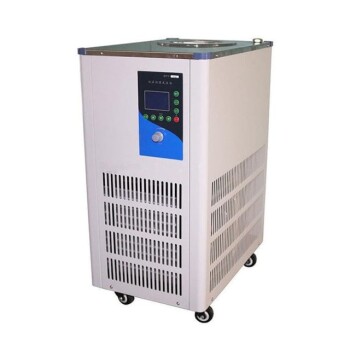
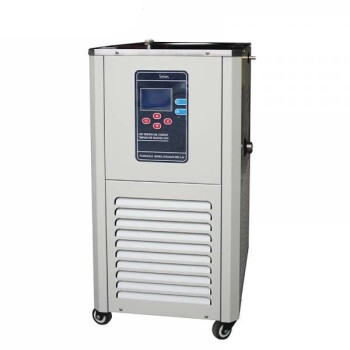
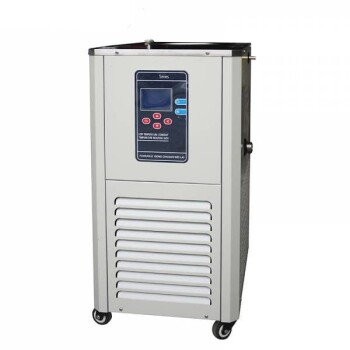
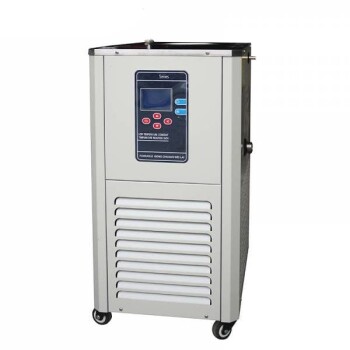
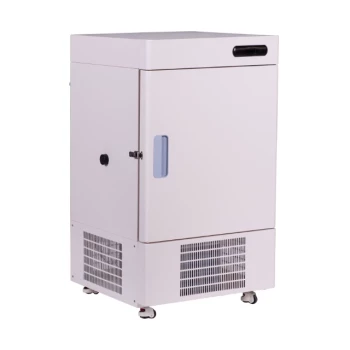
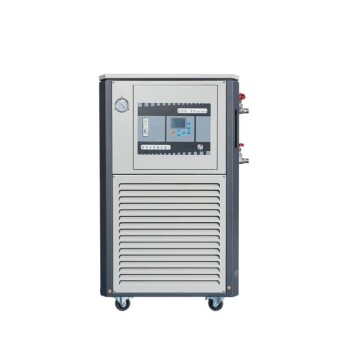
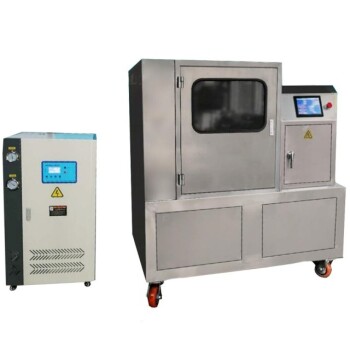
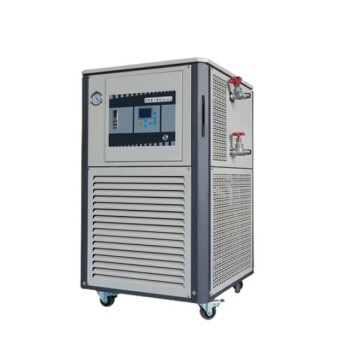
- 100L Chilling Circulator Cooling Water Circulator for Low Temperature Constant Temperature Reaction Bath Water Bath Cooling
- 80L Chilling Circulator Cooling Water Circulator for Water Bath Cooling and Low Temperature Constant Temperature Reaction Bath
- 10L Chilling Circulator Cooling Water Bath Low Temperature Constant Temperature Reaction Bath
- 20L Chiller Water Bath Cooling Circulator Low Temperature Constant Temperature Reaction Bath
- 5L Chilling Circulator Cooling Water Bath Circulator for Low Temperature Constant Temperature Reaction Bath
People Also Ask
- What function does a circulating cooling chiller perform during the gas adsorption isotherm testing of nanoporous carbon?
- Why is a circulating water chiller required for Prussian Blue nanoparticles? Ensure Stability & Batch Reproducibility
- What is the purpose of a cooling circulation water bath system in electrochemical experiments? Enhance Lab Precision
- How does a constant temperature circulator support the leaching reaction of gold scrap? Optimize Gold Recovery Results
- How do constant temperature circulators impact weight-loss immersion tests? Ensure Precision in Corrosion Analysis