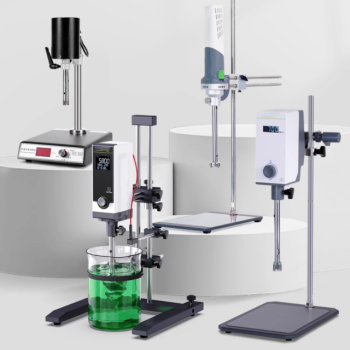
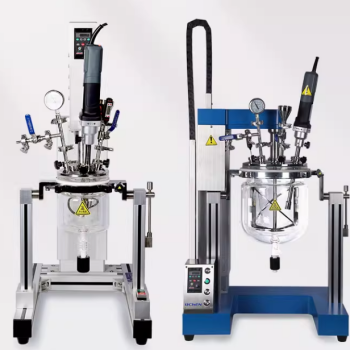
High-pressure homogenization is utilized for multiple cycles to force the graphene solution through a specialized chamber, subjecting the material to intense mechanical stress. This repetitive process uses impact, shear, and cavitation to achieve deep exfoliation, resulting in graphene nanosheets with significantly fewer layers and a highly uniform particle size.
Core Takeaway: The goal of multi-cycle homogenization is not merely dispersion, but structural refinement. By maximizing the specific surface area through repeated exposure to high shear forces, the process optimizes the graphene's ability to capture free radicals and integrate effectively into matrix materials like epoxy resin.
The Mechanics of Refinement
Generating Intense Physical Forces
A high-pressure homogenizer operates by forcing the pre-dispersed graphene solution through a narrow gap or specialized chamber.
This environment generates three critical physical forces: intense impact, shear, and cavitation. These forces work in concert to physically break apart agglomerates and strip layers from the graphene stack.
Achieving Deep Exfoliation
A single pass through the equipment is often insufficient to overcome the van der Waals forces holding graphene layers together.
Multiple cycles ensure that the material is repeatedly subjected to these forces, leading to deep exfoliation. This transforms thick, multi-layered stacks into thinner, high-quality nanosheets.
Why Uniformity Matters
Narrowing Particle Size Distribution
In material science, consistency is as important as quality.
Processing the solution through multiple cycles homogenizes the mixture, resulting in a narrower particle size distribution. This ensures that the final material properties are consistent throughout the entire batch, rather than having a mix of large chunks and fine sheets.
Increasing Specific Surface Area
The reduction in layer count and particle size directly correlates to a massive increase in specific surface area.
Higher surface area means more of the graphene is exposed to the surrounding medium. In the context of composites, this exposes more "active sites" capable of chemical interaction.
Application-Specific Benefits
Enhancing Resin Integration
The primary reference highlights the importance of this process for graphene used in epoxy resin.
By refining the graphene into fewer layers, the material becomes more effective at capturing free radicals within the resin. This chemical interaction is crucial for enhancing the mechanical and thermal properties of the final composite material.
Understanding the Trade-offs
Process Efficiency vs. Material Quality
While multiple cycles improve quality, they also increase energy consumption and processing time.
There is a point of diminishing returns where additional cycles provide negligible improvement in exfoliation. Furthermore, excessive processing can potentially fragment the graphene sheets too small, reducing their aspect ratio and effectiveness in certain structural applications.
Making the Right Choice for Your Goal
To determine the optimal number of cycles for your graphene pretreatment, consider your specific end-use requirements.
- If your primary focus is mechanical reinforcement: Prioritize enough cycles to achieve a high aspect ratio and uniform dispersion without pulverizing the sheets.
- If your primary focus is chemical reactivity: Maximize the number of cycles to achieve the highest possible specific surface area for free radical capture.
Success relies on balancing the need for deep exfoliation with the preservation of the graphene's structural integrity.
Summary Table:
| Feature | Impact of Multiple Cycles | Benefit to Graphene |
|---|---|---|
| Exfoliation Depth | Breaks van der Waals forces repeatedly | Fewer layers and thinner nanosheets |
| Particle Size | Continuous mechanical refinement | Narrower distribution and higher uniformity |
| Surface Area | Reduction in sheet thickness | Increased specific surface area for active sites |
| Integration | Better dispersion in matrices | Enhanced radical capture in epoxy resins |
Elevate Your Material Research with KINTEK Precision
Unlock the full potential of your graphene applications with KINTEK’s advanced laboratory solutions. Whether you are refining graphene for mechanical reinforcement or chemical reactivity, our high-performance high-pressure homogenizers, crushing and milling systems, and ultrasonic equipment deliver the precise mechanical stress needed for deep exfoliation.
From high-temperature furnaces for synthesis to hydraulic presses and cooling solutions, KINTEK provides the comprehensive tools required to ensure consistent, high-quality results for battery research, composite development, and beyond.
Ready to optimize your pretreatment process? Contact our technical experts today to find the perfect equipment for your laboratory needs.
References
- Hongxia Wang, Zhiwei Xu. Resistance of Graphene/Epoxy Resin—Based Composite Materials to γ Radiation Damage and Their Mechanical Properties. DOI: 10.3390/coatings13091536
This article is also based on technical information from Kintek Solution Knowledge Base .
Related Products
- High Shear Homogenizer for Pharmaceutical and Cosmetic Applications
- High Performance Lab Homogenizer for Pharma Cosmetics and Food R&D
- Laboratory High Throughput Tissue Grinding Mill Grinder
- Lab Sterile Slapping Type Homogenizer for Tissue Mashing and Dispersing
- Round Bidirectional Press Mold for Lab
People Also Ask
- Why Use a High Shear Homogenizer for Cathode Slurries? Optimize Double-Layer Solid-State Battery Production
- What is the function of high-shear dispersion equipment in corona-resistant nanocomposites? Elevate Your Insulation
- What is the necessity of using an industrial-grade high-shear homogenizer for biomass washing? Ensure Process Efficiency
- What are the advantages of using a high-shear homogenizer for BED/GMA coatings? Achieve Superior Nano-Dispersion
- What role does a high-shear homogenizer play in ODC catalyst suspensions? Unlock Superior Electrochemical Efficiency