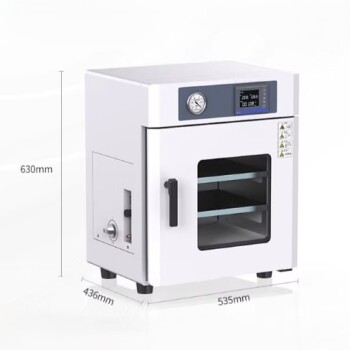
The high-temperature baking process is the critical catalyst for chemical permanence. This thermal treatment accelerates the condensation reaction between silane coupling agents—such as octadecyltrichlorosilane (OTS)—and the hydroxyl groups naturally present on the aluminum surface. By providing the necessary thermal energy, the oven transforms a physical mixture into a robust, chemically bonded superhydrophobic layer.
High-temperature baking transitions a surface treatment from a temporary coating to a durable functional layer by facilitating covalent bonding. This process is the foundation for ensuring that superhydrophobic surfaces can withstand mechanical wear and environmental degradation in practical applications.
The Chemical Mechanism of Thermal Treatment
Accelerating the Condensation Reaction
The primary role of the laboratory oven is to provide the activation energy required for silanization. When silane molecules encounter the aluminum surface, they must undergo a condensation reaction to form stable Si-O-Al bonds.
Heat significantly speeds up this molecular process, ensuring the reaction reaches completion much faster than it would at room temperature. This efficiency is vital for creating a uniform and dense molecular monolayer.
Strengthening the Molecular Interface
The high-temperature environment (typically around 130 °C) ensures that the silane molecules are not just "sitting" on the surface but are covalently anchored. These strong chemical bonds are far more resilient than the weak van der Waals forces that characterize unbaked coatings.
This molecular anchoring is what allows the aluminum plate to maintain its superhydrophobic properties even after exposure to external stressors. Without this step, the coating would likely delaminate or wash away during use.
Enhancing Material Longevity and Performance
Improving Mechanical Durability
In applications like Triboelectric Nanogenerators (TENGs), surfaces are subjected to repeated contact-separation cycles. The thermal curing process ensures the superhydrophobic layer possesses the mechanical durability to survive these cycles without losing its nanostructured effectiveness.
A baked plate exhibits significantly higher resistance to friction and abrasion. This durability is critical for maintaining the surface energy required to repel water over the long term.
Increasing Chemical Stability
Thermal treatment also enhances the chemical stability of the aluminum plate. By ensuring a complete reaction, the oven treatment minimizes the presence of unreacted precursor molecules that could react with moisture or pollutants in the environment.
This results in a surface that is less prone to oxidation or degradation when exposed to harsh chemicals. The process mirrors other specialized treatments, such as annealing, which reduces surface stresses and improves corrosion resistance.
Understanding the Trade-offs and Pitfalls
Risk of Thermal Degradation
While high temperatures are necessary, exceeding the optimal threshold can lead to the thermal decomposition of the silane agent itself. Most organic modifiers have a specific temperature ceiling beyond which their hydrophobic tails break down, destroying the superhydrophobic effect.
It is essential to calibrate the laboratory oven precisely. Overheating can also affect the underlying aluminum substrate's temper, potentially altering its mechanical properties.
Incomplete Dehydration
If the temperature is too low or the duration too short, residual water may remain trapped at the interface. As seen in aluminum sludge treatments, lower temperatures (e.g., 105 °C) are often used for simple dehydration, but may not be sufficient for the complex chemical bonding required in surface modification.
Incomplete removal of "bound water" can interfere with the silane-to-metal bond. This leads to a "patchy" superhydrophobic effect and significantly reduced service life.
How to Apply This to Your Project
Making the Right Choice for Your Goal
- If your primary focus is mechanical wear resistance (e.g., TENGs): Utilize a high-temperature bake at approximately 130 °C to ensure maximum covalent bonding between the OTS and the aluminum substrate.
- If your primary focus is preventing corrosion or stress-cracking: Focus on an annealing-style heat treatment to reduce surface stresses generated during previous etching or machining steps.
- If your primary focus is standardized material analysis: Use a consistent 105 °C drying cycle to remove all free and bound water, ensuring accurate mass measurements and chemical characterization.
Proper thermal management effectively bridges the gap between laboratory-scale surface chemistry and durable, real-world engineering solutions.
Summary Table:
| Process Aspect | Role of Thermal Treatment | Benefit to Surface |
|---|---|---|
| Chemical Bonding | Accelerates silanization and Si-O-Al bond formation | Transforms coating into a permanent functional layer |
| Mechanical Strength | Facilitates molecular anchoring to the substrate | Increases resistance to friction, abrasion, and wear |
| Chemical Stability | Ensures complete reaction and dehydration | Prevents oxidation and degradation from environmental factors |
| Process Control | Maintains optimal temperature (e.g., 130°C) | Prevents thermal decomposition of organic modifiers |
Elevate Your Material Research with KINTEK Precision
Achieving the perfect superhydrophobic surface requires more than just chemistry—it requires uncompromising thermal precision. At KINTEK, we specialize in providing high-performance laboratory equipment tailored for advanced material science.
Whether you need precise laboratory ovens for silanization, high-temperature furnaces (muffle, vacuum, or CVD) for annealing, or hydraulic presses for sample preparation, our comprehensive portfolio is designed to ensure your results are durable and reproducible. From high-pressure reactors to specialized PTFE and ceramic consumables, we provide the tools you need to bridge the gap between lab-scale innovation and industrial-grade durability.
Ready to optimize your treatment process? Contact our technical experts today to find the ideal thermal solution for your laboratory!
References
- Kun Zhao, Yu‐Lun Chueh. Rational design on high-performance triboelectric nanogenerator consisting of silicon carbide@silicon dioxide nanowhiskers/polydimethylsiloxane (SiC@SiO2/PDMS) nanocomposite films. DOI: 10.1186/s11671-023-03822-8
This article is also based on technical information from Kintek Solution Knowledge Base .
Related Products
- Laboratory Scientific Electric Heating Blast Drying Oven
- 56L Vertical Laboratory Vacuum Drying Oven
- 23L Laboratory Vacuum Drying Oven
- 1200℃ Muffle Furnace Oven for Laboratory
- 1700℃ Muffle Oven Furnace for Laboratory
People Also Ask
- How does a laboratory electric drying oven contribute to the formation of the initial coating? Expert Insights
- What role does a precision laboratory drying oven play in the synthesis of GO-PANI nanocomposites? Protect Material Integrity
- What role does a laboratory drying oven play in the preparation of zinc oxide nanoparticle precursors?
- What is the necessity of using a laboratory drying oven when processing MoO3/GO composite nanopowders? Find out here.
- What is the role of a laboratory drying oven in cellulose citrate production? Ensure Material Stability & Purity