The use of a laboratory drying oven is a non-negotiable step in the synthesis of Molybdenum Trioxide/Graphene Oxide (MoO3/GO) composite nanopowders. It provides a strictly controlled thermal environment, specifically at 80°C, to drive off volatile contaminants. This process ensures the complete removal of absorbed water and absolute ethanol introduced during the washing phase.
The primary necessity of this drying stage is to eliminate moisture and solvent residues that would otherwise chemically or physically interfere with the formulation of lubricating oils and the accuracy of subsequent tribological (friction and wear) testing.
The Critical Role of Controlled Drying
Eliminating Volatile Contaminants
During the preparation of MoO3/GO, the material retains significant amounts of absolute ethanol and water from the washing process.
A laboratory drying oven removes these by maintaining a constant temperature of 80°C. This specific thermal energy is sufficient to evaporate these solvents without degrading the composite material.
Preventing Oil Formulation Failure
The ultimate application of MoO3/GO nanopowders often involves dispersion into lubricating oils.
If the powder is not completely dry, residual water will repel the hydrophobic oil matrix. This immiscibility prevents uniform dispersion, leading to poor lubrication performance and unstable suspensions.
Ensuring Accurate Performance Data
Tribological testing measures how well the material reduces friction and wear.
Residual moisture or ethanol acts as a variable that skews these test results. By employing prolonged, constant-temperature drying, you ensure that the performance data reflects the properties of the MoO3/GO composite itself, not the contaminants trapped within it.
Understanding Process Risks and Trade-offs
Temperature Precision
While drying is essential, the specific temperature of 80°C is a calculated processing parameter.
Drying at significantly lower temperatures may fail to remove bound solvents completely, leaving "wet" pockets in the powder. Conversely, excessively high temperatures could risk altering the structure of the Graphene Oxide (GO) or inducing unwanted oxidation, similar to issues seen in other nanomaterials like Vanadium Dioxide.
The Risk of Agglomeration
Drying must be thorough, but it must also be controlled.
Rapid, uncontrolled heating can sometimes lead to hard agglomeration, where nanoparticles fuse together. A laboratory oven provides a stable environment that facilitates the production of a loose, dry powder suitable for tribological applications.
Making the Right Choice for Your Goal
To ensure the integrity of your MoO3/GO nanopowders, apply the drying process with the following objectives in mind:
- If your primary focus is Chemical Purity: Maintain a strictly constant temperature of 80°C to ensure the total evaporation of absolute ethanol and water without inducing thermal degradation.
- If your primary focus is Application Performance: Verify the powder reaches a completely dry state to prevent moisture-induced immiscibility when dispersing the composite into lubricating oils.
Consistency in the drying phase is the invisible foundation of reliable tribological data.
Summary Table:
| Drying Parameter | Requirement | Purpose in MoO3/GO Processing |
|---|---|---|
| Temperature | 80°C (Constant) | Removes ethanol and water without degrading GO structure. |
| Contaminant Removal | Absolute Ethanol & Water | Prevents chemical interference during oil formulation. |
| Material Integrity | Uniform Heating | Avoids hard agglomeration and ensures powder loose texture. |
| Testing Impact | High | Eliminates variables for accurate friction and wear data. |
Elevate Your Nanomaterial Synthesis with KINTEK
Precision is paramount when processing sensitive composites like MoO3/GO. KINTEK specializes in high-performance laboratory equipment designed to meet the rigorous demands of material science. Our range of precision drying ovens, high-temperature furnaces (muffle, vacuum, and tube), and advanced crushing and milling systems ensure your nanopowders achieve the purity and consistency required for world-class tribological research.
From high-temperature reactors to PTFE consumables and ceramics, we provide the comprehensive tools you need to prevent contamination and ensure uniform dispersion in lubricating oils.
Ready to optimize your lab's drying and thermal processing? Contact KINTEK today for expert guidance and tailored solutions!
References
- Haiyan Li, X. H. Zhang. Preparation and tribological properties of GO supported MoO3 composite nanomaterials. DOI: 10.15251/djnb.2023.184.1395
This article is also based on technical information from Kintek Solution Knowledge Base .
Related Products
- Laboratory Scientific Electric Heating Blast Drying Oven
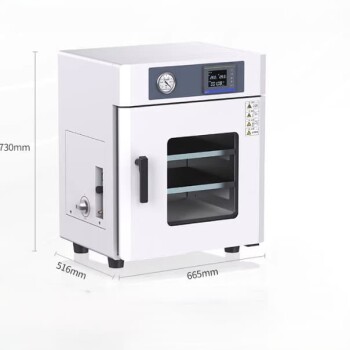
- 56L Vertical Laboratory Vacuum Drying Oven
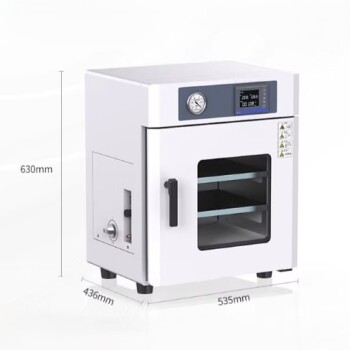
- 23L Laboratory Vacuum Drying Oven
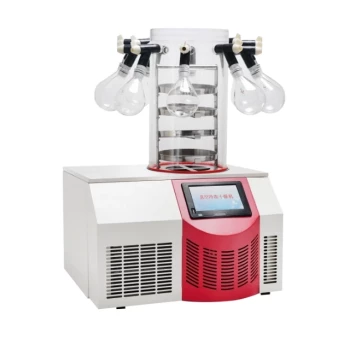
- High Performance Laboratory Freeze Dryer
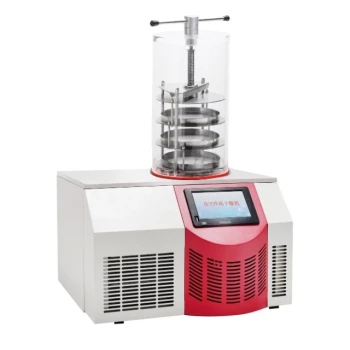
- High Performance Laboratory Freeze Dryer for Research and Development
People Also Ask
- How does a laboratory electric drying oven contribute to the formation of the initial coating? Expert Insights
- What role does a precision laboratory drying oven play in the synthesis of GO-PANI nanocomposites? Protect Material Integrity
- What role does a laboratory drying oven play in the preparation of zinc oxide nanoparticle precursors?
- What is the role of a laboratory drying oven in cellulose citrate production? Ensure Material Stability & Purity
- Why is a laboratory drying oven essential for biomass liquefaction? Ensure Accurate Conversion Rate Calculations