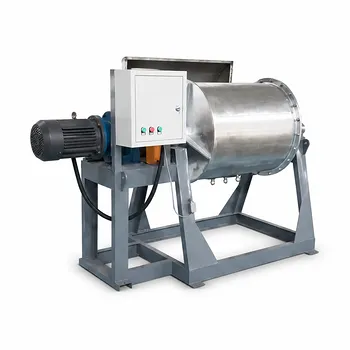
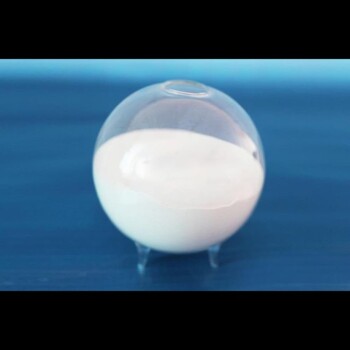
The primary reason a high-vacuum planetary ball mill is indispensable is the chemical volatility of the raw materials involved. Specifically, Zirconium Hydride (ZrH2) and Aluminum (Al) powders are highly reactive and susceptible to rapid oxidation when exposed to air. The high-vacuum mill creates a sealed environment that effectively isolates oxygen, allowing for high-energy mechanical mixing without degrading the feedstock.
Core Takeaway To produce high-quality Zr2Al-GNS ceramics, you must solve two problems simultaneously: achieving a uniform microscopic mix and preventing chemical deterioration. The high-vacuum planetary ball mill is the only tool that delivers the necessary kinetic energy for blending while maintaining a sealed, oxygen-free atmosphere to ensure high phase purity.
The Critical Role of Oxygen Isolation
Protecting Reactive Precursors
The synthesis of Zr2Al-GNS ceramics relies on Zirconium Hydride (ZrH2) and Aluminum (Al) as key precursors. These materials are chemically unstable in standard atmospheric conditions. If milled in the presence of air, they will oxidize immediately, compromising the chemical composition of the mixture.
Ensuring Phase Purity
The vacuum environment is not merely a precaution; it is a quality control requirement. By eliminating oxygen during the milling process, you prevent the formation of unwanted oxides. This isolation ensures that the final MAX phase ceramics achieve high phase purity, which is directly linked to the material's structural integrity and performance.
Achieving Microscopic Homogeneity
High-Energy Particle Refinement
Beyond atmospheric control, the "planetary" aspect of the mill is vital for mechanical refinement. The mill utilizes high-energy collisions, impact, and shear forces to refine powder particles. This process reduces the average particle size and breaks down soft agglomerates, ensuring a uniform dispersion of the GNS (Graphene Nanosheets) within the metal matrix.
Enhancing Surface Reactivity
The mechanical action of the mill increases the specific surface area of the particles. By stripping fresh surfaces and refining the powder to a microscopic scale, the process enhances the chemical interaction between components. This uniform dispersion serves as a critical prerequisite for successful sintering processes, such as Spark Plasma Sintering (SPS).
Understanding the Trade-offs
Equipment Complexity and Throughput
While essential for purity, high-vacuum systems introduce complexity. They require rigorous seal maintenance and generally operate in batch modes that may limit throughput compared to continuous, open-air milling processes.
Risk of Media Contamination
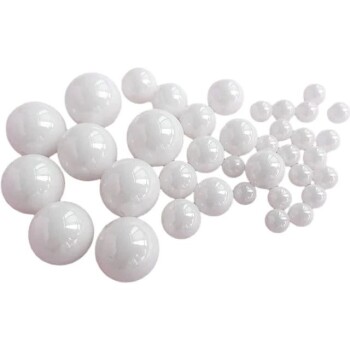
Even within a vacuum, impurities can be introduced through the wear of grinding media. To mitigate this, high-purity zirconia grinding balls are recommended. Their high hardness and density provide sufficient impact energy for mixing, while their wear resistance prevents metallic impurities from contaminating the electrical performance of the final ceramic.
Making the Right Choice for Your Project
To ensure the success of your Zr2Al-GNS preparation, align your process parameters with your specific quality targets:
- If your primary focus is Phase Purity: Ensure the vacuum seal integrity is verified prior to every run to completely mitigate oxidation of ZrH2 and Al.
- If your primary focus is Structural Density: Prioritize high-energy milling parameters (speed and duration) to achieve maximum particle refinement and dispersion for the sintering stage.
- If your primary focus is Electrical Performance: Utilize high-purity zirconia grinding media to eliminate the risk of metallic contamination during the milling process.
By combining an oxygen-free environment with high-energy mechanical alloying, you establish the foundation for a defect-free, high-performance ceramic composite.
Summary Table:
| Feature | Benefit for Zr2Al-GNS Preparation | Impact on Final Ceramic |
|---|---|---|
| High-Vacuum Seal | Eliminates oxygen exposure for ZrH2 and Al | Prevents oxidation and ensures high phase purity |
| Planetary Motion | Delivers high-energy impact and shear forces | Achieves microscopic homogeneity and GNS dispersion |
| Particle Refinement | Increases specific surface area of precursors | Enhances chemical reactivity for better sintering (SPS) |
| Zirconia Media | High hardness with minimal wear | Prevents metallic contamination of electrical properties |
Elevate Your Material Research with KINTEK Precision Solutions
Don't let oxidation or poor dispersion compromise your ceramic synthesis. KINTEK specializes in advanced laboratory equipment designed for the most demanding material science applications. Whether you are preparing sensitive Zr2Al-GNS composites or researching next-generation energy storage, we provide the tools you need for success.
Our comprehensive portfolio includes:
- High-Vacuum Planetary Ball Mills for oxygen-free mechanical alloying.
- Crushing and Milling Systems paired with high-purity zirconia and alumina media.
- High-Temperature Furnaces & Spark Plasma Sintering (SPS) support tools.
- Hydraulic Presses & High-Pressure Reactors for advanced material densification.
Ready to achieve superior phase purity and structural integrity? Contact our technical experts today to find the perfect milling and sintering configuration for your laboratory.
References
- Dumooa R. Hussein, Ahmed Al-Ghaban. Synthesizinge a novel Zr2Al-GNS MAX phase ceramic with superior electrical properties using pressureless sintering technique. DOI: 10.55730/1300-0527.3577
This article is also based on technical information from Kintek Solution Knowledge Base .
Related Products
- Stainless Steel Laboratory Ball Mill for Dry Powder and Liquid with Ceramic Polyurethane Lining
- High Energy Planetary Ball Mill Milling Machine for Laboratory
- High Energy Planetary Ball Mill Milling Machine for Laboratory
- High-Energy Omnidirectional Planetary Ball Mill Milling Machine for Laboratory
- High Energy Planetary Ball Mill for Laboratory Horizontal Tank Type Milling Machine
People Also Ask
- How do laboratory ball mills facilitate the mechanochemical synthesis of ZIF-8? Solvent-Free Synthesis Explained
- What is the primary function of a laboratory ball mill in the modification of sulfide-based solid electrolytes with LiPO2F2?
- How does a laboratory ball mill ensure the mixing quality of Mn3Zn0.8Sn0.2N and Ti? Achieve Perfect Homogeneity
- What is the function of a laboratory ball mill in the preparation of AMMCs? Optimize Dispersion & Grain Refinement
- In what way does a laboratory ball mill affect material properties when modifying PHBV/pulp fiber composites?