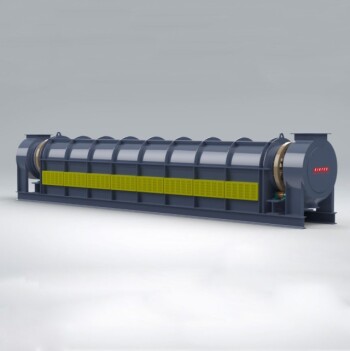
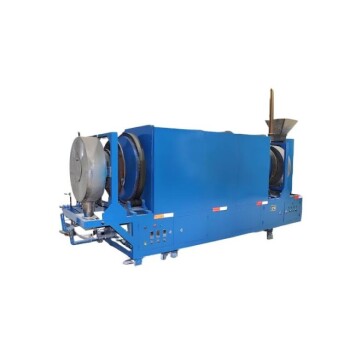
A medium-temperature calcination furnace is required to transform loose silver ions into a physically and chemically integrated part of the Zinc Oxide (ZnO) lattice. Specifically, treating the material at 300°C creates the necessary strong bonds between the silver and the support, ensuring the catalyst is stable and chemically active.
This thermal treatment is the bridge between a raw mixture and a functional catalyst. It optimizes the material's energy band structure for visible light performance while simultaneously removing volatile impurities that would otherwise inhibit reactivity.
The Mechanics of Catalyst Activation
Establishing the Ag-ZnO Bond
The primary function of the 300°C heat treatment is to facilitate a strong physical and chemical bond between the loaded silver and the ZnO crystal lattice.
Without this thermal energy, the silver ions would merely reside loosely on the surface.
Calcination forces the interaction, anchoring the silver to the support structure to ensure durability during chemical reactions.
Optimizing Charge Separation
The heat treatment directly alters the energy band structure of the material.
By optimizing this structure, the furnace treatment enhances the efficiency of charge separation when the catalyst is exposed to visible light.
This is critical for photocatalytic applications, as efficient charge separation prevents energy loss and drives the desired chemical activity.
Forming Stable Active Sites
Subjecting the material to medium temperatures converts the silver loading into stable active sites.
These sites are the specific locations on the catalyst surface where chemical reactions occur.
Ensuring these sites are stable prevents them from degrading or detaching during operation.
Chemical Transformation and Purification
Decomposition of Precursors
The furnace provides the thermal energy required to decompose metal salt precursors.
This process converts raw chemical inputs into stable metal oxide active species on the support.
It ensures that the final material consists of the desired active components rather than unreacted starting materials.
Removal of Volatiles
Calcination serves as a critical purification step.
It drives off absorbed moisture (water) and expels volatile constituents such as carbon dioxide introduced during the synthesis process.
Removing these impurities is essential, as they can block active sites and reduce the overall efficiency of the catalyst.
Understanding the Trade-offs
The Importance of Temperature Control
While heat is necessary, the specific "medium" temperature of 300°C is chosen carefully.
The goal is to provide enough energy for bonding and purification without providing so much heat that it causes unwanted sintering or surface area loss.
Phase Stability Risks
The calcination step determines the final crystal phase of the catalyst.
Incorrect temperatures can lead to undesirable phase changes or incomplete interaction between the active metal and the support.
Precision in the heating profile is required to maintain the desired structural integrity of the ZnO.
Making the Right Choice for Your Goal
To maximize the effectiveness of your Ag/ZnO catalyst, align your thermal treatment with your specific performance objectives:
- If your primary focus is Photocatalytic Efficiency: Ensure the temperature is sufficient to optimize the energy band structure for maximum charge separation under visible light.
- If your primary focus is Catalyst Stability: Prioritize a hold time at 300°C that guarantees the complete decomposition of precursors and the formation of strong chemical bonds.
- If your primary focus is Material Purity: Ensure the furnace has adequate airflow to carry away the volatile impurities and moisture released during calcination.
Correctly calibrated calcination turns a simple mixture into a robust, high-performance engine for chemical transformation.
Summary Table:
| Feature | Impact of 300°C Calcination on Ag/ZnO |
|---|---|
| Bonding | Transforms loose ions into integrated Ag-ZnO lattice bonds |
| Energy Band | Optimizes structure for enhanced visible light charge separation |
| Active Sites | Converts silver loading into stable, reactive catalytic sites |
| Purification | Decomposes precursors and expels moisture and volatile CO2 |
| Stability | Prevents sintering while ensuring physical & chemical durability |
Elevate Your Materials Research with KINTEK Precision
Achieving the perfect 300°C thermal profile is critical for transforming raw precursors into high-performance Ag/ZnO catalysts. KINTEK specializes in advanced laboratory equipment, offering a comprehensive range of high-temperature furnaces (muffle, tube, and atmosphere) designed for precise calcination and material synthesis.
Whether you are optimizing energy band structures or ensuring the stability of active sites, our specialized solutions—including high-pressure reactors, crushing systems, and specialized ceramics—provide the reliability your research demands.
Ready to optimize your calcination process? Contact our technical experts today to find the ideal furnace and consumables for your laboratory's needs.
References
- Bhuvaneswari Ramasamy, Prakash Chinnaiyan. Novel organic assisted Ag-ZnO photocatalyst for atenolol and acetaminophen photocatalytic degradation under visible radiation: performance and reaction mechanism. DOI: 10.1007/s11356-021-13532-2
This article is also based on technical information from Kintek Solution Knowledge Base .
Related Products
- Electric Rotary Kiln Pyrolysis Furnace Plant Machine Calciner Small Rotary Kiln Rotating Furnace
- Electric Rotary Kiln Continuous Working Small Rotary Furnace Heating Pyrolysis Plant
- 1200℃ Split Tube Furnace with Quartz Tube Laboratory Tubular Furnace
- 1700℃ Laboratory High Temperature Tube Furnace with Alumina Tube
- Vertical High Temperature Graphite Vacuum Graphitization Furnace
People Also Ask
- What is a rotary kiln electric furnace? Achieve Superior Uniform Heating for Your Materials
- What are the characteristics of the slipping, slumping, and rolling modes of bed motion? Optimize Your Rotary Process
- What are the advantages of rotary kiln furnace? Achieve Superior Uniformity & Efficiency
- What is the temperature of a rotating kiln? It Depends on Your Material and Process Goal
- What are the principles of a rotary kiln? Master the Mechanics of High-Temperature Processing