Knowledge Why is a molybdenum crucible selected for lead-bismuth eutectic corrosion experiments? Ensure Pure Testing Results
Author avatar

Tech Team · Kintek Solution

Updated 17 hours ago

Why is a molybdenum crucible selected for lead-bismuth eutectic corrosion experiments? Ensure Pure Testing Results


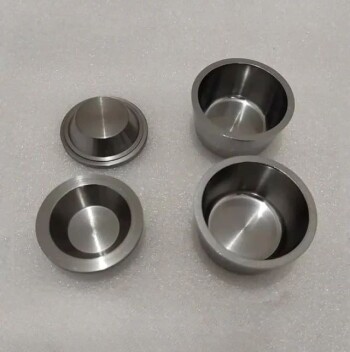
The selection of a molybdenum crucible is driven by its exceptional chemical stability and extremely low solubility in molten lead-bismuth eutectic (LBE). When conducting static corrosion experiments on 316L steel at high temperatures (specifically 823 K), molybdenum acts as an inert containment vessel. This prevents the crucible itself from dissolving into the liquid metal, ensuring that the corrosive environment remains pure and the resulting data accurately reflects the degradation of the steel sample alone.

Core Takeaway In corrosion testing, the containment vessel must be more stable than the material being tested to avoid contaminating the results. Molybdenum is selected because it does not leach elements into the LBE, preventing "false" saturation levels that could artificially inhibit or accelerate the corrosion of the 316L steel.

The Critical Role of Chemical Stability

Low Solubility at High Temperatures

The primary challenge in testing materials with liquid lead-bismuth eutectic (LBE) is the aggressive nature of the molten metal, particularly at elevated temperatures like 823 K.

Molybdenum possesses extremely low solubility in LBE under these conditions. Unlike standard structural metals, it resists dissolving into the molten alloy, maintaining its structural integrity throughout the experiment.

Preventing Elemental Leaching

To understand how 316L steel degrades, the chemical composition of the LBE must remain constant (except for the elements released by the steel itself).

If a less stable crucible were used, elements from the crucible would leach into the LBE medium. This leaching effectively contaminates the test environment, changing the chemical potential and aggressiveness of the liquid metal.

Ensuring Data Integrity

Isolating the Corrosion Variable

The goal of the experiment is to measure the corrosion depth of the 316L steel, not the interaction between the LBE and the crucible.

By using molybdenum, researchers ensure that the crucible is chemically "invisible" to the experiment. It acts strictly as a physical container, not a chemical participant.

Accurate Assessment of 316L Steel

Because the molybdenum prevents external contamination, any changes observed in the LBE or the weight loss of the 316L sample can be attributed solely to the interaction between the steel and the LBE.

This creates a controlled baseline, allowing for precise measurement of corrosion depth and rate without the noise of secondary chemical reactions.

The Risks of Improper Containment

The "Saturation" Artifact

If a crucible dissolves into the LBE, it can prematurely saturate the liquid metal with dissolved elements.

This saturation decreases the LBE's capacity to dissolve the test sample (316L steel), leading to underestimated corrosion rates. The steel might appear more resistant than it actually is simply because the liquid metal "can't hold" any more dissolved material.

Secondary Reactions

Reactive crucibles can induce secondary reactions between the liquid metal and the vessel walls.

While ceramic liners (like alumina) are sometimes used at lower temperatures (e.g., 600°C) for other alloys, molybdenum provides the necessary robustness and conductive properties required for the specific high-temperature conditions (823 K) used in 316L testing.

Making the Right Choice for Your Experiment

When designing liquid metal corrosion tests, the containment material is just as critical as the sample material.

  • If your primary focus is High-Temperature Accuracy (800K+): Prioritize molybdenum crucibles to ensure low solubility and prevent element leaching that distorts corrosion depth data.
  • If your primary focus is Chemical Purity: Ensure your containment vessel has a significantly higher resistance to dissolution in the specific liquid metal medium than the sample being tested.

Ultimately, the integrity of your corrosion data depends on the neutrality of your containment vessel; if the crucible reacts, your results are invalid.

Summary Table:

Feature Molybdenum Crucible Standard Metal Crucible
Solubility in LBE Extremely Low (Inert) High (Dissolves into melt)
Elemental Leaching None (Preserves purity) High (Contaminates environment)
Data Accuracy High (True steel degradation) Low (Saturation artifacts)
Max Temp Stability Superior at 823 K+ Varies (Prone to deformation)
Chemical Role Physical container only Active chemical participant

Secure Your Experimental Integrity with KINTEK Precision

Don't let crucible contamination invalidate your high-temperature research. KINTEK specializes in advanced laboratory solutions designed for the most demanding environments. Whether you are conducting LBE corrosion studies, battery research, or material synthesis, our comprehensive range of molybdenum crucibles, high-temperature furnaces, and ceramics provides the chemical neutrality your data requires.

From crushing and milling systems to high-pressure reactors and autoclaves, we empower researchers with the tools needed for precise, repeatable results. Contact KINTEK today to discuss how our specialized equipment and consumables can enhance the accuracy of your next project.

References

  1. Shujian Tian, Weishu Wang. Influence of High-Density electropulsing treatment on the interface corrosion characteristics of 316L steel in Lead-Bismuth eutectic at 823 K. DOI: 10.1051/e3sconf/201913606022

This article is also based on technical information from Kintek Solution Knowledge Base .

Related Products

People Also Ask

Related Products

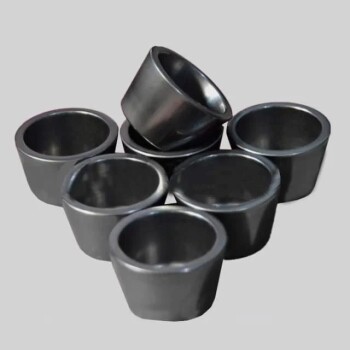
Electron Beam Evaporation Coating Tungsten Crucible and Molybdenum Crucible for High Temperature Applications

Electron Beam Evaporation Coating Tungsten Crucible and Molybdenum Crucible for High Temperature Applications

Tungsten and molybdenum crucibles are commonly used in electron beam evaporation processes due to their excellent thermal and mechanical properties.

Alumina Al2O3 Ceramic Crucible Semicircle Boat with Lid for Engineering Advanced Fine Ceramics

Alumina Al2O3 Ceramic Crucible Semicircle Boat with Lid for Engineering Advanced Fine Ceramics

Crucibles are containers widely used for melting and processing various materials, and semicircular boat-shaped crucibles are suitable for special smelting and processing requirements. Their types and uses vary by material and shape.

Electron Beam Evaporation Coating Gold Plating Tungsten Molybdenum Crucible for Evaporation

Electron Beam Evaporation Coating Gold Plating Tungsten Molybdenum Crucible for Evaporation

These crucibles act as containers for the gold material evaporated by the electron evaporation beam while precisely directing the electron beam for precise deposition.

Arc-Shaped Alumina Ceramic Crucible High Temperature Resistant for Engineering Advanced Fine Ceramics

Arc-Shaped Alumina Ceramic Crucible High Temperature Resistant for Engineering Advanced Fine Ceramics

In the journey of scientific exploration and industrial production, every detail is crucial. Our arc-shaped alumina ceramic crucibles, with their excellent high temperature resistance and stable chemical properties, have become a powerful assistant in laboratories and industrial fields. They are made of high-purity alumina materials and manufactured through precision processes to ensure excellent performance in extreme environments.

Molybdenum Disilicide (MoSi2) Thermal Elements Electric Furnace Heating Element

Molybdenum Disilicide (MoSi2) Thermal Elements Electric Furnace Heating Element

Discover the power of Molybdenum Disilicide (MoSi2) Heating Element for high-temperature resistance. Unique oxidation resistance with stable resistance value. Learn more about its benefits now!

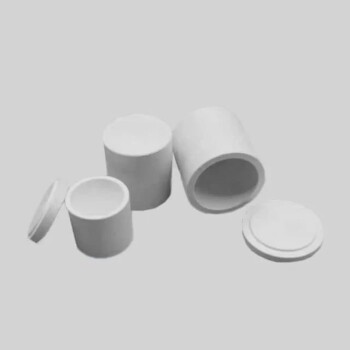
Engineering Advanced Fine Ceramics Alumina Al2O3 Crucible With Lid Cylindrical Laboratory Crucible

Engineering Advanced Fine Ceramics Alumina Al2O3 Crucible With Lid Cylindrical Laboratory Crucible

Cylindrical Crucibles Cylindrical crucibles are one of the most common crucible shapes, suitable for melting and processing a wide variety of materials, and are easy to handle and clean.

Electrolytic Electrochemical Cell for Coating Evaluation

Electrolytic Electrochemical Cell for Coating Evaluation

Looking for corrosion-resistant coating evaluation electrolytic cells for electrochemical experiments? Our cells boast complete specifications, good sealing, high-quality materials, safety, and durability. Plus, they're easily customizable to meet your needs.

Evaporation Crucible for Organic Matter

Evaporation Crucible for Organic Matter

An evaporation crucible for organic matter, referred to as an evaporation crucible, is a container for evaporating organic solvents in a laboratory environment.

Custom Machined and Molded PTFE Teflon Parts Manufacturer with PTFE Crucible and Lid

Custom Machined and Molded PTFE Teflon Parts Manufacturer with PTFE Crucible and Lid

PTFE crucibles, made from pure Teflon, offer chemical inertness and resistance from -196°C to 280°C, ensuring compatibility with a wide range of temperatures and chemicals. These crucibles feature machine-finished surfaces for easy cleaning and prevention of contamination, making them ideal for precise laboratory applications.

Engineering Advanced Fine Ceramics Alumina Crucibles (Al2O3) for Thermal Analysis TGA DTA

Engineering Advanced Fine Ceramics Alumina Crucibles (Al2O3) for Thermal Analysis TGA DTA

TGA/DTA thermal analysis vessels are made of aluminum oxide (corundum or aluminum oxide). It can withstand high temperature and is suitable for analyzing materials that require high temperature testing.

Engineering Advanced Fine Alumina Al2O3 Ceramic Crucible for Laboratory Muffle Furnace

Engineering Advanced Fine Alumina Al2O3 Ceramic Crucible for Laboratory Muffle Furnace

Alumina ceramic crucibles are used in some materials and metal melting tools, and flat-bottomed crucibles are suitable for melting and processing larger batches of materials with better stability and uniformity.

Square Lab Press Mold for Laboratory Applications

Square Lab Press Mold for Laboratory Applications

Create uniform samples easily with Square Lab Press Mold - available in various sizes. Ideal for battery, cement, ceramics, and more. Custom sizes available.

Cylindrical Press Mold with Scale for Lab

Cylindrical Press Mold with Scale for Lab

Discover precision with our Cylindrical Press Mold. Ideal for high-pressure applications, it molds various shapes and sizes, ensuring stability and uniformity. Perfect for lab use.

Electron Beam Evaporation Coating Oxygen-Free Copper Crucible and Evaporation Boat

Electron Beam Evaporation Coating Oxygen-Free Copper Crucible and Evaporation Boat

Electron Beam Evaporation Coating Oxygen-Free Copper Crucible enables precise co-deposition of various materials. Its controlled temperature and water-cooled design ensure pure and efficient thin film deposition.

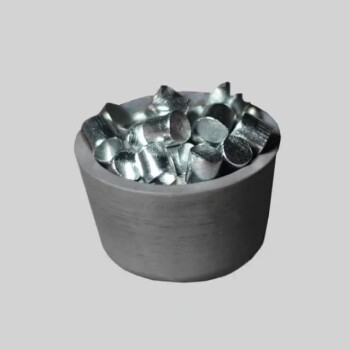
Electron Beam Evaporation Coating Conductive Boron Nitride Crucible BN Crucible

Electron Beam Evaporation Coating Conductive Boron Nitride Crucible BN Crucible

High-purity and smooth conductive boron nitride crucible for electron beam evaporation coating, with high temperature and thermal cycling performance.

Boron Nitride (BN) Crucible for Phosphorous Powder Sintered

Boron Nitride (BN) Crucible for Phosphorous Powder Sintered

Phosphorus powder sintered boron nitride (BN) crucible has a smooth surface, dense, pollution-free and long service life.

Laboratory High Pressure Horizontal Autoclave Steam Sterilizer for Lab Use

Laboratory High Pressure Horizontal Autoclave Steam Sterilizer for Lab Use

The horizontal autoclave steam sterilizer adopts the gravity displacement method to remove the cold air in the inner chamber, so that the inner steam and cold air content is less, and the sterilization is more reliable.

Custom PTFE Teflon Parts Manufacturer for Hydrothermal Synthesis Reactor Polytetrafluoroethylene Carbon Paper and Carbon Cloth Nano-growth

Custom PTFE Teflon Parts Manufacturer for Hydrothermal Synthesis Reactor Polytetrafluoroethylene Carbon Paper and Carbon Cloth Nano-growth

Acid and alkali resistant polytetrafluoroethylene experimental fixtures meet different requirements. The material is made of brand new polytetrafluoroethylene material, which has excellent chemical stability, corrosion resistance, airtightness, high lubricity and non-stickiness, electrical corrosion and good anti-aging ability, and can work for a long time at temperatures from -180℃ to +250℃.

Laboratory Sterilizer Lab Autoclave Pulsating Vacuum Desktop Steam Sterilizer

Laboratory Sterilizer Lab Autoclave Pulsating Vacuum Desktop Steam Sterilizer

The pulsating vacuum desktop steam sterilizer is a compact and reliable device used for rapid sterilization of medical, pharmaceutical, and research items.

Desktop Fast Laboratory Autoclave Sterilizer 35L 50L 90L for Lab Use

Desktop Fast Laboratory Autoclave Sterilizer 35L 50L 90L for Lab Use

The desktop fast steam sterilizer is a compact and reliable device used for rapid sterilization of medical, pharmaceutical, and research items. It efficiently sterilizes surgical instruments, glassware, medicines, and resistant materials, making it suitable for various applications.


Leave Your Message