Precision magnetic stirring is essential during Silicalite-1 synthesis to generate continuous, uniform shear force during the addition of silicon sources like TEOS. This specific mechanical action ensures that the structure-directing agent (TPAOH) and the silicon source make complete contact within the solvent system, facilitating the necessary hydrolysis-condensation reactions.
By maintaining strict control over the chemical composition of the precursor gel, precision stirring guarantees the synthesis of seed crystals with a uniform particle size distribution and the correct MFI topology.
The Role of Shear Force in Chemical Reaction
Facilitating Reactant Contact
In the synthesis of Silicalite-1, the interaction between the silicon source (TEOS) and the structure-directing agent (TPAOH) is not automatic.
These components are introduced into a water and ethanol system.
A precision magnetic stirring system provides the shear force required to physically drive these distinct components into full contact with one another.
Driving Hydrolysis-Condensation
The core chemical process at play is the hydrolysis-condensation reaction.
This reaction transforms the raw chemical inputs into the structural building blocks of the crystal.
Without continuous agitation, the reaction rate would be inconsistent, leading to uneven consumption of the silicon source.
Achieving Precursor Gel Homogeneity
Composition Consistency
The quality of the final crystal is determined effectively before crystallization begins, at the precursor gel stage.
High-precision stirring prevents local concentration gradients, ensuring the chemical composition is consistent throughout the entire mixture.
Controlling the Gel State
This mixing process allows for strict control over the precursor gel's uniformity.
A homogeneous gel is the foundational requirement for growing high-quality crystals rather than amorphous solids.
Impact on Final Crystal Properties
Uniform Particle Size
One of the primary metrics of success in Silicalite-1 synthesis is the particle size distribution.
Fluctuations in mixing speed or intensity can lead to crystals growing at different rates, resulting in a wide, unpredictable size range.
Uniform shear force ensures that nucleation and growth occur evenly, producing crystals of a consistent size.
Ensuring Correct MFI Topology
The specific crystal structure desired in this synthesis is the MFI topology.
The formation of this specific framework is sensitive to the local chemical environment of the gel.
Uniform mixing guarantees that the structure-directing agent is correctly distributed to guide the silicon framework into the proper MFI configuration.
Common Pitfalls of Inadequate Mixing
Incomplete Hydrolysis
If the shear force is intermittent or too weak, the TEOS may not undergo complete hydrolysis.
This leaves unreacted material in the solution and disrupts the stoichiometry required for the target crystal structure.
Phase Impurities
A lack of homogeneity in the gel can lead to regions where the ratio of TPAOH to TEOS is incorrect.
This often results in the crystallization of unwanted phases or impurities rather than the pure Silicalite-1 phase.
Optimizing Synthesis for Quality Results
To ensure the reproducibility and quality of your Silicalite-1 seed solutions, consider your specific goals when configuring your mixing setup.
- If your primary focus is Particle Uniformity: Prioritize a system that maintains constant RPM under changing viscosity to ensure consistent shear force throughout the gelation process.
- If your primary focus is Structural Purity: Ensure the stirring mechanism generates a vortex sufficient to fully disperse TEOS immediately upon addition to maximize contact with TPAOH.
Precision in the physical mixing process is just as critical as accuracy in chemical measurements for achieving the correct crystalline architecture.
Summary Table:
| Factor | Role in Silicalite-1 Synthesis | Impact of Precision Stirring |
|---|---|---|
| Shear Force | Drives contact between TEOS and TPAOH | Uniform hydrolysis-condensation reactions |
| Gel State | Defines the chemical environment | Eliminates local concentration gradients |
| Particle Size | Determines seed solution quality | Produces narrow, uniform size distribution |
| Structural Phase | Guides framework formation | Prevents impurities and ensures pure MFI topology |
Elevate Your Crystal Synthesis with KINTEK Precision Solutions
Achieving the perfect Silicalite-1 seed solution requires more than just chemicals—it demands the precise mechanical control that only high-performance laboratory equipment can provide. KINTEK specializes in advanced laboratory tools designed for rigorous research environments. From precision magnetic stirrers and homogenizers that ensure uniform shear force to high-temperature high-pressure reactors and autoclaves for hydrothermal crystallization, we provide the foundational technology your lab needs for reproducible results.
Whether you are focusing on battery research, material science, or catalyst synthesis, our comprehensive range—including hydrostatic presses, cooling solutions, and specialized ceramics—is engineered to meet the highest industry standards.
Ready to optimize your synthesis process? Contact KINTEK today to discover how our high-precision systems can enhance your research efficiency and material quality.
References
- Montree Thongkam, Pesak Rungrojchaipon. A Facile Method to Synthesize b-Oriented Silicalite-1 Thin Film. DOI: 10.3390/membranes12050520
This article is also based on technical information from Kintek Solution Knowledge Base .
Related Products
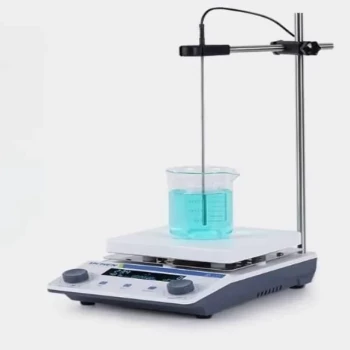
- Laboratory Small Constant Temperature Heated Magnetic Stirrer Heater and Stirrer
- Custom PTFE Teflon Parts Manufacturer for Magnetic Stirring Bar
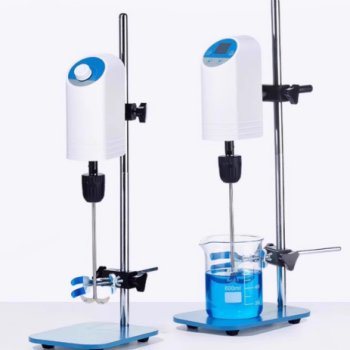
- High Performance Laboratory Stirrers for Diverse Applications
- Custom PTFE Teflon Parts Manufacturer for PTFE Stirring Bar Recovery Rod
- Three-dimensional electromagnetic sieving instrument
People Also Ask
- What role does a magnetic stirrer with heating play in ZnO nanoparticle synthesis? Precision Control for Quality Results
- What role does a constant temperature heating magnetic stirrer play in MFC-HAp synthesis? Achieve Material Homogeneity
- What is the function of a laboratory magnetic stirrer in Ni–Cr–P electrodeposition? Optimize Ion Transport & Coating
- Why is a laboratory magnetic stirrer required for benzoic acid esters? Boost Reaction Speed & Yield with High RPM
- What role does a laboratory magnetic stirrer play in TiO2 and TiO2-Ag sol preparation? Master Chemical Kinetics