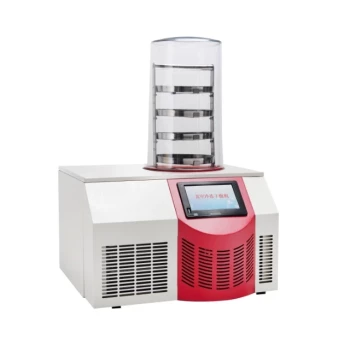
The vacuum drying oven serves as a critical preservation step in the processing of GNPs-Cu/Ti6Al4V mixed powders. Its primary function is to rapidly remove the residual ethanol grinding media used during the ball milling stage, utilizing a low-pressure environment to evaporate the solvent without exposing the highly reactive metal powders to oxidation.
Core Insight: The necessity of vacuum drying lies in the chemical volatility of the materials. Because ball milling drastically increases the surface area of the Titanium alloy and Copper nanocoatings, they become hyper-sensitive to oxygen; the vacuum oven allows for solvent removal at low temperatures, effectively neutralizing the risk of oxidation that would degrade the material's mechanical properties.
The Critical Role of the Vacuum Environment
Preventing Oxidation of Reactive Metals
The most significant threat to GNPs-Cu/Ti6Al4V powder after ball milling is atmospheric oxygen. Titanium alloy (Ti6Al4V) is naturally reactive, and the copper (Cu) coating exists at a nanometer scale, making it even more susceptible to chemical degradation.
Reducing Oxygen Partial Pressure
A standard drying oven would expose these powders to hot air, leading to the immediate formation of oxides (like titanium dioxide or copper oxide). The vacuum drying oven drastically reduces the oxygen partial pressure. This creates an oxygen-starved environment where the powder can be heated without triggering a chemical reaction, ensuring the chemical purity of the composite is maintained.
Mechanism of Low-Temperature Drying
Lowering the Solvent Boiling Point
To remove the ethanol grinding media efficiently, high heat is usually required. However, high temperatures can alter the microstructure of the composite.
The vacuum environment solves this by physically lowering the boiling point of the ethanol. This allows the solvent to evaporate rapidly at a much lower temperature than would be required at standard atmospheric pressure.
Preserving Material Integrity
By facilitating evaporation at lower temperatures, the process avoids thermal stress on the material. This ensures that the delicate nanocoating of copper on the graphene/titanium matrix remains intact and that the powder does not suffer from thermally induced agglomeration or degradation before the sintering phase.
Understanding the Trade-offs
The Risk of Incomplete Drying
While vacuum drying is effective, it requires precise process control. If the drying cycle is too short or the vacuum pressure is not sufficiently low, residual ethanol may remain trapped within the powder bed.
Consequences for Sintering
Any remaining solvent becomes a contaminant during the subsequent high-temperature sintering process. This can lead to porosity, cracking, or weak bonding between the Copper and Titanium matrix, ultimately causing the final component to fail under stress. Therefore, "deep drying" is non-negotiable.
Making the Right Choice for Your Goal
When optimizing your powder metallurgy process, consider the following priorities:
- If your primary focus is Chemical Purity: Ensure your vacuum system maintains a consistent low pressure to minimize oxygen partial pressure, preventing the formation of brittle oxide layers on the Titanium particles.
- If your primary focus is Microstructural Integrity: Utilize the lowest possible temperature setting that still achieves ethanol evaporation, preventing thermal alteration of the nanometer-scale Copper coatings.
Summary: The vacuum drying oven acts as a safeguard, utilizing low-pressure physics to remove solvents cleanly while shielding the chemically vulnerable powder from the destructive effects of heat and oxygen.
Summary Table:
| Feature | Role in GNPs-Cu/Ti6Al4V Processing | Benefit |
|---|---|---|
| Vacuum Environment | Reduces oxygen partial pressure | Prevents oxidation of Ti and Cu nanocoatings |
| Low-Temp Boiling | Lowers the boiling point of ethanol | Rapid solvent removal without thermal degradation |
| Microstructure Care | Avoids high-heat exposure | Preserves delicate copper coatings and matrix integrity |
| Chemical Purity | Eliminates residual contaminants | Prevents porosity and cracking during sintering |
Optimize Your Powder Metallurgy with KINTEK Precision
Ensure the integrity of your advanced materials with KINTEK’s high-performance laboratory solutions. From vacuum drying ovens that prevent oxidation in reactive metal powders to high-temperature furnaces, planetary ball mills, and hydraulic presses, we provide the specialized tools necessary for superior composite manufacturing.
Whether you are working on GNPs-Cu/Ti6Al4V composites or advanced battery research, our expert-grade equipment—including vacuum, CVD, and induction melting furnaces—is designed to meet the rigorous demands of your lab.
Ready to elevate your material properties? Contact our technical experts today to find the perfect equipment for your research!
Related Products
- 56L Vertical Laboratory Vacuum Drying Oven
- 23L Laboratory Vacuum Drying Oven
- Laboratory Scientific Electric Heating Blast Drying Oven
- Benchtop Laboratory Vacuum Freeze Dryer
- Dental Porcelain Zirconia Sintering Ceramic Vacuum Press Furnace
People Also Ask
- Why is a laboratory vacuum drying oven recommended for rice straw residues? Protect Your Biomass Integrity
- What role does a laboratory vacuum drying oven play in the preparation of modified multi-walled carbon nanotubes?
- What is the importance of using a laboratory vacuum drying oven? Preserving Slow-Release Microcapsule Integrity
- Why is a Laboratory Vacuum Drying Oven recommended for PBAT microspheres? Protect Sensitive Polymer Integrity
- What role does a laboratory vacuum drying oven play in processing nanoparticle powder samples? Protect Sample Integrity