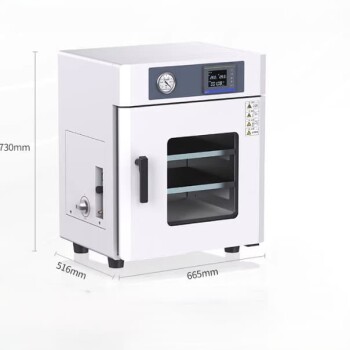
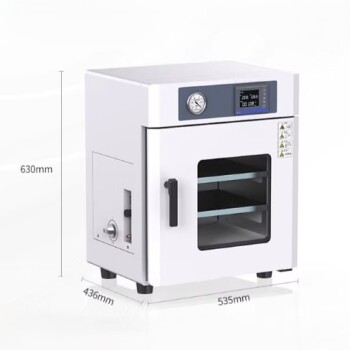
A vacuum oven is an absolute requirement for processing Lithium Iron Phosphate (LFP) cathode sheets because it ensures the complete removal of moisture and residual organic solvents. By subjecting the coated electrodes to heat (typically 100°C) within a vacuum environment, manufacturers eliminate impurities that would otherwise trigger destructive side reactions and degrade the battery's electrochemical performance.
Core Takeaway Lithium-ion chemistries are chemically intolerant to water and organic solvents. A vacuum oven serves as a critical purification step, utilizing low pressure to vaporize these contaminants efficiently while simultaneously protecting the electrode material from oxidation during the heating process.
The Critical Role of Impurity Removal
Eliminating Residual Moisture
Water is the primary enemy of battery longevity. Even trace amounts of moisture left in the cathode sheet can react with the electrolyte once the battery is assembled.
The vacuum oven ensures these microscopic traces of water are fully evaporated. Removing moisture prevents the formation of hydrofluoric acid (HF) and other byproducts that corrode internal components and degrade electrochemical performance.
Extracting Organic Solvents
During the initial coating process, organic solvents like N-Methyl-2-pyrrolidone (NMP) are used to create the electrode slurry. These solvents must be completely removed before assembly.
The vacuum oven effectively draws out these residual solvents. Failure to remove them can lead to electrolyte decomposition, significantly reducing the battery's lifespan.
Why Vacuum is Superior to Standard Heating
Accelerated Evaporation via Lower Boiling Points
A standard oven relies solely on temperature to dry materials, which can be inefficient or damaging. A vacuum environment significantly lowers the boiling point of both water and solvents.
This allows for rapid, thorough evaporation at moderate temperatures (such as 100°C to 120°C). It ensures deep drying of the porous electrode structure without requiring excessive heat that might damage the binder or active materials.
Preventing Material Oxidation
Heating LFP cathode sheets in the presence of air can lead to the oxidation of the electrode materials or the current collector (copper/aluminum foil).
By removing the air, the vacuum oven creates an inert environment. This protects the chemical integrity of the LFP material during the extended heating duration, ensuring the cathode retains its capacity and conductivity.
Understanding the Trade-offs
The Necessity of Extended Duration
This is not a rapid process. To ensure safety and performance, the drying phase often requires an extended duration, sometimes lasting up to 24 hours.
Attempts to rush this stage often result in "surface drying," where moisture remains trapped deep within the electrode coating. This hidden moisture will eventually migrate out, causing delayed failure mechanisms in the assembled battery.
Equipment and Energy Cost
Vacuum drying adds complexity and energy consumption to the manufacturing line compared to simple air drying.
However, the "cost" of skipping this step is far higher: it results in batteries with poor cycle stability and potential safety hazards, such as swelling or thermal instability.
Making the Right Choice for Your Goal
Whether you are producing standard Li-ion cells or advanced solid-state batteries, the drying protocol is a determinant of quality.
- If your primary focus is Cycle Stability: Prioritize extended drying times to ensure zero residual NMP, as solvent contamination directly accelerates electrolyte decomposition.
- If your primary focus is Material Purity: Rely on the vacuum environment to prevent oxidation, ensuring the active lithium iron phosphate structure remains unaltered during heating.
- If your primary focus is Safety: View moisture removal as non-negotiable; incomplete drying is a leading cause of internal pressure buildup and cell failure.
The vacuum oven is not merely a dryer; it is a specialized tool that stabilizes the cathode chemistry to guarantee a safe, high-performance battery.
Summary Table:
| Feature | Impact on LFP Cathode Processing | Why Vacuum is Essential |
|---|---|---|
| Moisture Removal | Prevents HF formation and internal corrosion | Lowers boiling point for complete deep-pore drying |
| Solvent Extraction | Eliminates residual NMP to prevent electrolyte decay | Ensures thorough removal without damaging binders |
| Oxidation Control | Preserves chemical integrity of LFP and foils | Creates an oxygen-free environment during heating |
| Thermal Efficiency | Avoids material degradation from excessive heat | Allows rapid evaporation at moderate temperatures (100-120°C) |
Elevate Your Battery Research with KINTEK Precision
Don't let residual moisture or oxidation compromise your battery's cycle stability and safety. KINTEK specializes in advanced laboratory solutions designed for the rigorous demands of energy storage research. From high-performance vacuum ovens and atmosphere furnaces to specialized battery research tools and consumables, we provide the equipment necessary to ensure the purity and performance of your LFP cathode sheets.
Whether you need precision crushing and milling systems for material preparation or high-temperature high-pressure reactors for advanced synthesis, our team is ready to help you optimize your workflow.
Ready to achieve superior electrochemical performance? Contact KINTEK today for a consultation and custom quote!
Related Products
- 56L Vertical Laboratory Vacuum Drying Oven
- 23L Laboratory Vacuum Drying Oven
- Dental Porcelain Zirconia Sintering Ceramic Vacuum Press Furnace
- Vacuum Heat Treat Sintering Brazing Furnace
- Ultra-High Temperature Graphite Vacuum Graphitization Furnace
People Also Ask
- Why is a laboratory vacuum drying oven recommended for rice straw residues? Protect Your Biomass Integrity
- What role does a laboratory vacuum drying oven play in the preparation of modified multi-walled carbon nanotubes?
- What is the importance of using a laboratory vacuum drying oven? Preserving Slow-Release Microcapsule Integrity
- Why is a Laboratory Vacuum Drying Oven recommended for PBAT microspheres? Protect Sensitive Polymer Integrity
- What role does a laboratory vacuum drying oven play in processing nanoparticle powder samples? Protect Sample Integrity