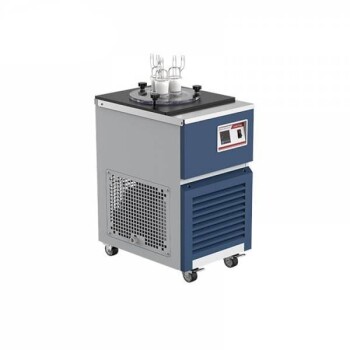
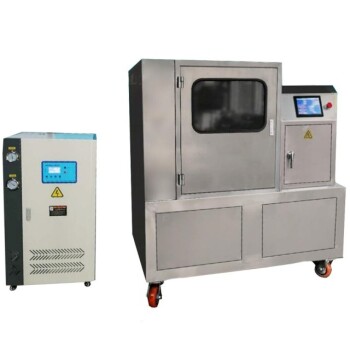
A water-cooled jacketed condenser serves as a critical barrier for thermal protection and chemical containment. Located at the exit of a high-temperature reactor, its primary function is to rapidly lower the temperature of escaping fluids and vapors, specifically acidic geothermal byproducts, before they interact with the rest of the facility.
By forcing a rapid phase change from gas to liquid, this component safeguards sensitive downstream equipment from thermal shock and ensures hazardous fumes are captured for safe neutralization rather than released into the laboratory.
Protecting Downstream Infrastructure
Preventing Thermal Damage
High-temperature reactors expel fluids and gases at temperatures that far exceed the operating limits of standard monitoring hardware.
Pressure monitoring and regulation equipment located downstream are particularly vulnerable to these thermal extremes. Without immediate cooling, the intense heat exiting the reactor would cause catastrophic failure or permanent calibration drift in these sensitive instruments.
Rapid Energy Dissipation
The jacketed design allows for efficient heat transfer between the hot reactor effluent and the cooling water.
This facilitates a rapid temperature drop, instantly bringing fluids down to a manageable state. This thermal break is the defining boundary between the high-energy reaction zone and the safe, controlled monitoring zone.
Ensuring Laboratory and Environmental Safety
Condensing Corrosive Gases
In geothermal and acidic applications, the reactor output often contains volatile, corrosive gases.
If left in a gaseous state, these acidic vapors can permeate the laboratory environment or corrode ventilation systems. The condenser forces these gases to undergo a phase change, converting them into a liquid state that is significantly easier to contain and transport.
Enabling Safe Neutralization
Once the corrosive vapors are condensed into a liquid, they can be directed into a designated waste tank.
This process allows for the controlled collection and neutralization of acidic byproducts. By trapping the hazardous chemicals in liquid form, the system prevents the release of toxic fumes, ensuring the safety of laboratory personnel during waste handling.
Operational Trade-offs
Dependency on Coolant Flow
The system's safety is entirely dependent on the continuous flow of the cooling medium (water).
A failure in the water supply or a blockage in the jacket instantly removes the thermal protection. This can lead to a rapid temperature spike downstream, potentially damaging the very pressure regulators the system was designed to protect.
Material Compatibility Requirements
While the condenser protects downstream equipment, it is subjected to the harshest conditions itself.
Because it handles hot, concentrated acids, the condenser's internal surfaces must be constructed from highly resistant materials. Using standard materials here will lead to rapid corrosion and leaks, compromising the containment of the system.
Designing for Safety and Reliability
If your primary focus is Equipment Protection: Ensure your cooling capacity is overrated for the maximum possible reactor temperature to prevent thermal bleed-through to pressure sensors.
If your primary focus is Personnel Safety: Verify that the condenser outlet is hard-piped directly to a neutralization vessel to prevent any open-air exposure to acidic condensates.
A properly implemented jacketed condenser effectively decouples the high-energy physics of the reactor from the delicate logistics of waste management and data collection.
Summary Table:
| Feature | Primary Function | Benefit to Laboratory |
|---|---|---|
| Thermal Protection | Rapid heat dissipation from reactor effluent | Prevents calibration drift and failure of pressure sensors |
| Phase Change | Converts corrosive vapors into liquid state | Ensures hazardous fumes are contained rather than released |
| Chemical Safety | Controlled collection of acidic byproducts | Enables safe neutralization and protects personnel |
| System Boundary | Decouples high-energy zones from monitoring zones | Stabilizes downstream monitoring and waste management |
Maximize Your Lab Safety with KINTEK Precision Engineering
High-temperature research demands uncompromising equipment reliability. At KINTEK, we specialize in high-performance high-temperature high-pressure reactors and autoclaves designed to withstand the most corrosive environments. Our integrated cooling solutions, including advanced jacketed condensers, ensure your sensitive monitoring hardware remains protected and your laboratory environment stays safe from hazardous vapors.
Whether you need robust pressure monitoring systems, acid-resistant reactors, or specialized cooling solutions, KINTEK provides the comprehensive portfolio—from PTFE-lined vessels to ULT freezers—to support your most critical breakthroughs.
Ready to upgrade your reactor safety? Contact our technical experts today to find the perfect configuration for your specific application.
References
- Andri Ísak Þórhallsson, Sigrún N. Karlsdóttir. Corrosion Behaviour of Titanium Alloy and Carbon Steel in a High-Temperature, Single and Mixed-Phase, Simulated Geothermal Environment Containing H2S, CO2 and HCl. DOI: 10.3390/cmd2020011
This article is also based on technical information from Kintek Solution Knowledge Base .
Related Products
- Double-Layer Water Bath Electrolytic Electrochemical Cell
- Vacuum Cold Trap Chiller Indirect Cold Trap Chiller
- Low-Temperature Water-Cooled Touchscreen Vibratory Ultrafine Pulverizer
People Also Ask
- What does the routine maintenance of a double-layer water-bath electrolytic cell involve? A Guide to Ensuring Precision and Longevity
- What is the typical experimental system used with a double-layer water-bath electrolytic cell? Achieve Precise Electrochemical Control
- What are the procedures for after using a double-layer water-bath electrolytic cell? Ensure Equipment Longevity and Data Accuracy
- When is professional repair required for a double-layer water-bath electrolytic cell? Protect Your Lab's Precision and Safety
- What are the key features of a double-layer water-bath electrolytic cell? Achieve Precise Temperature Control for Your Experiments