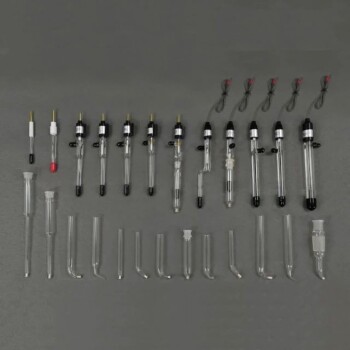
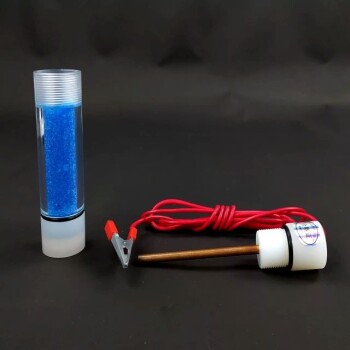
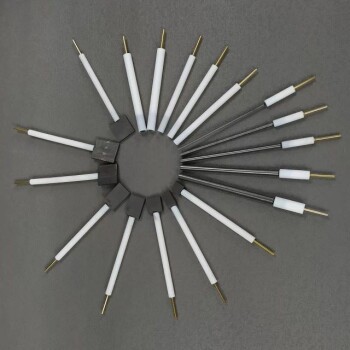
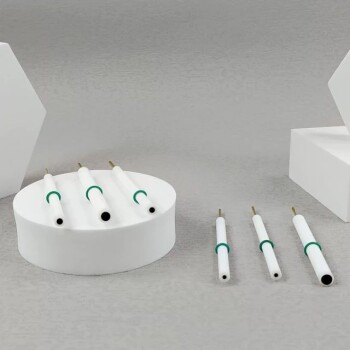
The Silver/Silver Chloride (Ag/AgCl) electrode is preferred for determining the corrosion potential of stainless steel in acidic systems because it acts as a highly stable, non-polarizable reference point. By maintaining a constant potential even in aggressive environments like nitric acid, it ensures that accurate polarization curves can be generated without baseline drift.
In corrosion analysis, the integrity of your data relies on a fixed baseline. The Ag/AgCl electrode provides this stability, allowing engineers to attribute voltage shifts solely to electrochemical reactions on the stainless steel surface rather than sensor error.
The Critical Role of Electrode Stability
Non-Polarizable Performance
To accurately measure corrosion, your reference tool must remain unaffected by the testing environment. The Ag/AgCl electrode is non-polarizable, meaning its potential remains fixed and does not fluctuate during the measurement process.
Consistency in Acidic Media
Stainless steel is often tested in harsh environments, such as nitric acid systems. The Ag/AgCl electrode is chemically robust in these conditions, providing a constant reference potential that serves as a reliable zero-point for all subsequent measurements.
Analyzing Corrosion Mechanisms
Establishing Clear Polarization Curves
To understand how stainless steel corrodes, engineers plot polarization curves. The stability of the Ag/AgCl electrode ensures these curves have a clear potential reference, preventing data skewing that could lead to false conclusions about the material's lifespan.
Detecting the Impact of Inhibitors
When studying corrosion prevention, researchers often add ligands (inhibitors) to the system. You must observe if the corrosion potential shifts upon this addition. A stable Ag/AgCl reference allows you to precisely detect these shifts.
Identifying Reaction Types
By accurately tracking the direction of the potential shift, you can determine the mechanism of the inhibitor. The data reveals whether the ligand is affecting the anodic (dissolution) or cathodic (reduction) reaction, a distinction that is impossible to make without a stable reference.
The Pitfalls of Reference Instability
The Risk of Signal Drift
If a less stable electrode were used in a nitric acid system, the reference potential might drift over time. This drift would be indistinguishable from actual changes in the stainless steel's corrosion potential.
Misinterpretation of Ligand Effects
In corrosion inhibition studies, the potential shifts are often subtle. Without the "anchor" provided by the Ag/AgCl electrode, a researcher might miss a shift entirely or misidentify which reaction pathway the inhibitor is blocking.
Applying This to Your Analysis
To ensure the validity of your corrosion data in acidic environments, use the Ag/AgCl electrode to facilitate specific analytical goals:
- If your primary focus is baseline accuracy: Rely on the Ag/AgCl electrode to provide a constant potential in nitric acid, eliminating sensor drift as a variable.
- If your primary focus is mechanism identification: Use the stable reference to track potential shifts after adding ligands, confirming if the inhibitor targets anodic or cathodic sites.
The Ag/AgCl electrode transforms raw voltage data into actionable insight regarding the electrochemical behavior of stainless steel.
Summary Table:
| Feature | Ag/AgCl Reference Electrode Advantage |
|---|---|
| Polarization | Non-polarizable; maintains a fixed potential during measurements. |
| Chemical Stability | Robust in harsh acidic environments like nitric acid. |
| Data Integrity | Eliminates baseline drift for accurate polarization curves. |
| Analytical Precision | Enables clear detection of anodic vs. cathodic reaction shifts. |
Precision Corrosion Analysis with KINTEK
Ensure the integrity of your electrochemical data with high-performance laboratory solutions. KINTEK specializes in advanced electrolytic cells and electrodes, providing the stable reference points essential for accurate corrosion testing and battery research. Whether you are analyzing stainless steel in acidic media or developing next-generation energy storage, our comprehensive portfolio—including high-temperature furnaces, hydraulic presses, and precision cooling systems—is designed to meet the rigorous demands of your lab.
Ready to eliminate signal drift and achieve actionable insights? Contact our experts today to find the perfect equipment for your research.
References
- Richard J. Wilbraham, Colin Boxall. The effect of SO<sub>3</sub>-Ph-BTBP on stainless steel corrosion in nitric acid. DOI: 10.1515/nuka-2015-0117
This article is also based on technical information from Kintek Solution Knowledge Base .
Related Products
- Reference Electrode Calomel Silver Chloride Mercury Sulfate for Laboratory Use
- Electrolytic Electrochemical Cell Gas Diffusion Liquid Flow Reaction Cell
- Copper Sulfate Reference Electrode for Laboratory Use
- Graphite Disc Rod and Sheet Electrode Electrochemical Graphite Electrode
- Glassy Carbon Electrochemical Electrode
People Also Ask
- What is the function of a reference electrode? Master Precision in Three-Electrode Reactor Reconstruction
- What is the recommended maintenance for the filling solution of a reference electrode? A Guide to Stable & Accurate Readings
- Which electrode is used as a ground reference? Master the Key to Accurate Electrochemical Measurements
- What is the reference electrode in potentiometry? The Key to Stable & Accurate Measurements
- Which electrode is used as a reference? A Guide to Accurate Electrochemical Measurements