Knowledge Why is an ultrasonic dispersion or homogenizer essential for photocatalytic solutions? Enhance Catalyst Efficiency
Author avatar

Tech Team · Kintek Solution

Updated 10 hours ago

Why is an ultrasonic dispersion or homogenizer essential for photocatalytic solutions? Enhance Catalyst Efficiency


Ultrasonic dispersion is the fundamental requirement for achieving a high-quality photocatalytic composite. By generating powerful shock waves and micro-jets through cavitation, these devices break up stubborn agglomerates of nanoparticles—such as titanium dioxide—that simple mechanical stirring cannot resolve. This process ensures inorganic particles reach a stable, colloidal-level dispersion within the polymer solution.

The difference between a functional photocatalytic material and a failed one often lies in dispersion quality. Ultrasonic homogenization overcomes the natural molecular forces that cause particles to clump, ensuring the final material possesses uniform mechanical strength and maximized active surface area.

The Mechanism of Dispersion

Overcoming Inter-particle Forces

Nanoparticles naturally tend to cluster together due to strong attractive interactions known as Van der Waals forces. Simple mixing is rarely sufficient to pull these clusters apart.

The Role of Cavitation

Ultrasonic homogenizers utilize high-frequency mechanical vibrations to create cavitation—the rapid formation and collapse of microscopic bubbles.

When these bubbles collapse, they generate intense shock waves and micro-jets. This energy provides the high shear force necessary to physically shatter agglomerates and distribute the particles at a molecular level.

Why Dispersion Defines Material Quality

Ensuring Structural Integrity

If nanoparticles remain clumped, they act as stress concentrators in the final material.

Effective ultrasonic dispersion eliminates these weak points, preventing the formation of micro-cracks during processes like electrospinning or casting. This results in a membrane structure with consistent porosity and superior mechanical strength.

Maximizing Photocatalytic Activity

For a photocatalytic composite to work, the "active sites" on the nanoparticles must be exposed to light and reactants.

Agglomerated particles hide these active sites inside the clump, rendering them useless. By achieving a uniform dispersion, you ensure that active sites are evenly distributed throughout the material, significantly boosting chemical efficiency.

Operational Trade-offs and Best Practices

Managing Heat Generation

A major side effect of high-intensity ultrasonic energy is the rapid generation of heat, which can degrade sensitive polymers or destabilize the solution.

To mitigate this, it is critical to use a pulsed vibration mode (e.g., 2 seconds of vibration followed by a 2-second interval). This allows for efficient dispersion without causing a significant spike in solution temperature.

Achieving Long-term Stability

Proper homogenization does more than just mix; it stabilizes.

By effectively separating particles, the process prevents them from re-agglomerating over time. This leads to a stable suspension that remains uniform during the storage and film-forming stages.

Making the Right Choice for Your Goal

Whether you are developing a filtration membrane or a surface coating, the quality of your dispersion dictates your success.

  • If your primary focus is Mechanical Durability: Prioritize ultrasonic dispersion to eliminate particle clumps that cause micro-cracks and structural failure in the final solid.
  • If your primary focus is Chemical Performance: Use homogenization to maximize surface area, ensuring that every nanogram of your catalyst contributes to the reaction.

True material performance is achieved only when the internal structure is uniform at the microscopic level.

Summary Table:

Feature Mechanical Stirring Ultrasonic Homogenization
Mechanism Simple physical mixing Acoustic cavitation & shear forces
Particle Size Often leaves large clusters/agglomerates Achieves stable, colloidal-level dispersion
Active Surface Area Low (sites hidden in clumps) High (maximized exposure of active sites)
Material Strength Prone to micro-cracks at stress points Uniform structure with superior durability
Stability Particles settle or re-agglomerate quickly Long-term stable suspension

Elevate Your Photocatalytic Research with KINTEK

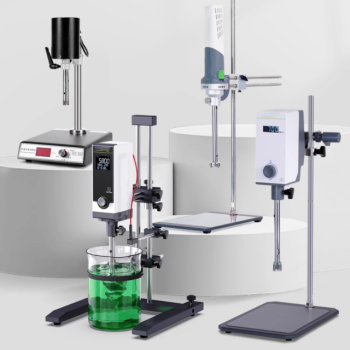
Don't let poor dispersion compromise your material's performance. KINTEK specializes in high-precision laboratory equipment, including advanced homogenizers, shakers, and ultrasonic systems designed to overcome Van der Waals forces and achieve true molecular-level uniformity. Whether you are developing filtration membranes or high-efficiency catalysts, our solutions ensure your nanoparticles are perfectly distributed for maximum chemical activity and mechanical integrity.

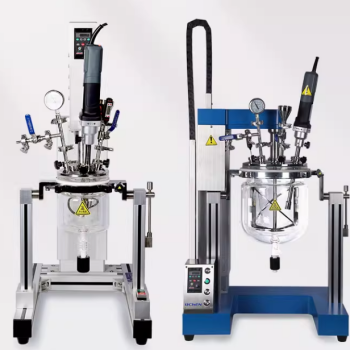
From high-temperature furnaces and reactors to specialized battery research tools and cooling solutions, KINTEK provides the comprehensive support your lab needs to innovate with confidence. Contact KINTEK today to optimize your dispersion process!

References

  1. Nina Maria Ainali, Dimitra A. Lambropoulou. Insights into Biodegradable Polymer-Supported Titanium Dioxide Photocatalysts for Environmental Remediation. DOI: 10.3390/macromol1030015

This article is also based on technical information from Kintek Solution Knowledge Base .

Related Products

People Also Ask

Related Products

Laboratory Test Sieves and Sieving Machines

Laboratory Test Sieves and Sieving Machines

Precision lab test sieves & sieving machines for accurate particle analysis. Stainless steel, ISO-compliant, 20μm-125mm range. Request specs now!

Laboratory Test Sieves and Vibratory Sieve Shaker Machine

Laboratory Test Sieves and Vibratory Sieve Shaker Machine

Efficiently process powders, granules, and small blocks with a high-frequency vibration sieve. Control vibration frequency, screen continuously or intermittently, and achieve accurate particle size determination, separation, and classification.

Small Lab Rubber Calendering Machine

Small Lab Rubber Calendering Machine

Small lab rubber calendering machine is used for producing thin, continuous sheets of plastic or rubber materials. It is commonly employed in laboratories, small-scale production facilities, and prototyping environments to create films, coatings, and laminates with precise thickness and surface finish.

Laboratory Vibratory Sieve Shaker Machine Slap Vibrating Sieve

Laboratory Vibratory Sieve Shaker Machine Slap Vibrating Sieve

KT-T200TAP is a slapping and oscillating sieving instrument for laboratory desktop use, with 300 rpm horizontal circular motion and 300 vertical slapping motions to simulate manual sieving to help sample particles pass through better.

Single Punch Electric Tablet Press Machine Laboratory Powder Tablet Punching TDP Tablet Press

Single Punch Electric Tablet Press Machine Laboratory Powder Tablet Punching TDP Tablet Press

The single-punch electric tablet press is a laboratory-scale tablet press suitable for corporate laboratories in pharmaceutical, chemical, food, metallurgical and other industries.

Laboratory Vibratory Sieve Shaker Machine for Dry and Wet Three-Dimensional Sieving

Laboratory Vibratory Sieve Shaker Machine for Dry and Wet Three-Dimensional Sieving

KT-VD200 can be used for sieving tasks of dry and wet samples in the laboratory. The screening quality is 20g-3kg. The product is designed with a unique mechanical structure and an electromagnetic vibrating body with a vibration frequency of 3000 times per minute.

Lab Blown Film Extrusion Three Layer Co-Extrusion Film Blowing Machine

Lab Blown Film Extrusion Three Layer Co-Extrusion Film Blowing Machine

Lab blown film extrusion is mainly used to detect the feasibility of film blowing of polymer materials and the colloid condition in the materials, as well as the dispersion of colored dispersions, controlled mixtures, and extrudates;

Rubber Vulcanizer Vulcanizing Machine Plate Vulcanizing Press for Lab

Rubber Vulcanizer Vulcanizing Machine Plate Vulcanizing Press for Lab

The Plate vulcanizing press is a kind of equipment used in the production of rubber products, mainly used for the vulcanization of rubber products. Vulcanization is a key step in rubber processing.

Single Punch Electric Tablet Press Machine TDP Tablet Punching Machine

Single Punch Electric Tablet Press Machine TDP Tablet Punching Machine

The electric tablet punching machine is a laboratory equipment designed for pressing various granular and powdery raw materials into discs and other geometric shapes. It is commonly used in pharmaceutical, healthcare products, food, and other industries for small batch production and processing. The machine is compact, lightweight, and easy to operate, making it suitable for use in clinics, schools, laboratories, and research units.

Electric Split Lab Cold Isostatic Press CIP Machine for Cold Isostatic Pressing

Electric Split Lab Cold Isostatic Press CIP Machine for Cold Isostatic Pressing

Split cold isostatic presses are capable of providing higher pressures, making them suitable for testing applications that require high pressure levels.

High Performance Laboratory Freeze Dryer for Research and Development

High Performance Laboratory Freeze Dryer for Research and Development

Advanced laboratory freeze dryer for lyophilization, preserving sensitive samples with precision. Ideal for biopharmaceuticals, research & food industries.

Automatic Lab Cold Isostatic Press CIP Machine Cold Isostatic Pressing

Automatic Lab Cold Isostatic Press CIP Machine Cold Isostatic Pressing

Efficiently prepare samples with our Automatic Lab Cold Isostatic Press. Widely used in material research, pharmacy, and electronic industries. Provides greater flexibility and control compared to electric CIPs.

Vibratory Sieve Shaker Machine Dry Three-Dimensional Vibrating Sieve

Vibratory Sieve Shaker Machine Dry Three-Dimensional Vibrating Sieve

The KT-V200 product focuses on solving common sieving tasks in the laboratory. It is suitable for sieving 20g-3kg dry samples.

Lab Internal Rubber Mixer Rubber Kneader Machine for Mixing and Kneading

Lab Internal Rubber Mixer Rubber Kneader Machine for Mixing and Kneading

Lab internal rubber mixer is suitable for mixing, kneading and dispersing various chemical raw materials such as plastics, rubber, synthetic rubber, hot melt adhesive and various low-viscosity materials.

Small Injection Molding Machine for Lab Use

Small Injection Molding Machine for Lab Use

The small injection molding machinehas fast and stable movements; good controllability and repeatability, super energy saving; the product can be automatically dropped and formed; the machine body is low, convenient for feeding, easy to maintain, and no height restrictions on the installation site.

Automatic Laboratory Hydraulic Pellet Press Machine for Lab Use

Automatic Laboratory Hydraulic Pellet Press Machine for Lab Use

Experience efficient sample preparation with our Automatic Lab Press Machine. Ideal for material research, pharmacy, ceramics, and more. Features a compact size and hydraulic press functionality with heating plates. Available in various sizes.

Automatic Heated Hydraulic Press Machine with Heated Plates for Laboratory Hot Press 25T 30T 50T

Automatic Heated Hydraulic Press Machine with Heated Plates for Laboratory Hot Press 25T 30T 50T

Efficiently prepare your samples with our Automatic Heated Lab Press. With a pressure range up to 50T and precise control, it's perfect for various industries.

Heated Hydraulic Press Machine with Integrated Manual Heated Plates for Lab Use

Heated Hydraulic Press Machine with Integrated Manual Heated Plates for Lab Use

Efficiently process heat-pressing samples with our Integrated Manual Heated Lab Press. With a heating range up to 500°C, it's perfect for various industries.

Chemical Vapor Deposition CVD Equipment System Chamber Slide PECVD Tube Furnace with Liquid Gasifier PECVD Machine

Chemical Vapor Deposition CVD Equipment System Chamber Slide PECVD Tube Furnace with Liquid Gasifier PECVD Machine

KT-PE12 Slide PECVD System: Wide power range, programmable temp control, fast heating/cooling with sliding system, MFC mass flow control & vacuum pump.

Single Punch Tablet Press Machine and Mass Production Rotary Tablet Punching Machine for TDP

Single Punch Tablet Press Machine and Mass Production Rotary Tablet Punching Machine for TDP

Rotary tablet punching machine is an automatic rotating and continuous tableting machine. It is mainly used for tablet manufacturing in the pharmaceutical industry, and is also suitable for industrial sectors such as food, chemicals, batteries, electronics, ceramics, etc. to compress granular raw materials into tablets.


Leave Your Message