High chemical stability is required to prevent the structural degradation of the electrode support in harsh acidic or alkaline environments. During long-term galvanostatic experiments, the support material must resist electrochemical corrosion to ensure that catalyst particles remain attached and active, preventing performance loss over time.
Core Takeaway In aggressive electrolytes like 1M H2SO4, chemical inertness is the primary factor determining the lifespan of an electrode. Carbon foam is the preferred support because it pairs high electrical conductivity with the stability necessary to prevent catalyst detachment, ensuring reliability for commercial-scale operations.
The Challenge of the Electrolytic Environment
The Vulnerability of Metal Supports
Standard metal supports face significant challenges when exposed to harsh environments, such as 1M H2SO4 (sulfuric acid) or alkaline solutions.
Under the stress of continuous operation, these metals are prone to electrochemical corrosion. This degradation compromises the physical integrity of the electrode structure.
The Mechanism of Failure
When the support material corrodes, it loses its ability to anchor the catalyst effectively.
This leads to the detachment or deactivation of catalyst particles. Once the catalyst separates from the support, the electrode's efficiency drops rapidly, rendering the system inviable for sustained hydrogen production.
Why Carbon Foam is the Solution
Combining Conductivity with Inertness
Carbon foam is identified as an ideal support material because it offers a unique duality of properties.
It provides the high electrical conductivity required for efficient electron transfer during electrolysis. Simultaneously, it possesses exceptional chemical inertness, allowing it to resist corrosion that would destroy metal alternatives.
Ensuring Long-Term Durability
Stability is not just a safety margin; it is a requirement for proving commercial viability.
For experiments designed to simulate real-world usage—such as cycles exceeding 60 hours—the support must maintain its structure. Carbon foam provides the stability necessary for the long-life operation of commercial water electrolyzers.
Common Pitfalls to Avoid
Overlooking Environmental Compatibility
A common error in electrolyzer design is selecting a support based solely on conductivity or cost, without accounting for the chemical aggressiveness of the electrolyte.
If a material lacks high chemical stability, it will fail during long-term galvanostatic operations. Even a highly conductive metal support is useless if it corrodes and releases the catalyst into the solution.
Making the Right Choice for Your Goal
To ensure the success of your water electrolysis experiments, you must align your support material with your longevity requirements.
- If your primary focus is commercial viability and longevity: Utilize carbon foam to leverage its chemical inertness, ensuring catalyst retention over operational cycles exceeding 60 hours.
- If your primary focus is avoiding rapid degradation: Avoid common metal supports in acidic environments like 1M H2SO4, as they are susceptible to electrochemical corrosion that leads to deactivation.
Ultimately, the chemical stability of the support is the foundational requirement for transitioning from short-term experiments to reliable, long-life electrolysis technologies.
Summary Table:
| Feature | Requirement in Electrolysis | Benefit of Carbon Foam Support |
|---|---|---|
| Corrosion Resistance | High stability in 1M H2SO4/alkaline | Prevents structural degradation and failure |
| Catalyst Anchoring | Must prevent detachment during 60h+ cycles | Maintains active surface area and performance |
| Electrical Conductivity | High electron transfer efficiency | Ensures low-resistance water splitting |
| Operational Life | Long-term galvanostatic stability | Enables transition to commercial-scale viability |
Upgrade Your Electrolysis Performance with KINTEK
Don't let electrochemical corrosion compromise your research. KINTEK specializes in providing high-performance laboratory equipment and specialized components designed for the most demanding environments. Whether you are conducting long-term water electrolysis or high-pressure research, our expertise in electrolytic cells, electrodes, and high-temperature high-pressure reactors ensures your systems achieve maximum stability and longevity.
Our value to you:
- Expert Material Selection: Access carbon-based supports and electrode materials that resist harsh acidic and alkaline electrolytes.
- Comprehensive Solutions: From battery research tools to high-temperature furnaces, we provide the infrastructure for next-generation energy research.
- Commercial Reliability: Our products are engineered to help you transition from bench-top experiments to long-life commercial operations.
Ready to enhance your lab's efficiency? Contact KINTEK today to discuss your project requirements!
References
- Abdulsattar H. Ghanim, Syed Mubeen. Low-Loading of Pt Nanoparticles on 3D Carbon Foam Support for Highly Active and Stable Hydrogen Production. DOI: 10.3389/fchem.2018.00523
This article is also based on technical information from Kintek Solution Knowledge Base .
Related Products
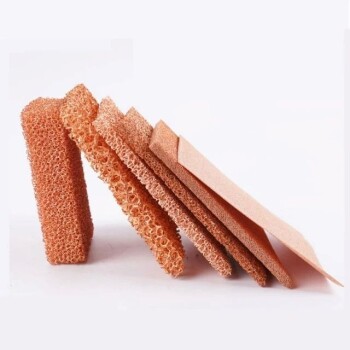
- Copper Foam
- Copper Nickel Foam Metal Sheet
- Conductive Carbon Cloth Carbon Paper Carbon Felt for Electrodes and Batteries
- Nickel Foam for Industrial and Laboratory Applications
- Hydrophilic Carbon Paper TGPH060 for Battery Lab Applications
People Also Ask
- What is copper foam used for? A Guide to Its High-Performance Thermal and Energy Applications
- How do you make copper foam? A Step-by-Step Guide to Creating Porous Metal Structures
- What are the available sizes and thicknesses for copper foam? Optimize Your Thermal and Filtration Performance
- What are the characteristics of copper foam? Unlock High-Performance Thermal and Electrical Solutions
- Is copper foam safe? Discover the facts about its antimicrobial and cooling benefits