High-precision mixing and grinding are essential to achieve the atomic-scale uniformity required for effective fluorine doping. Without this level of processing control, fluorine ions tend to agglomerate, creating defect clusters that physically block the transport channels needed for lithium-ion migration.
While fluorine doping alters the material's properties, the strong binding energy between fluorine ions and lithium vacancies creates a tendency for clustering. High-precision equipment is the only reliable way to prevent these clusters from forming, ensuring the electrolyte maintains high conductivity.
The Mechanics of Fluorine Doping
Achieving Atomic-Scale Dispersion
The primary goal of using high-precision equipment is not merely to mix ingredients, but to ensure uniform dispersion at the atomic scale.
In anti-perovskite materials, the arrangement of atoms within the lattice is critical for performance. Standard mixing methods often fail to separate particles sufficiently, leading to microscopic inconsistencies.
The Binding Energy Challenge
Fluorine doping introduces a specific chemical challenge: the strong binding energy between fluorine ions and lithium vacancies.
Because these ions are strongly attracted to the vacancies, they naturally want to stick together. If they are not physically forced apart and distributed evenly during the grinding process, they will form tight bonds that are difficult to break later.
Consequences of Poor Processing
Formation of Defect Clusters
If the grinding process lacks precision, the fluorine ions will succumb to their natural attraction and cause local agglomeration.
Instead of being spread evenly throughout the material, the dopants clump together. This results in the formation of defect clusters—dense zones of irregularities within the crystal structure.
Blockage of Ion Transport
These defect clusters have a catastrophic effect on the material's primary function.
They act as roadblocks, effectively preventing long-range lithium-ion migration. By clogging the pathways, these clusters reduce the overall conductivity of the material and compromise the efficiency of the electrolyte.
The Hidden Risk: Processing vs. Chemistry
Why Formulation Isn't Enough
It is a common pitfall to assume that getting the chemical stoichiometry correct is sufficient for high performance.
However, in anti-perovskites, the physical distribution of the elements is just as critical as the ratio of ingredients. Even with the perfect chemical formula, low-precision grinding will result in a material that fails to conduct ions effectively due to internal structural blockages.
Optimizing Your Material Synthesis
To ensure your fluorine-doped anti-perovskites perform as intended, match your processing approach to your specific goals:
- If your primary focus is Maximizing Conductivity: Prioritize grinding protocols that guarantee the elimination of agglomerates to keep ion transport channels open.
- If your primary focus is Process Consistency: Implement high-precision equipment to standardize the dispersion of dopants, preventing batch-to-batch variations caused by random clustering.
True material efficiency depends not just on what you mix, but on the precision with which you disperse it.
Summary Table:
| Factor | High-Precision Processing | Standard Mixing Methods |
|---|---|---|
| Dispersion Level | Atomic-scale uniformity | Microscopic inconsistencies |
| Dopant Behavior | Prevents ion clustering | High risk of agglomeration |
| Structural Integrity | Clear ion transport channels | Formation of defect clusters |
| Ionic Conductivity | Optimized and high | Reduced due to blockages |
| Material Performance | Consistent and efficient | Unpredictable and compromised |
Elevate Your Battery Research with KINTEK Precision
Achieving atomic-scale dispersion in anti-perovskite materials requires more than just chemistry—it demands the right technology. KINTEK specializes in high-performance crushing and milling systems and high-temperature furnaces designed to meet the rigorous demands of advanced electrolyte synthesis.
Whether you are refining fluorine doping protocols or developing next-generation solid-state batteries, our comprehensive range of laboratory equipment—from planetary ball mills to vacuum and atmosphere furnaces—ensures your materials achieve maximum conductivity and consistency.
Ready to eliminate defect clusters and optimize your ion transport? Contact KINTEK today to find the perfect precision tools for your laboratory.
Related Products
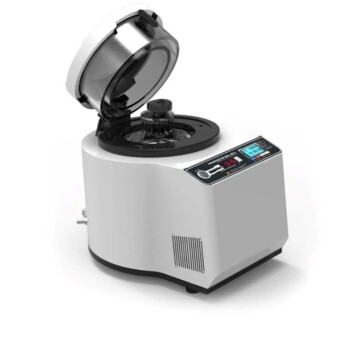
- Laboratory High Throughput Tissue Grinding Mill Grinder
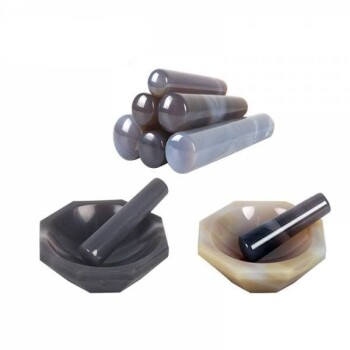
- Nature Agate Mortar and Pestle for Grinding and Mixing
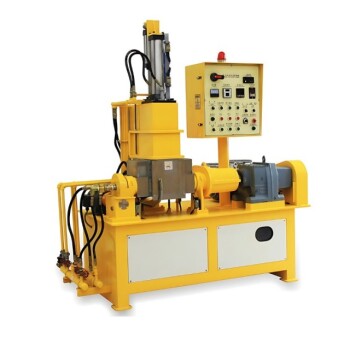
- Lab Internal Rubber Mixer Rubber Kneader Machine for Mixing and Kneading
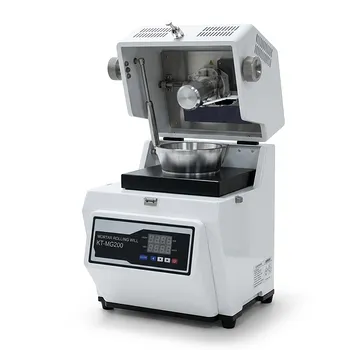
- Laboratory Grinding Mill Mortar Grinder for Sample Preparation
- High Energy Planetary Ball Mill Milling Machine for Laboratory
People Also Ask
- What is the purpose of using a laboratory grinder and standard sieves? Unlock Precise Rice Husk Pretreatment
- What is the purpose of using a laboratory grinder with specific mesh sieves for oat straw? Optimize Pellet Quality
- What is the role of laboratory-grade grinders and sieves in sample prep? Ensure High-Precision Corrosion Analysis
- How do laboratory grinders and standard sieving systems ensure the quality of feedstock for torrefaction?
- What does a grinder do in a laboratory? Achieve Homogeneous Sample Preparation for Accurate Analysis