Precision optical pyrometers are essential in Spark Plasma Sintering (SPS) because the process involves extremely rapid heating rates and complex internal physicochemical reactions that require immediate feedback. These devices provide the non-contact, real-time temperature monitoring necessary to maintain a stable sintering profile, specifically when processing temperatures rise above 570 °C.
Core Takeaway: Spark Plasma Sintering utilizes rapid internal heating to create materials with unique, non-equilibrium properties. A precision optical pyrometer is the only tool capable of accurately tracking these fast thermal changes to prevent over-sintering and ensure critical phase transformations occur precisely when intended.
Mastering the Rapid Heating Environment
The Nature of SPS Heating
Unlike conventional sintering, which heats a chamber externally, SPS passes a pulsed DC current directly through the graphite die and the powder compact.
Internal Heat Generation
This process creates "Joule heat" internally and generates discharge plasma between particles.
The Need for Real-Time Feedback
Because the heating is internal and exceptionally fast, the material does not reach equilibrium states easily. A precision optical pyrometer is required to track these rapid temperature spikes in real-time without the lag associated with contact sensors.
Critical Control Points in Sintering
Managing Complex Reactions
SPS often induces complex physicochemical reactions that define the material's final properties.
Identifying Reaction Onset
The pyrometer allows operators to identify specific reaction thresholds. For example, it is vital for detecting the onset of the reaction between tungsten carbide (WC) and metallic tungsten (W) to form ditungsten carbide (W2C).
Precise High-Temperature Control
Standard thermocouples often fail or degrade at the high temperatures required for advanced ceramics and metals. Optical pyrometers excel in these ranges, providing reliable data particularly above 570 °C.
Preventing Microstructural Degradation
Controlling Maximum Shrinkage
There is a critical window during sintering where the material achieves maximum density.
The 1540 °C Threshold
For specific materials, the maximum shrinkage phase occurs around 1540 °C. Accurate optical monitoring ensures the process is held exactly at this temperature to optimize density.
Avoiding Grain Coarsening
If the temperature overshoots or is held too long (over-sintering), the material's microstructure will degrade through grain coarsening. The pyrometer acts as a safeguard, allowing the system to cut power the moment optimal density is reached.
Understanding the Trade-offs
Line-of-Sight Dependencies
Optical pyrometers are non-contact, meaning they rely on a clear line of sight to the target (usually the graphite die).
Emissivity Variables
The accuracy of the reading depends on the emissivity of the target material. If the die surface changes or the vacuum chamber viewport becomes coated with evaporated material, temperature readings can drift, requiring careful calibration.
Surface vs. Core Temperature
While the pyrometer measures the surface temperature of the die, the core temperature of the sample may differ slightly due to the speed of heating, though the rapid nature of SPS minimizes these gradients compared to conventional methods.
Making the Right Choice for Your Goal
To maximize the effectiveness of your SPS system, align your monitoring strategy with your specific material objectives:
- If your primary focus is Material Research: Prioritize the pyrometer's ability to detect the exact onset of phase transformations (like WC to W2C) to document new material compositions.
- If your primary focus is Structural Integrity: Focus on the pyrometer's control loops around peak temperatures (e.g., 1540 °C) to halt the process immediately after maximum shrinkage, preventing grain growth.
Accurate temperature monitoring in SPS is not just about measuring heat; it is about capturing the precise moment a material achieves its optimal state.
Summary Table:
| Feature | Spark Plasma Sintering (SPS) Requirement | Precision Optical Pyrometer Benefit |
|---|---|---|
| Heating Rate | Extremely rapid (Pulsed DC Current) | Non-contact, real-time tracking with zero lag |
| Temp Range | High-temperature ceramics & metals | Reliable performance especially above 570 °C |
| Phase Control | Detect precise chemical reaction onset | High-sensitivity monitoring of reaction thresholds |
| Microstructure | Prevent grain coarsening/over-sintering | Immediate feedback to halt power at max density |
| Environment | Internal Joule heating | Measures die surface without contact interference |
Elevate Your Material Research with KINTEK Precision
Precise temperature control is the difference between a breakthrough material and a failed experiment. KINTEK specializes in advanced laboratory solutions, including state-of-the-art Spark Plasma Sintering (SPS) systems and high-precision monitoring tools.
Our extensive portfolio—ranging from high-temperature furnaces (vacuum, CVD, dental, induction melting) and hydraulic presses to high-pressure reactors and battery research consumables—is designed to meet the rigorous demands of modern material science.
Ready to optimize your sintering profiles and ensure microstructural integrity?
Contact KINTEK today to discuss your equipment needs
References
- Ahmed-Ameur Zegai, Antonio Javier Sánchez‐Herencia. Microstructural and Mechanical Characterization of Colloidal Processed WC/(W5Vol%Ni) via Spark Plasma Sintering. DOI: 10.3390/ma16134584
This article is also based on technical information from Kintek Solution Knowledge Base .
Related Products
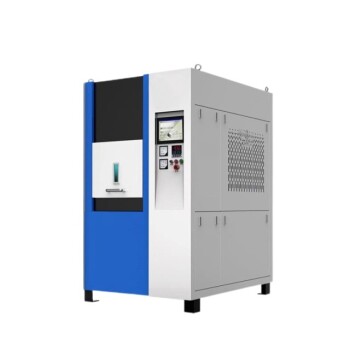
- Spark Plasma Sintering Furnace SPS Furnace
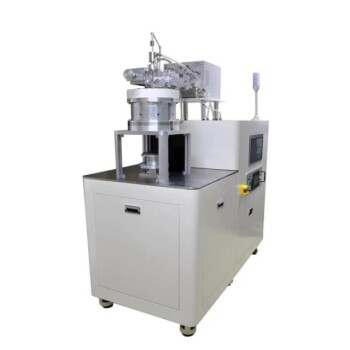
- Vacuum Heat Treat and Pressure Sintering Furnace for High Temperature Applications
- Vacuum Heat Treat and Sintering Furnace with 9MPa Air Pressure
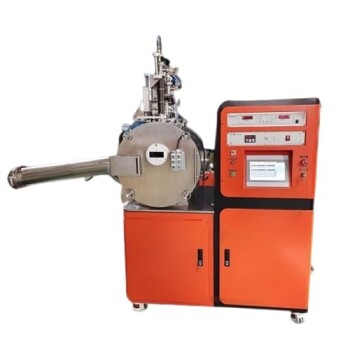
- Small Vacuum Heat Treat and Tungsten Wire Sintering Furnace
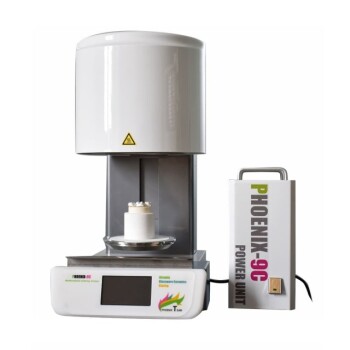
- Vacuum Dental Porcelain Sintering Furnace
People Also Ask
- What is SPS sintering method? A Guide to High-Speed, High-Performance Material Fabrication
- Why are Spark Plasma Sintering (SPS) furnaces or hot presses utilized in the preparation of Li3PS4 solid electrolytes?
- What is the difference between spark plasma sintering and flash sintering? A Guide to Advanced Sintering Methods
- What technical advantages does a Spark Plasma Sintering (SPS) furnace offer for LZP ceramics? Enhance Ionic Conductivity
- What is the theory of spark plasma sintering? A Guide to Rapid, Low-Temperature Densification