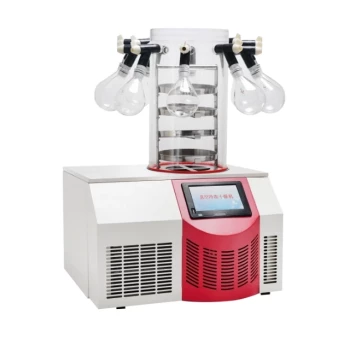
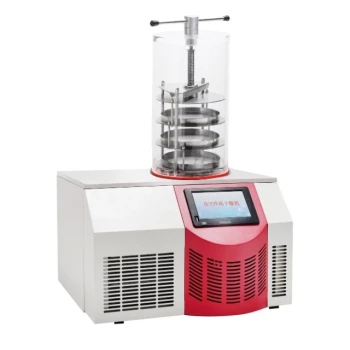
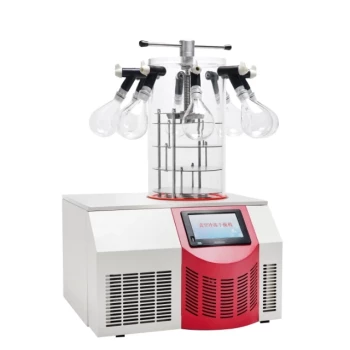
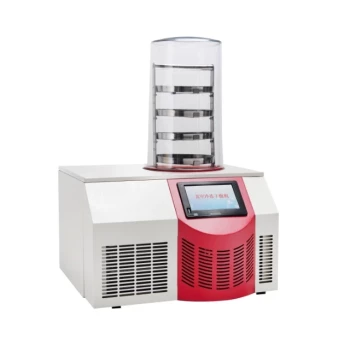
Using a freeze dryer is a critical requirement, not merely an option, for the proper analysis of oxidized dextran. This process removes water through sublimation in a low-temperature vacuum environment, effectively bypassing the liquid state that causes structural collapse. By avoiding high temperatures, you prevent the chemical alteration of the sample before analysis can even begin.
Oxidized dextran is highly hygroscopic and chemically sensitive to heat; therefore, traditional drying methods frequently result in moisture re-absorption or structural damage. Freeze drying is the only reliable method to preserve the functional group activity and pore structure required for accurate quantitative analysis.
Preserving Chemical Fidelity
Preventing Thermal Degradation
Oxidized dextran is inherently sensitive to high temperatures. Traditional drying methods that rely on atmospheric pressure heating often cause irreversible thermal degradation.
This degradation alters the fundamental chemical composition of the polymer. If you use heat, the sample you analyze will no longer represent the original material.
Maintaining Functional Group Activity
For advanced analysis, the specific activity of chemical groups is paramount. Freeze drying operates at low temperatures to maximize the preservation of original functional group activity.
This preservation is essential for techniques like quantitative nuclear magnetic resonance (qNMR). Without it, your quantitative data will reflect a degraded sample rather than the true synthesis result.
Ensuring Physical Stability
Combating Hygroscopicity
Oxidized dextran is highly hygroscopic, meaning it aggressively absorbs moisture from the surrounding environment.
Standard drying techniques often fail because the material re-absorbs water the moment it cools or is exposed to air. The vacuum environment of a freeze dryer removes moisture thoroughly without exposing the sample to atmospheric humidity during the process.
Protecting Pore Structure
The physical architecture of the polymer is just as important as its chemistry. The sublimation process protects the material's internal lattice.
This prevents the shrinkage or collapse often seen with heat drying. It ensures the pore structure remains intact, allowing for accurate characterization of the material's morphology.
Understanding the Trade-offs
Operational Complexity
While freeze drying guarantees quality, it introduces operational demands that simple oven drying does not. It requires maintaining a strict low-temperature vacuum environment, which necessitates specialized equipment and maintenance.
Processing Time
The mechanism of sublimation is generally slower than evaporation via heat. You are trading speed for accuracy; the process cannot be rushed without risking the very structural integrity you are trying to preserve.
Making the Right Choice for Your Goal
To ensure your analytical results are valid, align your drying method with your specific analytical needs.
- If your primary focus is Chemical Quantification (e.g., qNMR): You must use freeze drying to prevent thermal degradation and ensure the functional groups remain active and measurable.
- If your primary focus is Morphological Analysis: You must use freeze drying to prevent physical collapse and maintain the original pore structure of the oxidized dextran.
The integrity of your final data is entirely dependent on the preservation of your sample during the dehydration phase.
Summary Table:
| Feature | Freeze Drying (Sublimation) | Traditional Heat Drying |
|---|---|---|
| Temperature | Low (Sub-zero) | High (Elevated) |
| Chemical Stability | Preserves functional group activity | Risks irreversible thermal degradation |
| Physical Structure | Maintains pore structure & lattice | Causes shrinkage or structural collapse |
| Moisture Control | Prevents hygroscopic re-absorption | High risk of moisture re-uptake |
| Analytical Accuracy | High (Ideal for qNMR/Morphology) | Low (Sample integrity compromised) |
Precision Sample Preparation with KINTEK
Don't let improper dehydration compromise your analytical results. KINTEK specializes in advanced cooling solutions, including high-performance freeze dryers and cold traps designed to preserve the delicate functional groups and pore structures of sensitive polymers like oxidized dextran.
Whether you are conducting battery research, performing high-temperature synthesis, or focusing on biomaterial characterization, our comprehensive range of laboratory equipment—from high-temperature furnaces and vacuum reactors to PTFE consumables—ensures your lab maintains the highest standards of accuracy.
Ready to upgrade your laboratory's dehydration capabilities? Contact our experts today to find the perfect freeze-drying solution tailored to your research needs.
References
- Sarina C. Maßmann, Adriaan J. Minnaard. Regioselective palladium-catalysed aerobic oxidation of dextran and its use as a bio-based binder in paperboard coatings. DOI: 10.1039/d3gc04204a
This article is also based on technical information from Kintek Solution Knowledge Base .
Related Products
- High Performance Laboratory Freeze Dryer
- High Performance Laboratory Freeze Dryer for Research and Development
- Benchtop Laboratory Freeze Dryer for Lab Use
- Benchtop Laboratory Vacuum Freeze Dryer
- 108L Vertical Ultra Low Temperature ULT Freezer
People Also Ask
- What role does a laboratory freeze dryer play in the synthesis of graphene-based electrocatalysts? Preserve 3D Structures
- What are the technical advantages of using a laboratory freeze dryer for porous carbon precursors? Preserve 3D Networks
- What types of liquid samples can be processed using a laboratory freeze dryer? Preserve Your Sensitive Materials
- How do laboratory freeze dryers support scientific research? Preserve Sample Integrity for Reproducible Results
- Why is a laboratory freeze dryer preferred over traditional heating? Preserve Biochar Structure & Maximize Porosity