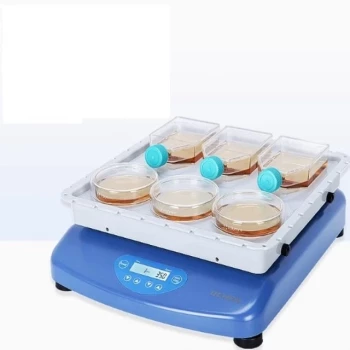
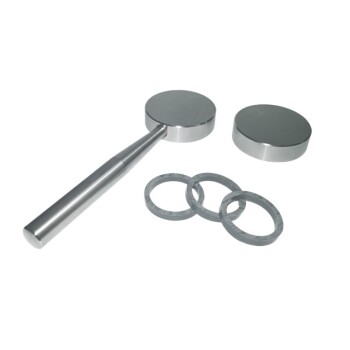
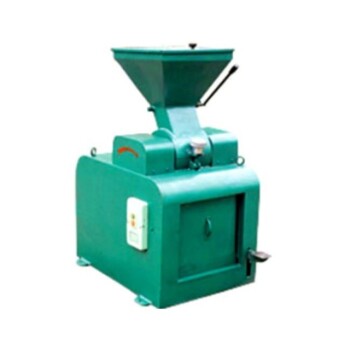
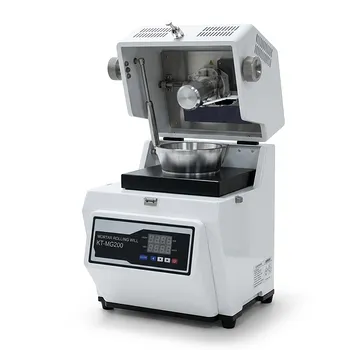
To ensure accurate delignification parameters, you must use a laboratory pulverizer to reduce wood biomass to particles smaller than 125 microns. This mechanical processing dramatically increases the material's surface area and disrupts stubborn cell wall structures. By doing so, you facilitate rapid solvent penetration and significantly boost chemical reaction rates, ensuring your experimental data is both efficient and reliable.
The success of GVL/water extraction relies on overcoming wood's natural resistance. Pulverizing biomass does not just make it smaller; it exposes the internal structure to solvents, ensuring that your evaluation of processing efficiency is scientifically accurate.
The Mechanics of Efficient Extraction
Maximizing Surface Area
To optimize the interaction between the biomass and the GVL/water solvent, the contact area must be maximized.
A laboratory pulverizer grinds the raw wood into fine particles measuring less than 125 microns. This exponential increase in surface area allows the solvent to touch more of the material simultaneously, preventing bottlenecks in the extraction process.
Breaching Cellular Defenses
Wood biomass is naturally engineered to resist chemical and biological breakdown.
The pulverization process mechanically shatters the cell wall barriers that protect the lignin and cellulose. By destroying these physical defenses, you grant the solvent direct access to the target compounds without waiting for slow natural diffusion.
Accelerating Reaction Kinetics
Chemical reactions are defined by the speed at which reactants can meet.
By removing physical barriers and increasing surface area, pulverization significantly increases chemical reaction rates. This ensures that the delignification process occurs within a practical timeframe for laboratory evaluation.
Ensuring Experimental Validity
Eliminating Diffusion Limitations
In larger wood chips, solvents struggle to penetrate to the center of the material.
Using micron-sized sawdust removes this variable, ensuring that the solvent penetration is uniform throughout the sample. This guarantees that your results reflect the chemistry of the extraction, not the physical limitations of the sample size.
Standardization for Accuracy
Small-scale trials are only valuable if they produce precise, reproducible data.
Processing biomass into a consistent, fine powder ensures that every gram of material behaves predictably. This consistency is required to determine the optimal delignification parameters with high accuracy.
Common Pitfalls in Sample Preparation
The Risk of Incomplete Reactions
Attempting extraction on coarse material often leads to "false negatives" regarding efficiency.
If the particle size exceeds 125 microns, the solvent may fail to penetrate the core of the particle fully. This results in artificially low yields that do not accurately reflect the potential of the GVL/water solvent system.
Skewed Parameter Optimization
When cell walls are not sufficiently broken down, you may miscalculate the time or temperature required for the reaction.
You might inadvertently increase energy input to force a reaction that would have happened naturally with properly pulverized material. This leads to inefficient process designs and inaccurate scaling data.
Making the Right Choice for Your Goal
To obtain valid data from your GVL/water extraction experiments, you must treat particle size as a critical variable.
- If your primary focus is process optimization: Ensure all particles are pulverized to below 125 microns to determine the true chemical efficiency of the solvent without physical diffusion interference.
- If your primary focus is data reproducibility: Use a standardized pulverization protocol to guarantee that every trial yields comparable, noise-free results regarding reaction rates.
Proper mechanical preparation is the invisible foundation of precise chemical evaluation.
Summary Table:
| Factor | Coarse Wood Biomass | Pulverized Sawdust (<125 μm) |
|---|---|---|
| Surface Area | Low (Minimal solvent contact) | High (Exponentially increased) |
| Cell Wall Integrity | Intact (Physical barrier) | Shattered (Direct lignin access) |
| Reaction Kinetics | Slow (Diffusion limited) | Rapid (Chemically controlled) |
| Data Accuracy | Risk of false negatives | Precise & Reproducible |
| Solvent Penetration | Incomplete / Non-uniform | Complete / Uniform |
Precision Sample Preparation with KINTEK
Achieving accurate experimental data begins with superior sample preparation. At KINTEK, we specialize in high-performance laboratory crushing and milling systems designed to reduce wood biomass to the precise micron-sized particles required for GVL/water extraction and delignification studies.
Beyond pulverization, KINTEK offers a comprehensive suite of laboratory equipment, including high-temperature high-pressure reactors and autoclaves, muffle and vacuum furnaces, and hydraulic pellet presses to support every stage of your material research.
Empower your research with reliable, industrial-grade tools. Contact our experts today to find the perfect milling solution for your laboratory and ensure your chemical evaluations are built on a foundation of precision.
References
- Huy Quang Lê, Herbert Sixta. Wood biorefinery based on γ-valerolactone/water fractionation. DOI: 10.1039/c6gc01692h
This article is also based on technical information from Kintek Solution Knowledge Base .
Related Products
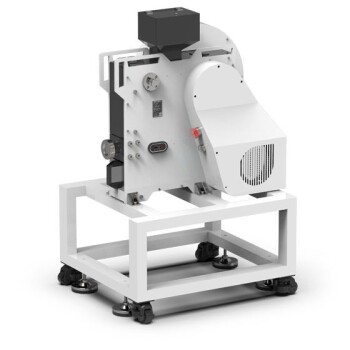
- Vibrating Disc Mill Small Laboratory Grinding Machine
- Lab Sterile Slapping Type Homogenizer for Tissue Mashing and Dispersing
- Laboratory Jaw Crusher
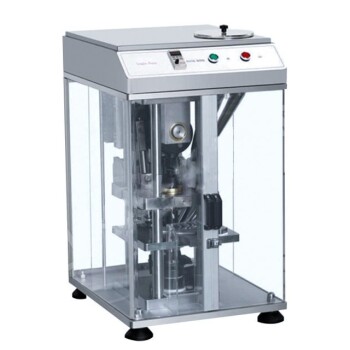
- Single Punch Electric Tablet Press Machine Laboratory Powder Tablet Punching TDP Tablet Press
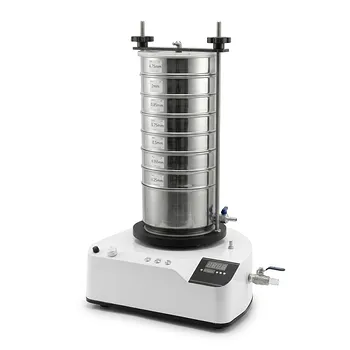
- Laboratory Vibratory Sieve Shaker Machine for Dry and Wet Three-Dimensional Sieving
People Also Ask
- What role do disc mills play in the wet or dry pretreatment of lignocellulosic waste? Scalable Biomass Solutions
- What is the function of a laboratory grinding mill? Achieve Precise Sample Preparation for Accurate Results
- What is the function of an industrial vibratory mill? Optimize Fe-Cr-Al Alloy Powder Production
- What laboratory apparatus is used for grinding? Match the Right Mill to Your Sample Material
- Why use stainless steel jars and balls for solid-state battery slurries? Maximize Dispersion and Conductivity