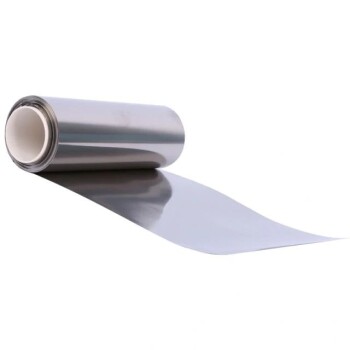
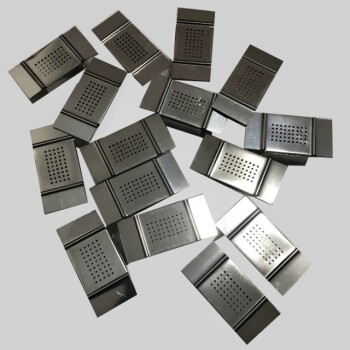
Tantalum foil acts as an essential physical barrier during the hot-press sintering of yttrium oxide. It physically separates the ceramic powder from the graphite mold, preventing the diffusion of carbon atoms into the sample at high temperatures.
Without this specific metallic barrier, carbon contamination inevitably occurs, causing the ceramic to turn black and opaque, effectively destroying the high light transmittance required for optical-grade yttrium oxide.
Preserving Optical Transparency
The Threat of Carbon Diffusion
Graphite molds are standard in hot-press sintering due to their thermal stability, but they present a chemical risk. At the elevated temperatures required to sinter ceramics, carbon atoms from the mold become mobile.
Without intervention, these atoms diffuse directly into the porous yttrium oxide powder. This chemical interaction changes the composition of the ceramic surface and bulk material.
Consequences for the Final Product
The primary reference highlights that carbon contamination leads to immediate sample blackening.
For structural ceramics, this might be a cosmetic issue, but for yttrium oxide—often valued for its optical properties—it is catastrophic. The contamination introduces scattering centers and impurities that drastically reduce light transmittance, rendering the material opaque.
The Role of the Tantalum Barrier
Creating a Physical Shield
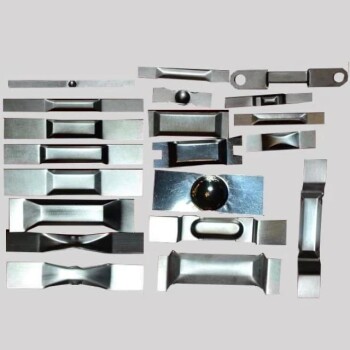
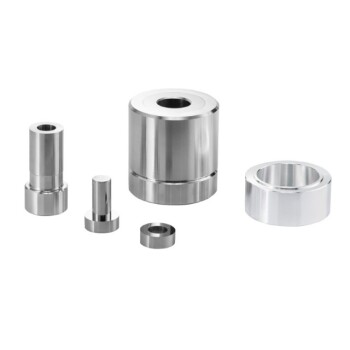
Tantalum foil functions as a liner between the graphite punch/die and the yttrium oxide powder.
It creates a non-carbon interface that the powder touches during densification. This effectively blocks the migration path of carbon atoms, ensuring they cannot penetrate the ceramic matrix.
Ensuring Chemical Purity
By maintaining strict isolation, the tantalum foil preserves the stoichiometry of the yttrium oxide.
This purity allows the material to reach full density without the inclusion of carbon defects. This is the deciding factor in producing a transparent ceramic rather than a dark, defective one.
Common Pitfalls and Trade-offs
Misunderstanding Barrier Materials
In general hot pressing, graphite paper or flexible graphite foil is often used for lubrication and to prevent adhesion, as noted in standard powder metallurgy practices.
However, relying on graphite-based barriers for yttrium oxide is a critical error. Graphite paper cannot stop carbon diffusion because it is composed of carbon itself. While it may aid in demolding, it will not prevent the blackening of the sample.
Processing Considerations
Using tantalum foil adds a layer of complexity to the mold assembly process compared to simple graphite sprays or papers.
The foil must be applied carefully to avoid folds or wrinkles. Imperfections in the foil liner can be pressed into the surface of the ceramic, creating texture issues that may require aggressive grinding and polishing to remove after sintering.
Making the Right Choice for Your Goal
To ensure the success of your sintering run, select your barrier material based on the final requirements of the ceramic:
- If your primary focus is Optical Transparency: You must use tantalum foil. It is the only reliable way to prevent carbon diffusion and ensure a clear, high-transmittance finished product.
- If your primary focus is General Mold Protection: For non-optical materials where carbon uptake is acceptable, graphite paper may suffice to prevent adhesion and extend mold life.
Using tantalum foil is the definitive method for achieving chemically pure, optically clear yttrium oxide ceramics.
Summary Table:
| Feature | Tantalum Foil Barrier | Graphite Paper/Foil |
|---|---|---|
| Primary Function | Blocks carbon diffusion & prevents contamination | Provides lubrication & easy demolding |
| Effect on Yttrium Oxide | Preserves stoichiometry & optical transparency | Causes blackening and opacity |
| Material Compatibility | Ideal for high-purity optical ceramics | Suitable for structural/non-optical parts |
| Surface Outcome | Chemically pure, high-transmittance finish | Carbon-contaminated, dark/opaque finish |
Elevate Your Material Purity with KINTEK Laboratory Solutions
Precision in sintering requires more than just high temperatures—it demands the right environment. At KINTEK, we specialize in providing the advanced equipment and high-purity consumables needed to achieve flawless results. Whether you are producing optical-grade ceramics or high-performance alloys, our comprehensive range of hot-press sintering systems, vacuum furnaces, and hydraulic presses provides the control you need.
From tantalum and graphite consumables to specialized milling and crushing systems, KINTEK is your partner in advanced material research. Don't let carbon contamination compromise your yttrium oxide transparency. Contact our technical experts today to discover how our tailored solutions can optimize your laboratory’s efficiency and product quality.
Related Products
- Vacuum Heat Treat and Pressure Sintering Furnace for High Temperature Applications
- Molybdenum Tungsten Tantalum Special Shape Evaporation Boat
- 600T Vacuum Induction Hot Press Furnace for Heat Treat and Sintering
- Double Plate Heating Press Mold for Lab
- Vacuum Heat Treat and Molybdenum Wire Sintering Furnace for Vacuum Sintering
People Also Ask
- What is the purpose of the heat treatment (sintering) step? Engineering Robust Electroactive Membranes
- What is a vacuum sintering furnace? Unlock Purity and Performance in Advanced Materials
- How does the vacuum environment impact sintering of diamond-copper composites? Protect Against Thermal Damage
- What are some alternative atmospheres to pure hydrogen for powder metallurgy sintering processes? Top Sintering Solutions
- Why must green bodies produced via binder jetting undergo treatment in a vacuum sintering furnace?