Dynamic mixing acts as a chemical catalyst through physical processing. It is necessary because it introduces continuous and varying mechanical stress at high temperatures, which actively promotes the partial dehydrochlorination of chlorosulfonated polyethylene (CSPE). This mechanism forces unstable chlorine atoms to break and recombine, guiding the formation of a reinforced polymer matrix that achieves strength levels far exceeding standard theoretical expectations.
The core value of dynamic mixing lies in its ability to fundamentally alter the polymer's structure rather than simply blending ingredients. By leveraging mechanical stress to drive chemical recombination, it unlocks material strength that static processing methods cannot achieve.
The Mechanism of Structural Enhancement
The Role of Mechanical Stress
Standard mixing often focuses on homogenization, but dynamic mixing focuses on stress application.
The process introduces continuous, varying mechanical stress throughout the material.
This stress is not merely for distribution; it is the physical force required to initiate chemical changes within the polymer chains.
Triggering Partial Dehydrochlorination
For HPE-CSPE compositions to reach high strength, specific chemical reactions must occur during processing.
The combination of high temperatures and dynamic mechanical stress promotes partial dehydrochlorination.
This reaction is the critical turning point where the material transitions from a simple blend to a chemically modified elastomer.
Atomic Recombination and Matrix Formation
As dehydrochlorination occurs, unstable chlorine atoms are forced to break away from their original positions.
Dynamic mixing ensures these atoms do not simply degrade but are guided to recombine.
This recombination process dictates the final structure of the polymer matrix, creating a network that is more robust than the original components.
Exceeding Theoretical Limits
Conventional processing methods generally yield properties consistent with theoretical predictions.
However, the structural reorganization driven by dynamic mixing allows the material to outperform these standard expectations.
The resulting thermoplastic elastomer possesses strength characteristics that would be impossible to generate through static or low-stress mixing modes.
Understanding the Operational Requirements
Process Control Sensitivity
While dynamic mixing unlocks superior strength, it relies heavily on precise processing conditions.
The interaction between temperature and mechanical stress must be carefully balanced.
Insufficient stress will fail to trigger the necessary dehydrochlorination, resulting in a standard, lower-strength material.
Complexity of Implementation
This mode requires equipment capable of sustaining varying stress levels continuously.
It moves the manufacturing process beyond simple blending into the realm of reactive processing.
Operators must view the mixer not just as a blender, but as a reactor where physical forces drive chemical restructuring.
Maximizing Polymer Potential
To leverage the full capabilities of HPE-CSPE compositions, align your processing strategy with your material goals.
- If your primary focus is maximizing tensile strength: Ensure your mixing equipment is calibrated to deliver high, continuous mechanical stress to drive the recombination of chlorine atoms.
- If your primary focus is material consistency: Monitor temperature and stress variables closely, as fluctuations can alter the degree of dehydrochlorination and affect the uniformity of the final matrix.
Dynamic mixing is not just a preferred method; it is the requisite driver for transforming raw potential into high-performance reality.
Summary Table:
| Feature | Static/Standard Mixing | Dynamic Mixing (Reactive Processing) |
|---|---|---|
| Primary Function | Homogenization & Blending | Structural Reorganization & Chemical Recombination |
| Mechanism | Low-stress distribution | Continuous, varying mechanical stress at high temp |
| Chemical Impact | Minimal chemical change | Triggers partial dehydrochlorination |
| Polymer Matrix | Standard theoretical strength | Reinforced matrix exceeding theoretical limits |
| Equipment Role | Simple blender | Reactive processing vessel/Reactor |
Elevate Your Material Science with KINTEK
To achieve the precise mechanical stress and thermal control required for high-performance HPE-CSPE compositions, you need equipment engineered for reactive processing. KINTEK specializes in advanced laboratory solutions, providing the high-precision crushing, milling, and high-temperature furnace systems necessary to drive complex chemical transformations.
Whether you are developing next-generation elastomers, conducting battery research, or perfecting high-pressure reactions, our comprehensive portfolio—including crushing and milling systems, high-temperature high-pressure reactors, and hydraulic presses—ensures your materials exceed standard expectations.
Ready to unlock the full potential of your polymer matrix? Contact our technical experts today to find the perfect equipment for your research and production needs.
References
- Fayzulla Nurkulov, U. Shoazimova. Study of modified thermoplastic elastomers based on polyethylene chlorinated with thiokol rubbers. DOI: 10.1051/e3sconf/202449101021
This article is also based on technical information from Kintek Solution Knowledge Base .
Related Products
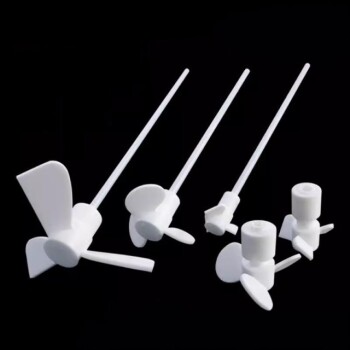
- Custom PTFE Teflon Parts Manufacturer Laboratory High Temperature Mixing Paddle Mixer
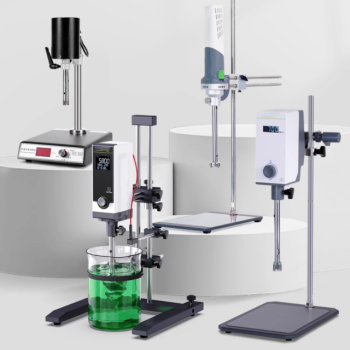
- High Shear Homogenizer for Pharmaceutical and Cosmetic Applications
People Also Ask
- What are the technical advantages of using PTFE laboratory consumables? Ensure Ultimate Chemical Resistance
- Why are PTFE reactors preferred for silver phosphate glass testing? Ensure Purity and Kinetic Accuracy
- Why must a Polytetrafluoroethylene (PTFE) reactor be used for Ti3C2TX MXene etching? Ensure Safety and Purity
- Why is a PTFE reactor required for titanium-based nano-ceramic coating solutions? Ensure Chemical Inertness & Purity
- What is the function of a PTFE reactor in MXene etching? Ensure Safe, High-Purity MAX Phase Conversion