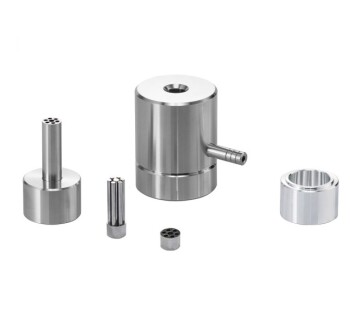
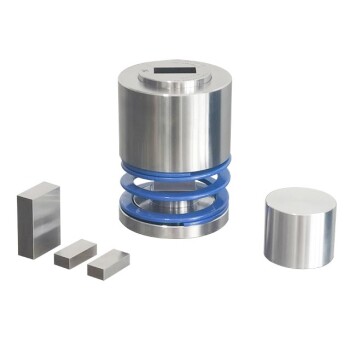
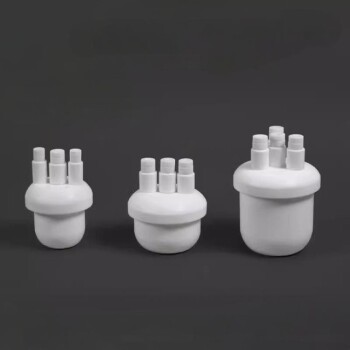
The integrity of fittings and end caps serves as the primary barrier against catastrophic failure in high-pressure environments. In catalytic hydrothermal oxidation, reactors operate under subcritical or supercritical conditions where internal pressures rise significantly. Utilizing precision-machined, high-strength stainless steel components is the only way to contain this pressure, preventing dangerous steam leaks and ensuring the chemical process remains closed and accurate.
Precision-machined stainless steel components provide the necessary structural containment to handle the extreme pressure of hydrothermal reactions. Their integrity ensures both the physical safety of the operator and the scientific validity of the process by maintaining a strict mass balance.
Managing Extreme Operational Pressures
The Challenge of Subcritical and Supercritical States
Hydrothermal reactions often push water beyond its boiling point, entering subcritical or supercritical phases.
During these transitions, the internal pressure within the reactor does not remain stable; it increases significantly. Standard components are often unable to withstand these spikes without deforming or failing.
The Role of High-Strength Materials
To combat these forces, the system requires precision-machined, high-strength stainless steel.
Unlike softer metals or standard fittings, high-strength stainless steel provides the tensile strength necessary to maintain structural rigidity. This prevents the vessel from expanding or bursting under the intense internal load.
Preserving Process Accuracy and Safety
Maintaining Mass Balance
For a catalytic oxidation process to be scientifically valid, the input must equal the output.
Proper sealing is essential to maintain the mass balance of reactants and media. Even a microscopic leak allows matter to escape, rendering data regarding reaction efficiency and chemical conversion inaccurate.
Preventing Safety Hazards
The most immediate risk in these processes is the release of high-pressure steam.
Specialized sealing end caps are critical for creating a leak-free environment. If these seals fail, the escaping steam poses a severe burn and impact hazard to operators, in addition to damaging surrounding equipment.
Critical Considerations for Component Selection
Installation Precision
High-quality materials are only as effective as their assembly.
Even the strongest stainless steel fittings will leak if the end caps are not seated correctly. Precision machining helps, but operator error during assembly remains a common failure point.
Material Limitations
While high-strength stainless steel is robust, it is not invincible.
You must ensure the specific grade of steel selected is compatible with the corrosive nature of the oxidation process. Over time, chemical incompatibility can compromise the integrity of the fitting from the inside out, regardless of its pressure rating.
Ensuring Success in Your Application
To ensure the safety and accuracy of your hydrothermal oxidation process, evaluate your components based on your specific operational goals:
- If your primary focus is Safety: Prioritize components with specialized sealing end caps designed specifically to contain high-pressure steam without leakage.
- If your primary focus is Data Accuracy: Select precision-machined fittings that guarantee a hermetic seal to strictly maintain the mass balance of your reactants.
Treat your fittings and end caps not as accessories, but as critical safety instrumentation required for reaction stability.
Summary Table:
| Feature | Importance in Hydrothermal Oxidation | Benefit |
|---|---|---|
| High-Strength Stainless Steel | Resists tensile stress under subcritical/supercritical pressures. | Prevents reactor deformation and catastrophic bursts. |
| Precision Machining | Ensures a perfect mechanical fit between components. | Minimizes failure points and enhances structural rigidity. |
| Hermetic Sealing Caps | Creates a leak-proof barrier for high-pressure steam. | Protects operators from burns and maintains mass balance. |
| Chemical Compatibility | Resists corrosion from oxidation media. | Extends component lifespan and prevents internal integrity loss. |
Secure Your High-Pressure Research with KINTEK
Don't compromise on safety or data precision. At KINTEK, we specialize in providing high-performance laboratory equipment designed for the most demanding environments. Whether you are conducting catalytic hydrothermal oxidation or complex chemical synthesis, our high-temperature high-pressure reactors, autoclaves, and precision-machined fittings ensure your processes remain closed, accurate, and safe.
Why choose KINTEK?
- Superior Durability: High-strength stainless steel and ceramic components for extreme conditions.
- Process Accuracy: Precision sealing solutions to maintain strict mass balance.
- Comprehensive Range: From hydraulic presses and muffle furnaces to specialized electrolytic cells.
Ready to upgrade your lab's structural integrity? Contact our technical experts today to find the perfect solution for your high-pressure applications!
References
- Mohamad Zarqani Yeop, Ahmad Rafizan Mohamad Daud. Effect of Process Conditions on Catalytic Hydrothermal Oxidation of p-Xylene to Terephthalic Acid. DOI: 10.47836/pjst.30.4.16
This article is also based on technical information from Kintek Solution Knowledge Base .
Related Products
- Stainless High Pressure Autoclave Reactor Laboratory Pressure Reactor
- Customizable High Pressure Reactors for Advanced Scientific and Industrial Applications
- Mini SS High Pressure Autoclave Reactor for Laboratory Use
- High Pressure Laboratory Autoclave Reactor for Hydrothermal Synthesis
- Customizable Laboratory High Temperature High Pressure Reactors for Diverse Scientific Applications
People Also Ask
- Why is a laboratory high-pressure reactor used in the hydrothermal synthesis of hydroxyapatite catalysts?
- Why is a laboratory high-pressure reactor necessary for synthesizing fly ash-based zeolite? Achieve Pure Crystallization
- What role does a laboratory high-pressure reactor play in the leaching process of spent cathode materials? Optimize Recovery
- What conditions do laboratory high-pressure reactors provide for HTC? Optimize Your Biochar Production Processes
- How are high-pressure reactors used to prepare metaphosphate electrocatalysts? Master In-Situ Precursor Growth