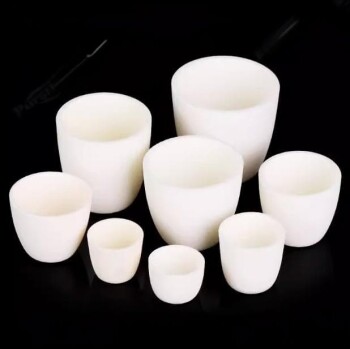
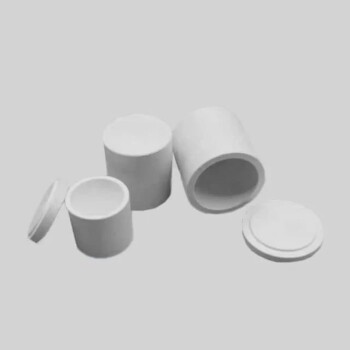
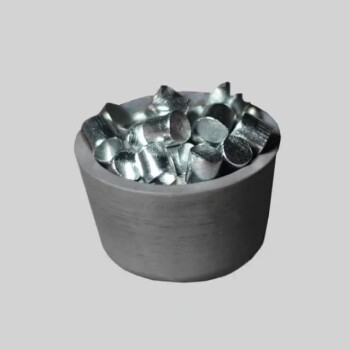
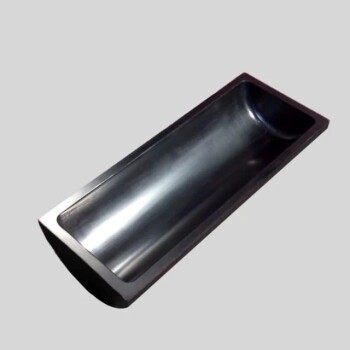
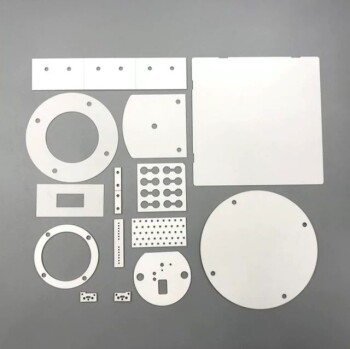
The use of high-quality crucibles and ceramic consumables is strictly required to guarantee the accuracy and reproducibility of polymer thermal analysis. In these sensitive experiments, the container must remain completely inert and thermally stable to ensure that all recorded data points—specifically mass loss and thermal behavior—originate solely from the polymer sample and not from experimental errors.
The reliability of polymer thermal analysis hinges on the inertness and stability of the sample container. High-quality consumables ensure that observed changes are inherent to the polymer itself, not the result of contamination or container degradation.
Preventing Chemical Interference
The Necessity of an Inert Environment
At elevated temperatures, polymers undergo significant chemical changes. High-quality crucibles are engineered to be chemically inert, ensuring they do not react with the polymer sample as it decomposes or melts.
Avoiding Catalytic Reactions
Inferior consumables often contain impurities that can act as unintentional catalysts. These interactions can alter the degradation path of the polymer, leading to false conclusions about its thermal stability.
Preserving Molecular Weight Data
Accurate analysis of molecular weight distribution changes relies on the sample behaving naturally under heat. If the crucible interacts chemically with the sample, it distorts the breakdown process, rendering the resulting data invalid.
Ensuring Thermal Stability
Withstanding Extreme Conditions
Thermal analysis often pushes materials to their limits. Consumables must possess excellent thermal stability to withstand these temperature ramps without warping, cracking, or degrading.
Isolating Sample Mass Loss
One of the primary metrics in thermal analysis is mass loss. If the crucible itself degrades or off-gases due to low quality, that mass loss is added to the sample's data.
Eliminating Ghost Signals
High-quality ceramics ensure that the measured weight changes reflect only the polymer's properties. This prevents the recording of experimental artifacts that mask the true behavior of the material.
Common Pitfalls to Avoid
The Risk of False Positives
Using lower-grade consumables introduces the risk of "ghost" transitions. A slight chemical reaction between the container and the sample can appear as a legitimate thermal event on a graph.
Contamination from Within
Low-quality ceramics may release trapped volatiles when heated. This contamination interferes with the analysis, making it impossible to distinguish between the polymer's off-gassing and the container's impurities.
Making the Right Choice for Your Goal
Selecting the correct consumables is a strategic decision that directly impacts data integrity.
- If your primary focus is Research & Development: Prioritize the highest purity crucibles to ensure that novel polymer degradation paths are characterized without any interference.
- If your primary focus is Quality Control: Ensure your consumables offer consistent thermal stability to maintain reproducibility across large batches of molecular weight distribution tests.
Invest in the highest quality consumables to ensure your data reflects the true science of your materials, not the limitations of your equipment.
Summary Table:
| Feature | High-Quality Consumables | Impact on Polymer Analysis |
|---|---|---|
| Chemical Inertness | Zero reaction with sample | Prevents altered degradation paths and catalytic interference |
| Thermal Stability | No warping or cracking | Ensures mass loss data originates solely from the polymer |
| Purity Levels | Minimal impurities/volatiles | Eliminates "ghost signals" and experimental artifacts |
| Consistency | High reproducibility | Guarantees reliable QC and R&D molecular weight data |
Elevate Your Polymer Research with KINTEK Precision Consumables
In the world of polymer science, your results are only as reliable as the containers that hold them. KINTEK understands that even the smallest impurity can compromise your data. We provide premium high-purity crucibles, ceramics, and PTFE products specifically designed to withstand extreme thermal conditions without interference.
Whether you are conducting advanced R&D or rigorous Quality Control, our comprehensive range of laboratory equipment—from high-temperature furnaces and vacuum systems to specialized crushing and milling tools—ensures your experiments are accurate and reproducible every time.
Ready to eliminate experimental errors? Contact KINTEK today to discover our high-performance consumables and let our experts help you achieve superior data integrity in your laboratory.
References
- Onur Dogu, Kevin M. Van Geem. The chemistry of chemical recycling of solid plastic waste via pyrolysis and gasification: State-of-the-art, challenges, and future directions. DOI: 10.1016/j.pecs.2020.100901
This article is also based on technical information from Kintek Solution Knowledge Base .
Related Products
- Alumina Al2O3 Ceramic Crucible Semicircle Boat with Lid for Engineering Advanced Fine Ceramics
- Engineering Advanced Fine Ceramics Alumina Crucibles (Al2O3) for Thermal Analysis TGA DTA
- Engineering Advanced Fine Ceramics Alumina Al2O3 Crucible With Lid Cylindrical Laboratory Crucible
- Engineering Advanced Fine Alumina Al2O3 Ceramic Crucible for Laboratory Muffle Furnace
- Arc-Shaped Alumina Ceramic Crucible High Temperature Resistant for Engineering Advanced Fine Ceramics
People Also Ask
- Why are alumina crucibles and mother powder essential for LATP sintering? Optimize Your Solid Electrolyte Performance
- Why are high-purity alumina crucibles used for liquid lead corrosion experiments? Ensure Data Accuracy at 550°C
- Why Use Alumina Crucibles & Powder Burial for NaSICON? Ensure Phase Purity and Prevent Elemental Volatilization
- What is the primary purpose of using alumina crucibles for LLTO ceramics? Optimize Your High-Temperature Sintering
- What are the benefits of using an alumina crucible with a lid for TiB2 nanopowder heat treatment? Ensure High Purity