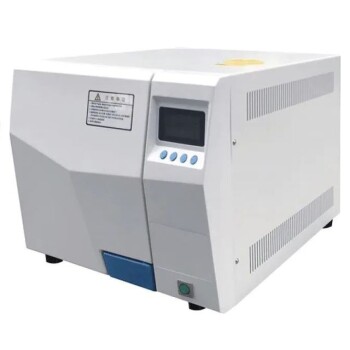
The 24-hour oven drying period is a critical protocol designed to completely eliminate residual moisture and cleaning solvents, such as anhydrous ethanol, from the surface of J55 steel specimens. This step is necessary because determining corrosion rates requires detecting weight changes at the 0.0001 g level, where even a microscopic film of water or solvent will skew the results.
Precision in corrosion experiments relies on isolating the exact mass of the metal substrate. Long-term constant temperature drying ensures that any measured weight difference is exclusively the result of material loss, preventing data bias caused by the evaporation or retention of surface liquids.
The Physics of Precision Weighing
Eliminating Volatile Contaminants
Before weighing, specimens are typically cleaned with agents like anhydrous ethanol. While effective for cleaning, these solvents can linger in the microscopic pores of the metal.
The 24-hour heating cycle ensures that all traces of these solvents are fully evaporated. Without this step, the initial weight of the specimen would include the mass of the solvent, creating a false baseline.
The Problem of Microscopic Moisture
Water weight is a significant source of error in high-sensitivity experiments. A thin, invisible film of moisture absorbed from the air can easily register on a scale sensitive to the fourth decimal place (0.0001 g).
Placing the specimen in an oven removes this hydroscopic layer. It brings the specimen to a "dry weight" state, which is the only reliable standard for comparison.
Ensuring Data Purity
Corrosion loss is calculated by subtracting the final weight from the initial weight. If moisture is present during either weighing stage, the calculation becomes invalid.
Long-term drying creates a consistent environment for the metal. It guarantees that the mass recorded reflects the steel structure itself, rather than the variable humidity of the lab environment.
The Risks of Inadequate Drying
Calculation Bias
Skipping or shortening the drying phase introduces immediate bias into your data.
If the specimen is wet before the experiment, the initial weight is artificially high, leading to an overestimation of corrosion loss later. Conversely, if it is wet after the experiment, the final weight is too high, leading to an underestimation of corrosion severity.
Measurement Instability
When moisture is present, the weight reading on a high-precision balance will often drift as the liquid evaporates on the scale.
Thorough oven drying stabilizes the specimen. This ensures that the scale provides a locked, steady reading instantly, rather than a fluctuating number that is impossible to record accurately.
Ensuring Data Integrity in Your Protocol
To achieve reproducible results in your corrosion study, apply the following standards to your weighing procedure:
- If your primary focus is absolute accuracy: Strictly adhere to the full 24-hour drying cycle to ensure the complete removal of moisture films that interfere with 0.0001 g precision.
- If your primary focus is experimental consistency: Apply the exact same drying duration and temperature settings before the initial weighing and after the corrosion test to cancel out potential environmental variables.
Treat the drying process not as a preparatory step, but as an integral part of the measurement itself.
Summary Table:
| Protocol Step | Duration | Purpose | Impact on Accuracy |
|---|---|---|---|
| Pre-Weighing Drying | 24 Hours | Remove cleaning solvents (ethanol) and moisture | Establishes a true dry-weight baseline |
| Post-Weighing Drying | 24 Hours | Eliminate residual liquids from corrosion testing | Ensures mass loss reflects only material degradation |
| Constant Temp. Storage | Continuous | Prevent hygroscopic layer formation | Prevents scale drift and 0.0001g measurement errors |
Maximize Your Lab’s Experimental Precision with KINTEK
Accurate corrosion analysis starts with the right equipment. KINTEK specializes in high-performance laboratory solutions designed for rigorous research standards. From high-temperature muffle and vacuum furnaces for precise specimen drying to high-pressure reactors and autoclaves for advanced corrosion studies, we provide the tools necessary to ensure your data integrity.
Whether you are performing material testing on J55 steel or conducting complex battery research, our comprehensive range of crushing systems, hydraulic presses, and precision cooling solutions empowers your workflow.
Ready to elevate your research accuracy? Contact KINTEK today to discover how our high-precision lab equipment and essential consumables can optimize your experimental outcomes.
References
- Wangdong Li, Hai Wang. Investigation of the Corrosion Characteristics and Corrosion Inhibitor Action on J55 Steel in Produced Water. DOI: 10.3390/su15043355
This article is also based on technical information from Kintek Solution Knowledge Base .
Related Products
- Laboratory Scientific Electric Heating Blast Drying Oven
- 23L Laboratory Vacuum Drying Oven
- 56L Vertical Laboratory Vacuum Drying Oven
- 1200℃ Muffle Furnace Oven for Laboratory
- 1700℃ Muffle Oven Furnace for Laboratory
People Also Ask
- How does a laboratory electric drying oven contribute to the formation of the initial coating? Expert Insights
- What role does a precision laboratory drying oven play in the synthesis of GO-PANI nanocomposites? Protect Material Integrity
- What role does a laboratory drying oven play in the preparation of zinc oxide nanoparticle precursors?
- What is the necessity of using a laboratory drying oven when processing MoO3/GO composite nanopowders? Find out here.
- What is the role of a laboratory drying oven in cellulose citrate production? Ensure Material Stability & Purity