Knowledge Why must photocatalytic CO2 reduction use a closed glass reactor with quartz? Ensure Precision and High Light Efficiency
Author avatar

Tech Team · Kintek Solution

Updated 1 day ago

Why must photocatalytic CO2 reduction use a closed glass reactor with quartz? Ensure Precision and High Light Efficiency


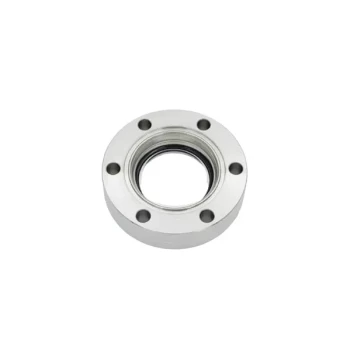
Precision in data collection and energy efficiency dictates the requirement for this specific apparatus. A closed glass reactor creates an isolated gas-liquid-solid environment that prevents the escape of trace reaction products like carbon monoxide and methane, while the quartz window maximizes light transmittance to ensure the Xenon lamp's energy effectively reaches the catalyst surface.

The integrity of your data relies on two pillars: a sealed system to trap every molecule of product for quantification, and a high-transparency window to deliver unattenuated light energy to the reaction site.

Preserving the Chemical Environment

Preventing Product Leakage

Photocatalytic CO2 reduction often yields gaseous products in trace amounts. Key outputs such as carbon monoxide (CO) and methane (CH4) are highly volatile.

In an open system, these gases would immediately dissipate into the atmosphere. A closed glass reactor traps these products, ensuring the reaction yield is not underestimated.

Enabling Quantitative Analysis

The primary goal of these experiments is often to measure efficiency and selectivity.

To achieve this, the enclosed headspace is connected to a gas chromatograph (GC). The seal ensures that the sample analyzed by the GC represents the total sum of the reaction, guaranteeing experimental accuracy.

Stabilizing the Three-Phase Interface

The reaction occurs at a complex boundary involving gas (CO2), liquid (solvent), and solid (catalyst).

A closed vessel maintains the pressure and concentration equilibrium of this gas-liquid-solid three-phase environment. This stability is required to produce reproducible results.

Maximizing Energy Transfer

The Role of High Transmittance

The choice of window material is critical for energy delivery. Standard glass absorbs significant amounts of UV and visible light.

Quartz is used specifically for its high optical clarity and broad transmission range. It ensures that the specific wavelengths emitted by the Xenon lamp pass through to the reactor interior without significant loss.

Efficient Catalyst Activation

The catalyst requires a specific threshold of light energy to trigger the reduction process.

If the window attenuates the light, the catalyst receives insufficient energy, leading to artificially low reaction rates. The quartz window removes this variable, allowing the light to act effectively on the catalyst surface.

Common Pitfalls to Avoid

Compromising the Optical Path

A common error is substituting the quartz window with borosilicate or standard glass to save costs.

This drastically reduces the UV light reaching the sample. Doing so effectively blinds the catalyst, rendering the experiment invalid regardless of the chemical setup.

Overlooking Seal Integrity

A "closed" reactor is only as good as its seals.

Even a microscopic leak in the glass reactor will allow trace gases to escape before GC analysis. This leads to false negatives, where a successful catalyst appears inactive because the products were lost to the room air.

Ensuring Experimental Success

To obtain valid data from your photocatalytic experiments, you must prioritize the integrity of your hardware setup.

  • If your primary focus is Accurate Quantification: Ensure the reactor is completely sealed to trap all trace gases like CO and methane for the gas chromatograph.
  • If your primary focus is Reaction Efficiency: Verify that your optical window is pure quartz to prevent light absorption from dampening the catalyst's activity.

The quality of your containment and optical path sets the ceiling for the accuracy of your results.

Summary Table:

Feature Purpose Impact on Experiment
Closed Glass Reactor Creates an isolated system Prevents trace product leakage (CO, CH4) and ensures accurate GC analysis
Quartz Window Maximizes light transmittance Delivers full energy from Xenon lamps to the catalyst without attenuation
Sealed Headspace Maintains pressure/concentration Stabilizes the gas-liquid-solid interface for reproducible results
Atmospheric Control Excludes ambient contaminants Eliminates false negatives and ensures high selectivity data

Maximize Your Photocatalytic Research Accuracy with KINTEK

Precise data in photocatalytic CO2 reduction begins with superior containment and optimal light transmission. KINTEK specializes in high-performance laboratory equipment designed for the most demanding research environments. From our precision-engineered glass reactors and high-transparency quartz windows to our advanced electrolytic cells and high-pressure autoclaves, we provide the tools needed to ensure every molecule and photon is accounted for.

Whether you are focusing on battery research, catalyst efficiency, or complex chemical synthesis, KINTEK’s comprehensive portfolio—including crushing systems, hydraulic presses, and cooling solutions—delivers the reliability your lab deserves.

Ready to elevate your experimental integrity? Contact our laboratory specialists today to find the perfect solution for your research needs.

References

  1. Zhiqi Zhu, Yanqiu Zhu. SiC@FeZnZiF as a Bifunctional Catalyst with Catalytic Activating PMS and Photoreducing Carbon Dioxide. DOI: 10.3390/nano13101664

This article is also based on technical information from Kintek Solution Knowledge Base .

Related Products

People Also Ask

Related Products

Customizable Laboratory High Temperature High Pressure Reactors for Diverse Scientific Applications

Customizable Laboratory High Temperature High Pressure Reactors for Diverse Scientific Applications

High-pressure lab reactor for precise hydrothermal synthesis. Durable SU304L/316L, PTFE liner, PID control. Customizable volume & materials. Contact us!

High Pressure Laboratory Autoclave Reactor for Hydrothermal Synthesis

High Pressure Laboratory Autoclave Reactor for Hydrothermal Synthesis

Discover the applications of Hydrothermal Synthesis Reactor - a small, corrosion-resistant reactor for chemical labs. Achieve rapid digestion of insoluble substances in a safe and reliable way. Learn more now.

Mini SS High Pressure Autoclave Reactor for Laboratory Use

Mini SS High Pressure Autoclave Reactor for Laboratory Use

Mini SS High Pressure Reactor - Ideal for medicine, chemical, and scientific research industries. Programmed heating temp and stirring speed, up to 22Mpa pressure.

Visual High-Pressure Reactor for In-Situ Observation

Visual High-Pressure Reactor for In-Situ Observation

The visual high-pressure reactor uses transparent sapphire or quartz glass, maintaining high strength and optical clarity under extreme conditions for real-time reaction observation.

Laboratory High Pressure Horizontal Autoclave Steam Sterilizer for Lab Use

Laboratory High Pressure Horizontal Autoclave Steam Sterilizer for Lab Use

The horizontal autoclave steam sterilizer adopts the gravity displacement method to remove the cold air in the inner chamber, so that the inner steam and cold air content is less, and the sterilization is more reliable.

Float Soda-Lime Optical Glass for Laboratory Use

Float Soda-Lime Optical Glass for Laboratory Use

Soda-lime glass, widely favored as an insulating substrate for thin/thick film deposition, is created by floating molten glass on molten tin. This method ensures uniform thickness and exceptionally flat surfaces.

915MHz MPCVD Diamond Machine Microwave Plasma Chemical Vapor Deposition System Reactor

915MHz MPCVD Diamond Machine Microwave Plasma Chemical Vapor Deposition System Reactor

915MHz MPCVD Diamond Machine and its multi-crystal effective growth, the maximum area can reach 8 inches, the maximum effective growth area of single crystal can reach 5 inches. This equipment is mainly used for the production of large-size polycrystalline diamond films, the growth of long single crystal diamonds, the low-temperature growth of high-quality graphene, and other materials that require energy provided by microwave plasma for growth.

Graphite Vacuum Furnace Negative Material Graphitization Furnace

Graphite Vacuum Furnace Negative Material Graphitization Furnace

Graphitization furnace for battery production has uniform temperature and low energy consumption. Graphitization furnace for negative electrode materials: an efficient graphitization solution for battery production and advanced functions to enhance battery performance.

Optical Water Bath Electrolytic Electrochemical Cell

Optical Water Bath Electrolytic Electrochemical Cell

Upgrade your electrolytic experiments with our Optical Water Bath. With controllable temperature and excellent corrosion resistance, it's customizable for your specific needs. Discover our complete specifications today.

Microwave Plasma Chemical Vapor Deposition MPCVD Machine System Reactor for Lab and Diamond Growth

Microwave Plasma Chemical Vapor Deposition MPCVD Machine System Reactor for Lab and Diamond Growth

Get high-quality diamond films with our Bell-jar Resonator MPCVD machine designed for lab and diamond growth. Discover how Microwave Plasma Chemical Vapor Deposition works for growing diamonds using carbon gas and plasma.

Laboratory Oscillating Orbital Shaker

Laboratory Oscillating Orbital Shaker

Mixer-OT orbital shaker uses brushless motor, which can run for a long time. It is suitable for vibration tasks of culture dishes, flasks and beakers.

Double Layer Five-Port Water Bath Electrolytic Electrochemical Cell

Double Layer Five-Port Water Bath Electrolytic Electrochemical Cell

Experience optimal performance with our Water Bath Electrolytic Cell. Our double-layer, five-port design boasts corrosion resistance and longevity. Customizable to fit your specific needs. View specs now.

Manual High Temperature Heated Hydraulic Press Machine with Heated Plates for Lab

Manual High Temperature Heated Hydraulic Press Machine with Heated Plates for Lab

The High Temperature Hot Press is a machine specifically designed for pressing, sintering and processing materials in a high temperature environment. It is capable of operating in the range of hundreds of degrees Celsius to thousands of degrees Celsius for a variety of high temperature process requirements.

Square Bidirectional Pressure Mold for Lab Use

Square Bidirectional Pressure Mold for Lab Use

Discover precision in molding with our Square Bidirectional Pressure Mold. Ideal for creating diverse shapes and sizes, from squares to hexagons, under high pressure and uniform heating. Perfect for advanced material processing.

Platinum Auxiliary Electrode for Laboratory Use

Platinum Auxiliary Electrode for Laboratory Use

Optimize your electrochemical experiments with our Platinum Auxiliary Electrode. Our high-quality, customizable models are safe and durable. Upgrade today!

Platinum Sheet Electrode for Laboratory and Industrial Applications

Platinum Sheet Electrode for Laboratory and Industrial Applications

Elevate your experiments with our Platinum Sheet Electrode. Crafted with quality materials, our safe and durable models can be tailored to fit your needs.

Anti-Cracking Press Mold for Lab Use

Anti-Cracking Press Mold for Lab Use

The anti-cracking press mold is a specialized equipment designed for molding various shapes and sizes of film using high pressure and electric heating.

Laboratory Jaw Crusher

Laboratory Jaw Crusher

Discover the small jaw crusher for efficient, flexible, and affordable crushing in labs and small mines. Ideal for coal, ores, and rocks. Learn more now!

Desktop Fast Laboratory Autoclave Sterilizer 35L 50L 90L for Lab Use

Desktop Fast Laboratory Autoclave Sterilizer 35L 50L 90L for Lab Use

The desktop fast steam sterilizer is a compact and reliable device used for rapid sterilization of medical, pharmaceutical, and research items. It efficiently sterilizes surgical instruments, glassware, medicines, and resistant materials, making it suitable for various applications.

Custom PTFE Teflon Parts Manufacturer for PTFE Measuring Cylinder 10/50/100ml

Custom PTFE Teflon Parts Manufacturer for PTFE Measuring Cylinder 10/50/100ml

PTFE measuring cylinder are a rugged alternative to traditional glass cylinders. They are chemically inert over a wide temperature range (up to 260º C), have excellent corrosion resistance and maintain a low coefficient of friction, ensuring ease of use and cleaning.


Leave Your Message