Post-anodic heat treatment is the defining step for material performance. While anodic oxidation creates the initial titanium dioxide layer, a calcination furnace is required to finalize the material's properties. This high-temperature process purifies the surface of chemical residues and fundamentally alters the crystal structure to unlock the plate's functional potential.
Calcination at 500°C transforms the titanium plate from a simple oxidized metal into a functional component. It achieves this by evaporating residual electrolytes and driving a critical phase change from amorphous titanium dioxide to the highly active anatase crystalline phase.
Transforming Material Structure
Moving from Amorphous to Crystalline
Immediately following the anodic oxidation stage, the titanium dioxide ($\text{TiO}_2$) on the surface is amorphous.
In this state, the atomic structure lacks defined order. Calcination provides the thermal energy required to rearrange these atoms into a precise lattice structure.
Targeting the Anatase Phase
The primary goal of this heat treatment is to achieve the anatase crystal phase.
This specific crystalline form is essential because it possesses superior photocatalytic activity. Without this phase transformation, the titanium plate cannot effectively perform light-induced chemical reactions.
Enhancing Electronic Stability
Beyond reactivity, the structural order introduced by calcination improves the material's durability.
The transformation to the anatase phase results in significantly improved electronic stability. This ensures the material behaves consistently under electrical stress compared to the disordered amorphous state.
Purification and Surface Cleaning
Removing Chemical Contaminants
The anodic oxidation process involves liquid electrolytes that often linger on the material.
Specifically, components such as residual glycerol and moisture can remain trapped within the porous oxide layer. If left untreated, these impurities can interfere with the plate's performance.
The Mechanism of Evaporation
The calcination furnace utilizes a controlled environment to purge these contaminants.
Subjecting the plates to 500°C for 1.5 hours ensures that volatile residues are completely evaporated. This leaves behind a chemically pure surface that is ready for demanding applications.
Understanding the Trade-offs
Process Sensitivity
The parameters of this step are not arbitrary; they must be precise.
The specific target of 500°C is chosen to maximize the anatase formation. Deviating significantly from this temperature could fail to achieve the desired phase or potentially degrade the surface structure.
Throughput Implications
Adding a calcination step increases manufacturing complexity.
It requires a dedicated 1.5-hour cycle, which introduces a bottleneck compared to the relatively fast oxidation process. However, this time investment is unavoidable for high-performance applications.
Making the Right Choice for Your Goal
To ensure your titanium plates meet their performance requirements, consider the following processing priorities:
- If your primary focus is Maximum Reactivity: Strictly maintain the temperature at 500°C to ensure the highest possible percentage of anatase crystal phase formation.
- If your primary focus is Chemical Purity: Do not shorten the 1.5-hour duration, as this time is critical to fully evaporate residual glycerol and moisture from the pore structure.
By treating the calcination furnace as a tool for structural engineering rather than just a drying oven, you guarantee a stable, high-performance final product.
Summary Table:
| Process Feature | Before Calcination (Post-Oxidation) | After Calcination (500°C for 1.5h) |
|---|---|---|
| Crystal Structure | Amorphous (Disordered) | Anatase Crystalline (Ordered) |
| Photocatalytic Activity | Low / Inactive | High / Functional |
| Surface Purity | Contains Residual Glycerol & Electrolytes | Chemically Pure & Dry |
| Electronic Stability | Low / Unpredictable | High / Stable |
| Physical State | Porous & Contaminated | Refined & Stable Structure |
Elevate Your Titanium Processing with KINTEK
Precise thermal engineering is the difference between a simple metal plate and a high-performance functional component. At KINTEK, we understand that achieving the perfect anatase phase and ensuring total chemical purity requires uncompromising temperature control and reliability.
Whether you are performing advanced surface treatments or battery research, KINTEK provides the industrial-grade solutions you need, including:
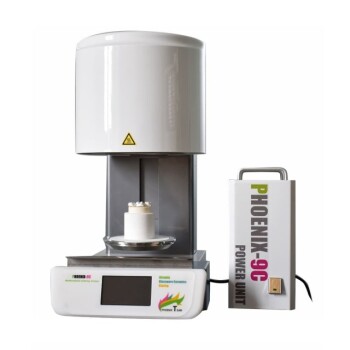
- High-Temperature Calcination & Muffle Furnaces for precise crystal phase transformation.
- Advanced High-Pressure Reactors & Autoclaves for demanding chemical synthesis.
- Specialized Electrolytic Cells & Electrodes for anodic oxidation research.
- Precision Crushing, Milling, and Sieving Systems for material preparation.
Ready to optimize your material performance? Contact our laboratory specialists today to discover how KINTEK’s comprehensive range of furnaces and consumables can bring superior stability and reactivity to your production line.
References
- Dwiprayogo Wıbowo, Akrajas Ali Umar. Morphological Analysis of Ag Doped on TiO2/Ti Prepared via Anodizing and Thermal Oxidation Methods. DOI: 10.33263/briac122.14211427
This article is also based on technical information from Kintek Solution Knowledge Base .
Related Products
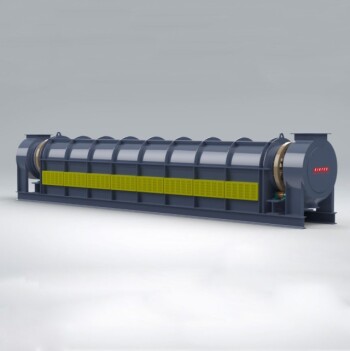
- Electric Rotary Kiln Pyrolysis Furnace Plant Machine Calciner Small Rotary Kiln Rotating Furnace
- Electric Rotary Kiln Continuous Working Small Rotary Furnace Heating Pyrolysis Plant
- Vertical High Temperature Graphite Vacuum Graphitization Furnace
- Graphite Vacuum Furnace Bottom Discharge Graphitization Furnace for Carbon Materials
- High Temperature Muffle Oven Furnace for Laboratory Debinding and Pre Sintering
People Also Ask
- What is a rotary kiln electric furnace? Achieve Superior Uniform Heating for Your Materials
- What are the characteristics of the slipping, slumping, and rolling modes of bed motion? Optimize Your Rotary Process
- What are the advantages of rotary kiln furnace? Achieve Superior Uniformity & Efficiency
- What is the temperature of a rotating kiln? It Depends on Your Material and Process Goal
- What are the principles of a rotary kiln? Master the Mechanics of High-Temperature Processing