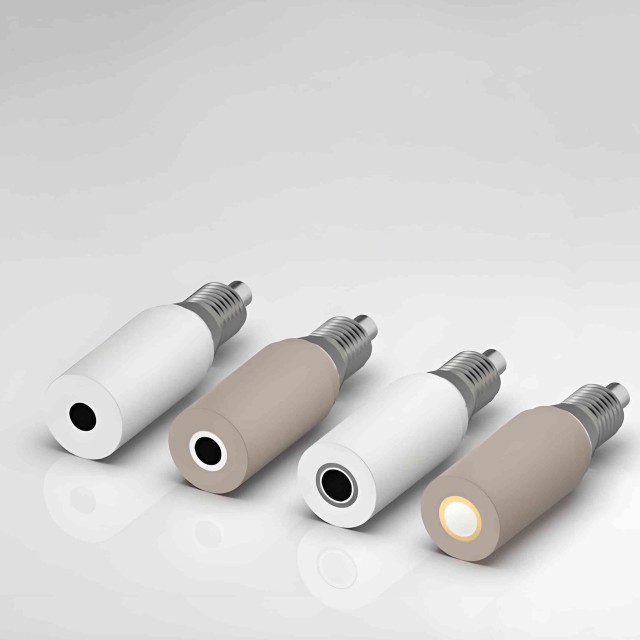
Electrochemical Consumables
RRDE rotating disk (ring disk) electrode / compatible with PINE, Japanese ALS, Swiss Metrohm glassy carbon platinum
Item Number : ELER
Price varies based on specs and customizations
$399.00 / set
- Specifications
- 5mm gold/platinum/glassy carbon
- Applicable temperature range
- 10 ~ 25℃
- Purity
- 99.99%
- Guide material
- glassy carbon + platinum ring

Shipping:
Contact us to get shipping details Enjoy On-time Dispatch Guarantee.
Why Choose Us
Easy ordering process, quality products, and dedicated support for your business success.
Introduction
The RRDE, featuring a central disk and a concentric ring, is a powerful tool for studying complex reaction mechanisms. It allows researchers to not only analyze electrochemical properties at the disk but also to detect and quantify reaction intermediates by collecting them at the ring. This dual-electrode system provides deeper insights into multi-electron processes and reaction kinetics.
Constructed with a choice of high-purity electrode materials—including Glassy Carbon (GC), Platinum (Pt), Gold (Au), Copper (Cu), Palladium (Pd), and Titanium (Ti)—and housed in robust insulating shrouds of PEEK or PTFE, our electrodes are built to last. The PEEK shroud offers excellent chemical resistance and thermal stability up to 80°C, while the PTFE shroud is ideal for work at room temperature (10°C to 25°C). The precision screw-thread design ensures a secure connection and stable signal transmission.
Detail & Parts
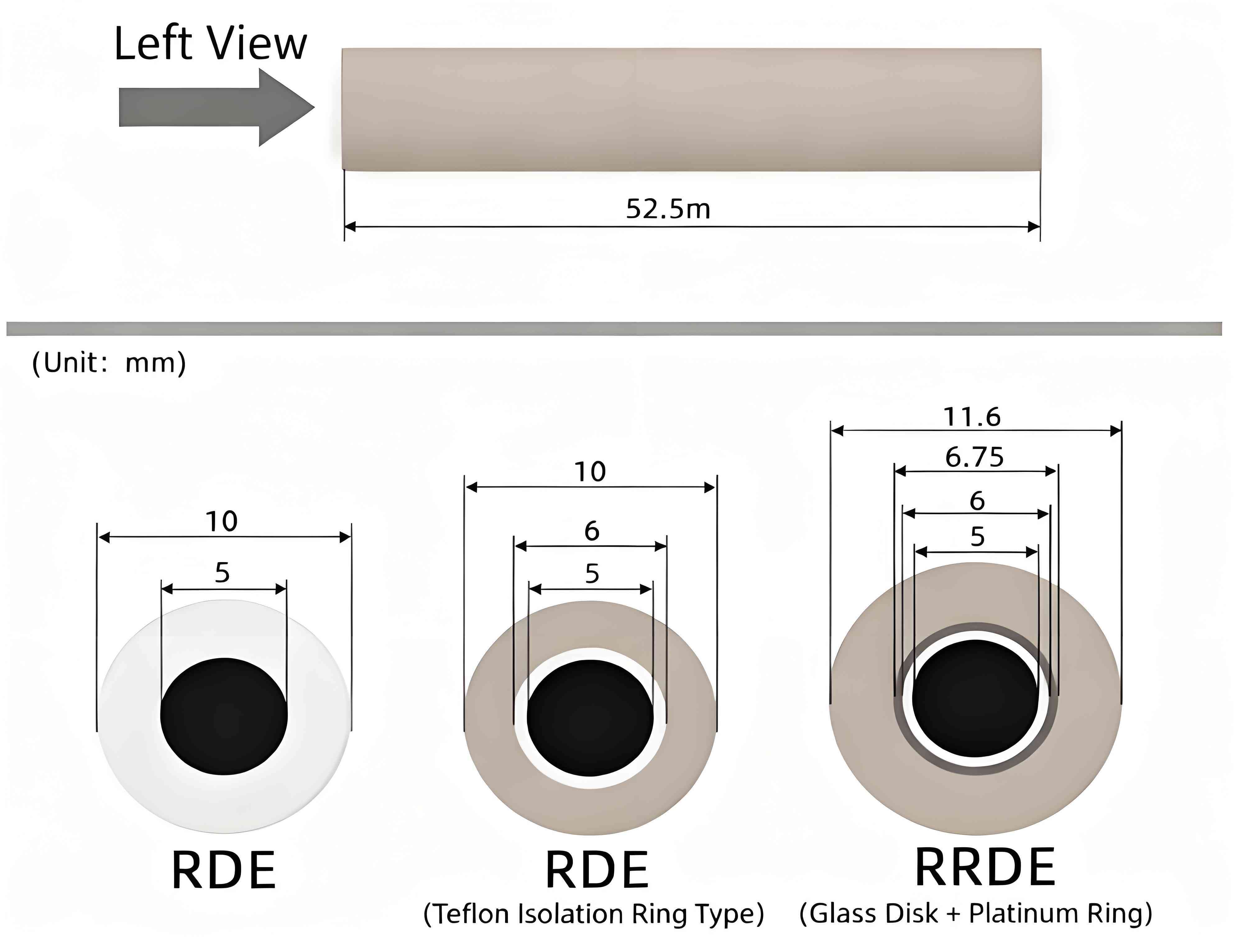
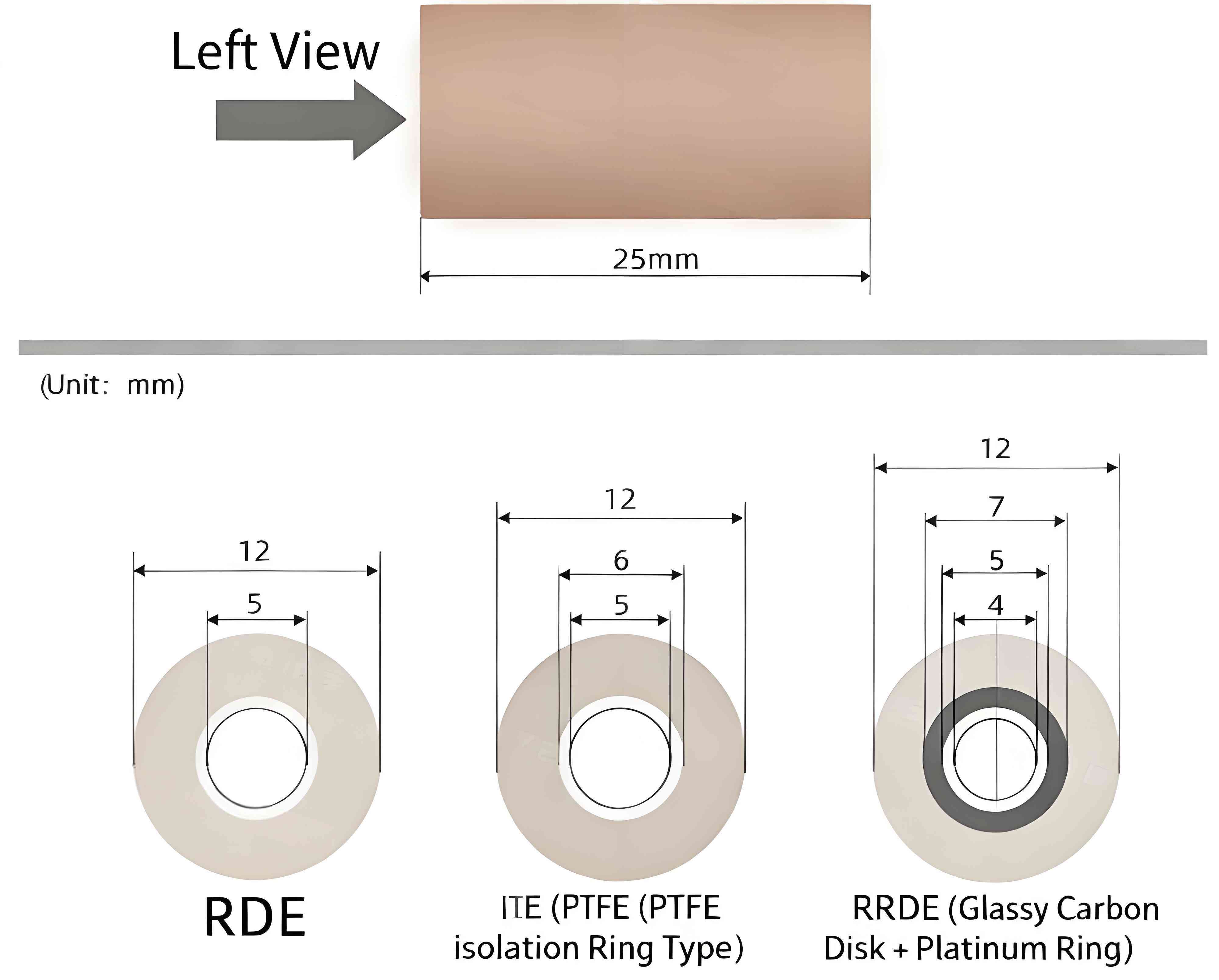
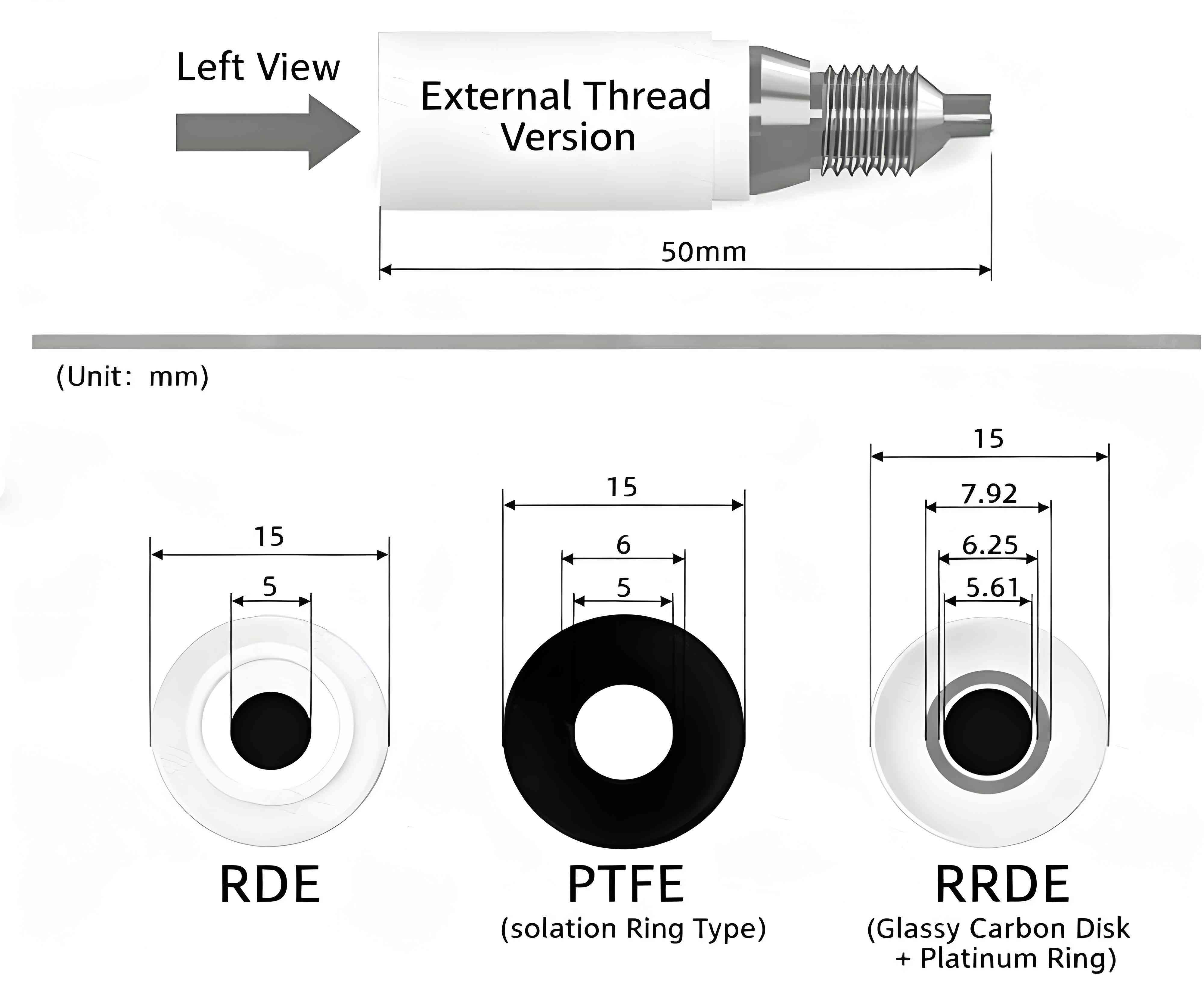
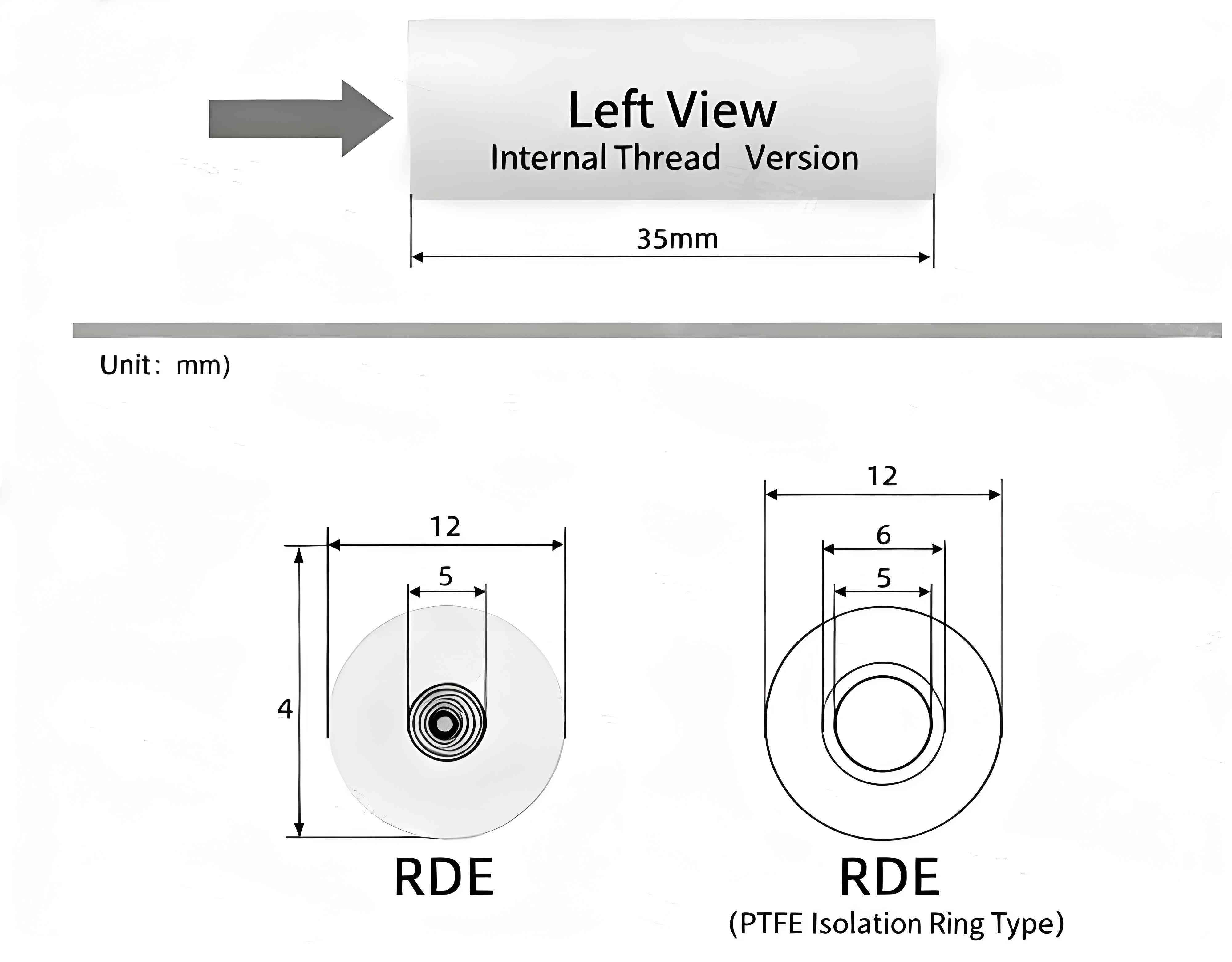
Product Specifications
For PINE Rotator Systems (External Thread)
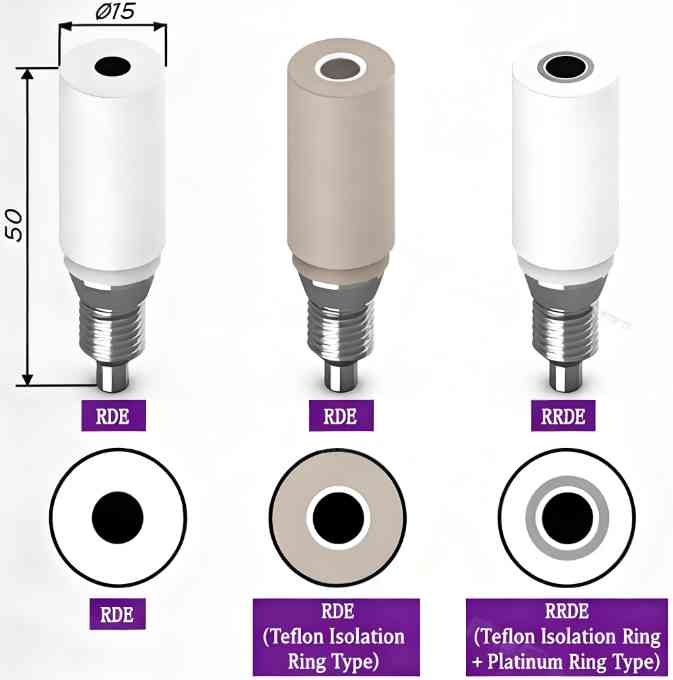
| Product No. | Product Name | Length (mm) | Insulator OD (mm) | Ring Dimensions OD/ID (mm) | Disk Diameter (mm) |
|---|---|---|---|---|---|
| RDE | |||||
| RDE0111 | RDE GC/Glassy Carbon Electrode | 50 | 15 | -- | 5.0 |
| RDE0112 | RDE Pt/Platinum Electrode | 50 | 15 | -- | 5.0 |
| RDE0113 | RDE Au/Gold Electrode | 50 | 15 | -- | 5.0 |
| RDE0114 | RDE Cu/Copper Electrode | 50 | 15 | -- | 5.0 |
| RDE0115 | RDE Pd/Palladium Electrode | 50 | 15 | -- | 5.0 |
| RDE0116 | RDE Ti/Titanium Electrode | 50 | 15 | -- | 5.0 |
| RDE0211 | RDE PTFE Insulator/GC Electrode | 50 | 15 | 6.0 | 5.0 |
| RDE0212 | RDE PTFE Insulator/Pt Electrode | 50 | 15 | 6.0 | 5.0 |
| RDE0213 | RDE PTFE Insulator/Au Electrode | 50 | 15 | 6.0 | 5.0 |
| RRDE | |||||
| RRDE0311 | RRDE PTFE Insulator/GC Disk + Pt Ring | 50 | 15 | 7.92 / 6.25 | 5.61 |
| RRDE0312 | RRDE Pt Disk + Pt Ring | 50 | 15 | 7.92 / 6.25 | 5.61 |
| RRDE0313 | RRDE Au Disk + Pt Ring | 50 | 15 | 7.92 / 6.25 | 5.61 |
For PINE Rotator Systems (Internal Thread)
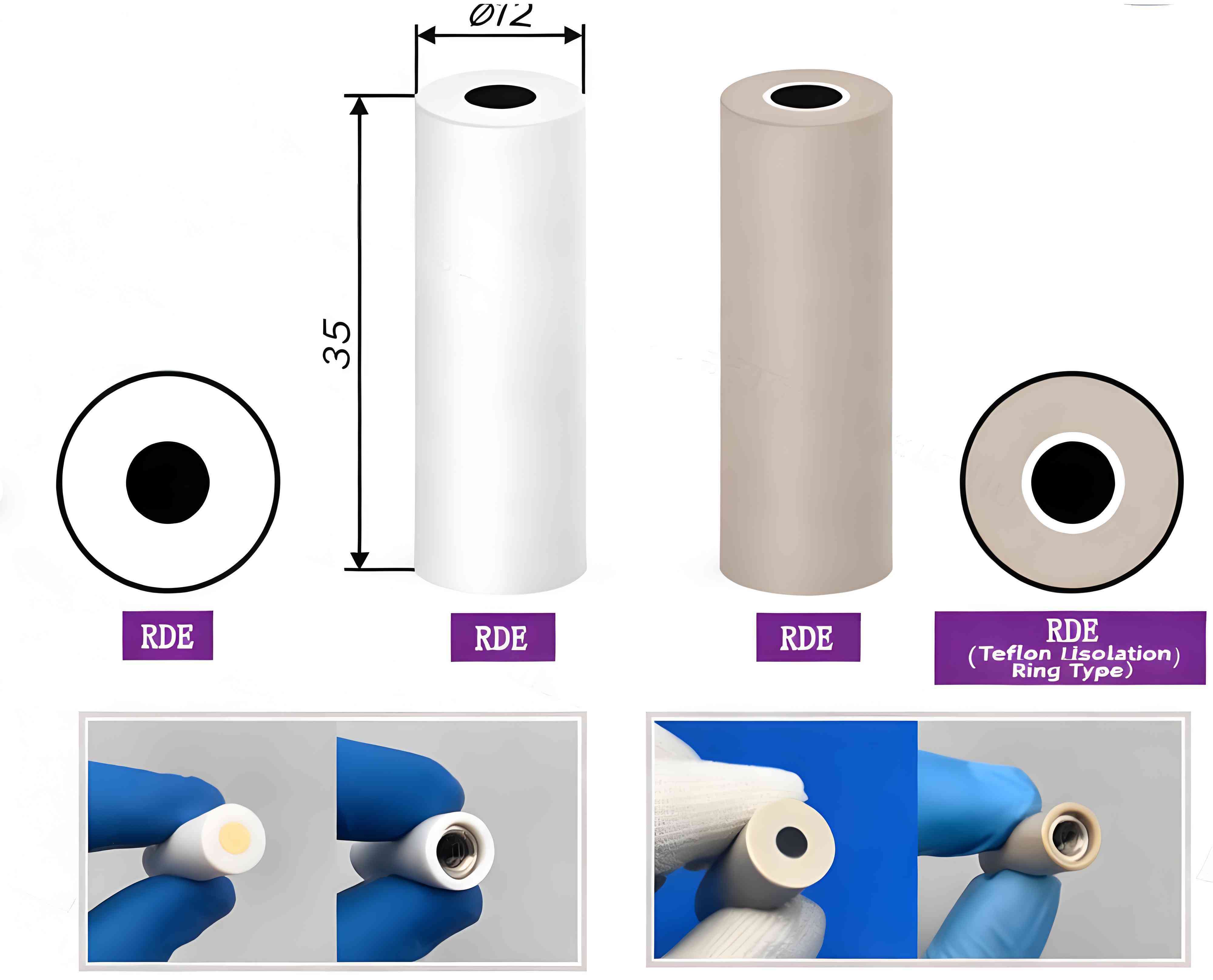
| Product No. | Product Name | Length (mm) | Insulator OD (mm) | Disk Diameter (mm) |
|---|---|---|---|---|
| RDE | ||||
| RDE1111 | RDE GC/Glassy Carbon Electrode | 35 | 12 | 5.0 |
| RDE1112 | RDE Pt/Platinum Electrode | 35 | 12 | 5.0 |
| RDE1113 | RDE Au/Gold Electrode | 35 | 12 | 5.0 |
| RDE1114 | RDE Cu/Copper Electrode | 35 | 12 | 5.0 |
| RDE1115 | RDE Pd/Palladium Electrode | 35 | 12 | 5.0 |
| RDE1116 | RDE Ti/Titanium Electrode | 35 | 12 | 5.0 |
| RDE1211 | RDE PTFE Insulator/GC Electrode | 35 | 12 | 5.0 |
| RDE1212 | RDE PTFE Insulator/Pt Electrode | 35 | 12 | 6.0 |
| RDE1213 | RDE PTFE Insulator/Au Electrode | 35 | 12 | 6.0 |
For ALS (Japan) Rotator Systems (Internal Thread)
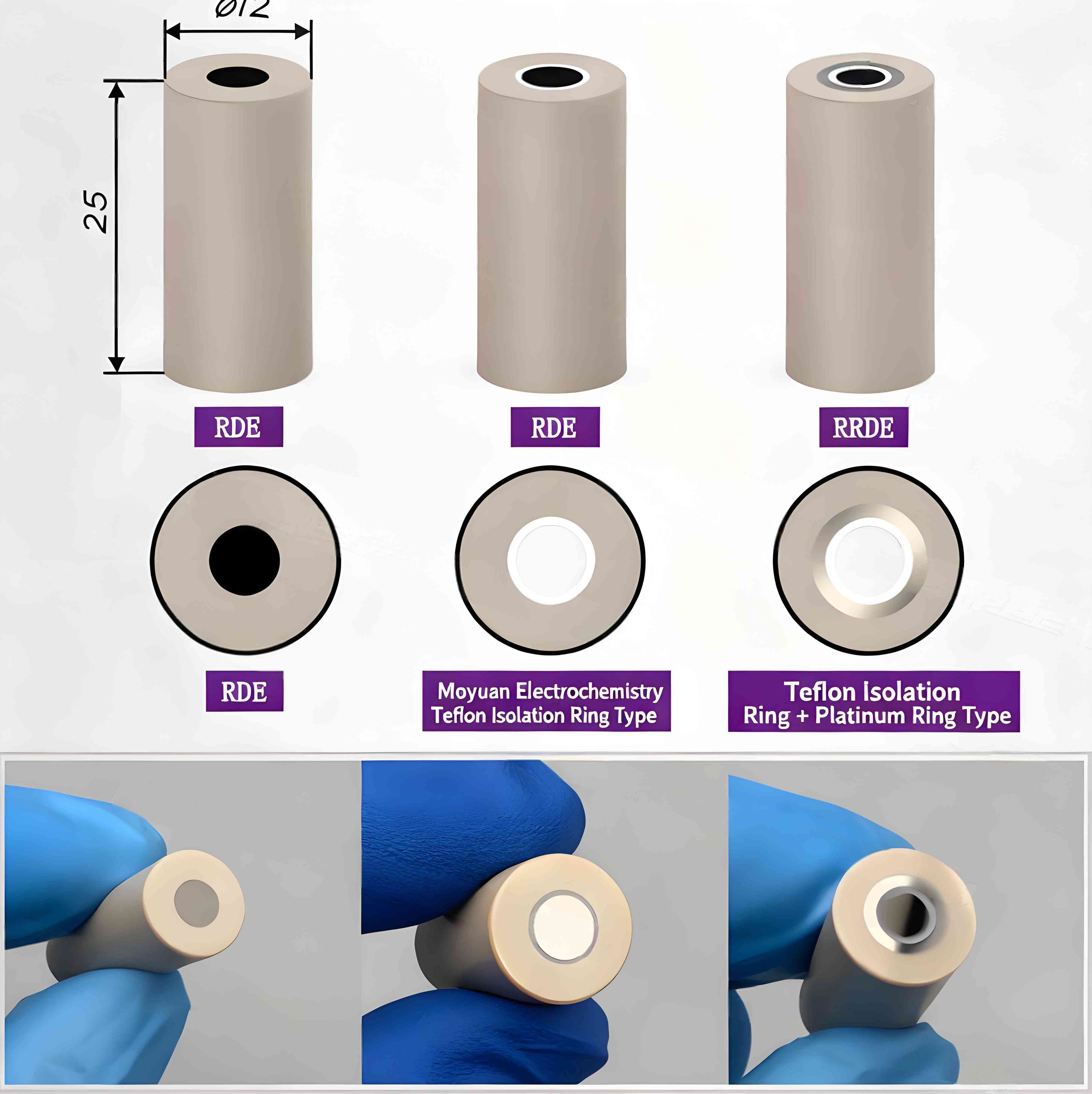
| Product No. | Product Name | Length (mm) | Insulator OD (mm) | Ring Dimensions OD/ID (mm) | Disk Diameter (mm) |
|---|---|---|---|---|---|
| RDE | |||||
| RDE0121 | RDE GC/Glassy Carbon Electrode | 25 | 12 | -- | 3.0 |
| RDE0122 | RDE GC/Glassy Carbon Electrode | 25 | 12 | -- | 5.0 |
| RDE0123 | RDE Pt/Platinum Electrode | 25 | 12 | -- | 3.0 |
| RDE0124 | RDE Au/Gold Electrode | 25 | 12 | -- | 3.0 |
| RDE0125 | RDE Cu/Copper Electrode | 25 | 12 | -- | 3.0 |
| RDE0126 | RDE Pd/Palladium Electrode | 25 | 12 | -- | 3.0 |
| RDE0127 | RDE Ti/Titanium Electrode | 25 | 12 | -- | 5.0 |
| RDE0221 | RDE PTFE Insulator/GC Electrode | 25 | 12 | 4.0 | 3.0 |
| RDE0222 | RDE PTFE Insulator/Pt Electrode | 25 | 12 | 4.0 | 3.0 |
| RDE0223 | RDE PTFE Insulator/Au Electrode | 25 | 12 | 4.0 | 3.0 |
| RRDE | |||||
| RRDE0321 | RRDE PTFE Insulator/GC Disk + Pt Ring | 25 | 12 | 7.0 / 5.0 | 4.0 |
| RRDE0322 | RRDE Pt Disk + Pt Ring | 25 | 12 | 7.0 / 5.0 | 4.0 |
| RRDE0323 | RRDE Au Disk + Pt Ring | 25 | 12 | 7.0 / 5.0 | 4.0 |
For Metrohm (Switzerland) Rotator Systems (Internal Thread)
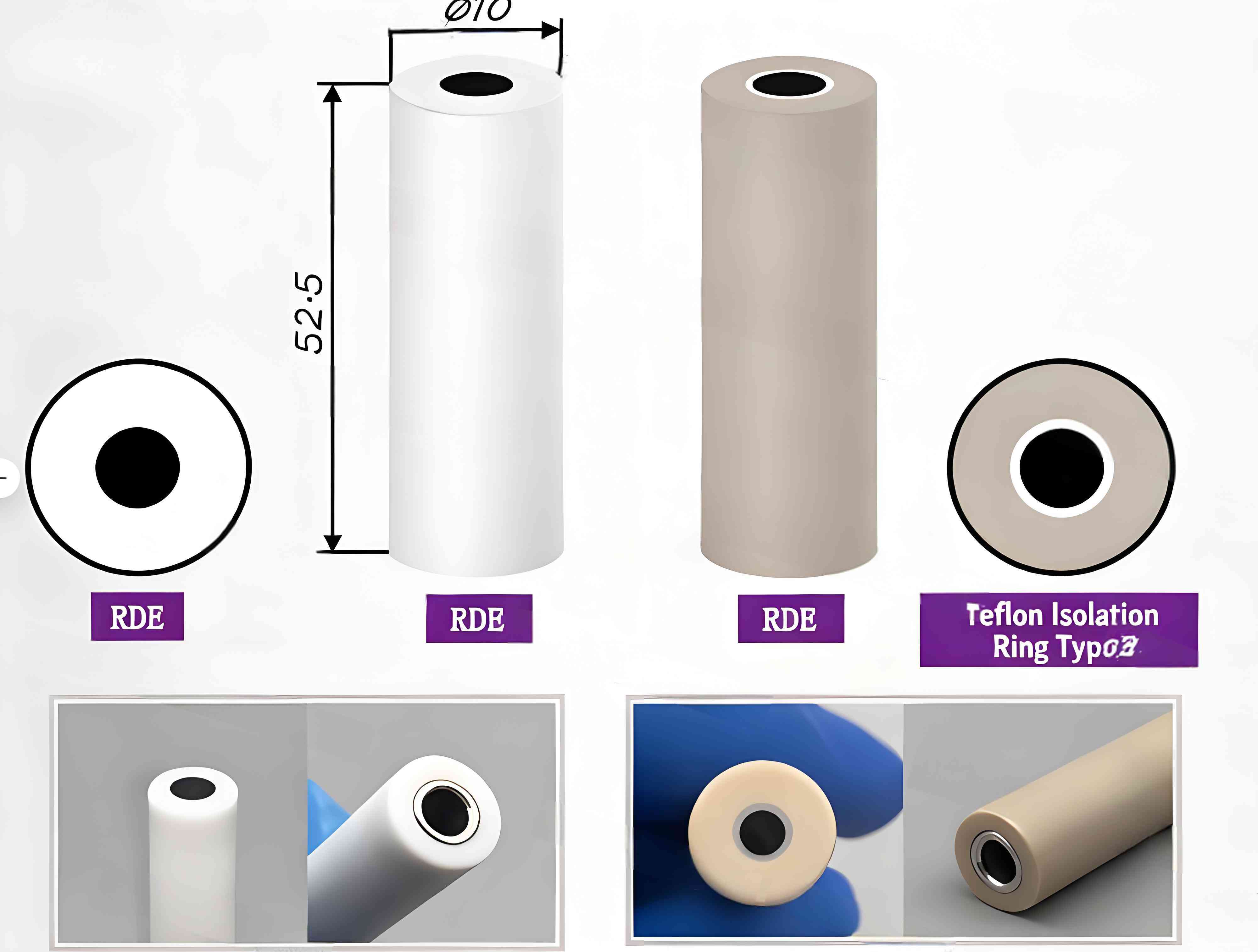
| Product No. | Product Name | Length (mm) | Insulator OD (mm) | Special Insulator OD (mm) | Disk Diameter (mm) |
|---|---|---|---|---|---|
| RDE | |||||
| RDE0131 | RDE GC/Glassy Carbon Electrode | 52.5 | 10 | -- | 5.0 |
| RDE0132 | RDE Pt/Platinum Electrode | 52.5 | 10 | -- | 5.0 |
| RDE0133 | RDE Au/Gold Electrode | 52.5 | 10 | -- | 5.0 |
| RDE0134 | RDE Cu/Copper Electrode | 52.5 | 10 | -- | 5.0 |
| RDE0135 | RDE Pd/Palladium Electrode | 52.5 | 10 | -- | 5.0 |
| RDE0136 | RDE Ti/Titanium Electrode | 52.5 | 10 | -- | 5.0 |
| RDE0231 | RDE PTFE Insulator/GC Electrode | 52.5 | 10 | 6.0 | 5.0 |
| RDE0232 | RDE PTFE Insulator/Pt Electrode | 52.5 | 10 | 6.0 | 5.0 |
| RDE0233 | RDE PTFE Insulator/Au Electrode | 52.5 | 10 | 6.0 | 5.0 |
Key Advantages and Customer Value
- Broad Compatibility: Our electrodes are designed to be fully compatible with major rotator systems from manufacturers including PINE, ALS (Japan), and Metrohm (Switzerland), ensuring seamless integration into your existing laboratory setup.
- Superior Materials: The use of acid and alkali-resistant materials guarantees longevity and consistent performance even in harsh chemical environments.
- Precision and Reliability: Meticulous manufacturing ensures dimensional accuracy for reproducible results, while the secure design minimizes signal noise and enhances data quality.
- Customization Service: We specialize in creating custom electrodes tailored to your specific research needs. Whether you require unique dimensions, different material combinations, or specialized configurations, our team can deliver a solution from prototype to mass production.
Applications in Leading Research Fields
These electrodes are indispensable tools for a wide range of advanced research areas, including:
- Fuel Cell and Battery Research: Evaluating the efficiency and mechanisms of catalysts for energy conversion and storage.
- Electrocatalysis: Investigating the kinetics and pathways of catalytic reactions, such as the Oxygen Reduction Reaction (ORR) and Oxygen Evolution Reaction (OER).
- Air-Battery Studies: Analyzing the performance of metal-air battery components.
- Mechanism Analysis: Studying complex electrochemical reactions by detecting intermediate products in real-time.
Whether you require a standard electrode for routine analysis or a fully customized solution for groundbreaking research, our team is ready to assist. To discuss your specific requirements or to get a quote for a custom-designed electrode, please contact us through our inquiry form and let our experts handle the rest.
Designed for You
KinTek provide deep custom made service and equipment to worldwide customers, our specialized teamwork and rich experienced engineers are capable to undertake the custom tailoring hardware and software equipment requirements, and help our customer to build up the exclusive and personalized equipment and solution!
Would you please drop your ideas to us, our engineers are ready for you now!
Trusted by Industry Leaders

FAQ
What Is Rotating Disk Electrode Used For?
What Is An Electrode In Electrochemistry?
What Is The Rotating Electrode Method?
What Are The 3 Electrodes In Electrochemistry?
What Is The Rotating Ring-disk Electrode Method?
What Are The Different Types Of Electrochemical Electrodes?
What Are The Advantages Of Rotating Disc Electrode?
What Materials Are Commonly Used For Electrochemical Electrodes?
What Factors Should Be Considered When Selecting An Electrochemical Electrode?
How Can Electrochemical Electrodes Be Used In Various Applications?
REQUEST A QUOTE
Our professional team will reply to you within one business day. Please feel free to contact us!
Related Products
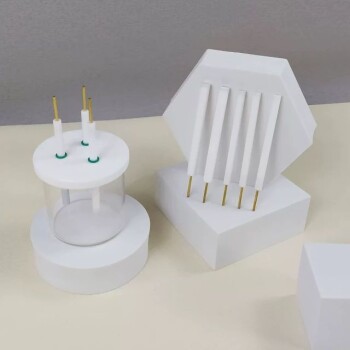
Rotating Platinum Disk Electrode for Electrochemical Applications
Upgrade your electrochemical experiments with our Platinum Disc Electrode. High-quality and reliable for accurate results.

Graphite Disc Rod and Sheet Electrode Electrochemical Graphite Electrode
High-quality graphite electrodes for electrochemical experiments. Complete models with acid and alkali resistance, safety, durability, and customization options.
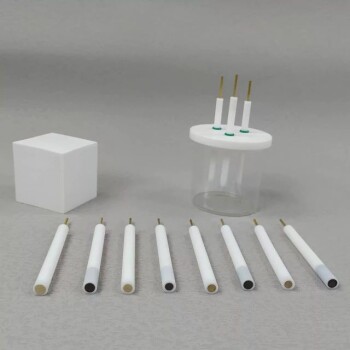
Metal Disc Electrode Electrochemical Electrode
Elevate your experiments with our Metal Disk Electrode. High-quality, acid and alkali resistant, and customizable to fit your specific needs. Discover our complete models today.
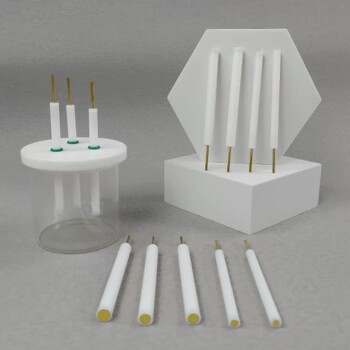
Gold Disc Electrode
Looking for a high-quality gold disc electrode for your electrochemical experiments? Look no further than our top-of-the-line product.
Multi-Punch Rotary Tablet Press Mold Ring for Rotating Oval and Square Molds
The multi-punch rotary tablet press mold stands as a pivotal component in pharmaceutical and manufacturing industries, revolutionizing the process of tablet production. This intricate mold system comprises multiple punches and dies arranged in a circular fashion, facilitating rapid and efficient tablet formation.
Laboratory Disc Rotary Mixer for Efficient Sample Mixing and Homogenization
Efficient Laboratory Disc Rotary Mixer for Precise Sample Mixing, Versatile for Various Applications, DC Motor and Microcomputer Control, Adjustable Speed and Angle.
Gold Electrochemical Sheet Electrode Gold Electrode
Discover high-quality gold sheet electrodes for safe and durable electrochemical experiments. Choose from complete models or customize to meet your specific needs.

Reference Electrode Calomel Silver Chloride Mercury Sulfate for Laboratory Use
Find high-quality reference electrodes for electrochemical experiments with complete specifications. Our models offer resistance to acid and alkali, durability, and safety, with customization options available to meet your specific needs.
Copper Sulfate Reference Electrode for Laboratory Use
Looking for a Copper Sulfate Reference Electrode? Our complete models are made of high-quality materials, ensuring durability and safety. Customization options available.
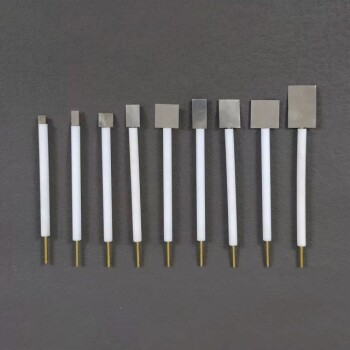
Platinum Sheet Electrode for Laboratory and Industrial Applications
Elevate your experiments with our Platinum Sheet Electrode. Crafted with quality materials, our safe and durable models can be tailored to fit your needs.
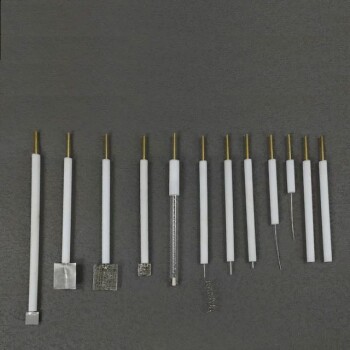
Platinum Auxiliary Electrode for Laboratory Use
Optimize your electrochemical experiments with our Platinum Auxiliary Electrode. Our high-quality, customizable models are safe and durable. Upgrade today!

Ring Press Mold for Lab Applications
Ring Press Dies, also known as Circular Pellet Press Die Sets, are integral components in various industrial and laboratory processes.
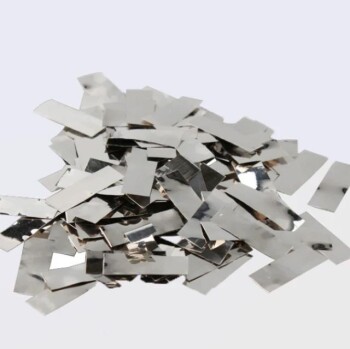
Platinum Sheet Electrode for Battery Lab Applications
Platinum sheet is composed of platinum, which is also one of the refractory metals. It is soft and can be forged, rolled and drawn into rod, wire, plate, tube and wire.
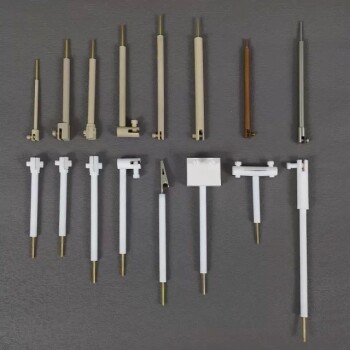
Electrode Fixture for Electrochemical Experiments
Upgrade your experiments with our customizable Electrode Fixtures. High-quality materials, acid and alkali resistant, and safe and durable. Discover our complete models today.

Laboratory CVD Boron Doped Diamond Materials
CVD boron-doped diamond: A versatile material enabling tailored electrical conductivity, optical transparency, and exceptional thermal properties for applications in electronics, optics, sensing, and quantum technologies.
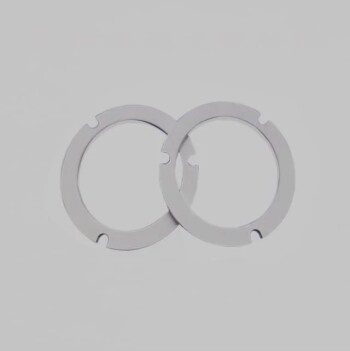
Hexagonal Boron Nitride HBN Ceramic Ring
Boron nitride ceramic (BN) rings are commonly used in high temperature applications such as furnace fixtures, heat exchangers and semiconductor processing.
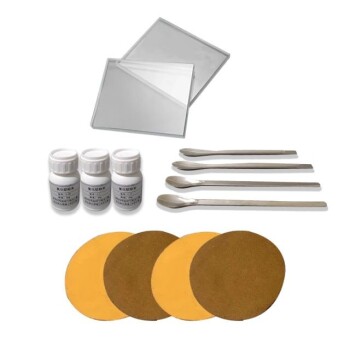
Electrode Polishing Material for Electrochemical Experiments
Looking for a way to polish your electrodes for electrochemical experiments? Our polishing materials are here to help! Follow our easy instructions for best results.
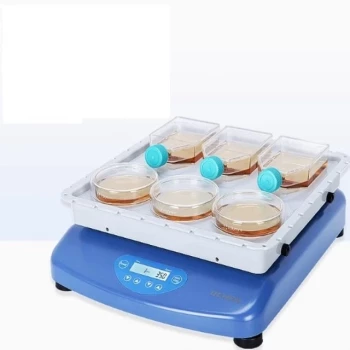
Laboratory Oscillating Orbital Shaker
Mixer-OT orbital shaker uses brushless motor, which can run for a long time. It is suitable for vibration tasks of culture dishes, flasks and beakers.
Related Articles

Electrode Materials for Rotating Ring-Disk Electrodes
Rotating ring-disk electrodes (RRDEs) are used in a wide range of applications, from fuel cells to sensors, and they require careful selection of electrode materials for optimal performance.
Understanding the Rotating Disk Electrode: Principles and Applications
Explores the development, principles, and applications of the rotating disk electrode in electrochemistry.
Basic Principles and Applications of Rotating Disc Electrodes
Explores the development, principles, and applications of Rotating Disc Electrodes in electrochemistry.
Introduction to Rotating Disc Electrodes and Common Electrochemical Applications
An overview of rotating disc electrodes and their applications in various electrochemical studies, including catalyst evaluation, battery research, and corrosion protection.
Comprehensive Guide to Rotating Disk Electrode (RDE) in Electrochemical Studies
Explore the detailed workings, applications, and significance of Rotating Disk Electrodes (RDE) in electrochemical research. Discover how RDEs are used in fuel cells, catalyst development, and more.
Exploring Rotating Electrode Technology in Electrochemistry
An in-depth analysis of rotating electrode technology, its applications, and its impact on electrochemical reactions under different flow conditions.
Advantages of the Rotating Electrode Method
Rotating electrode method involves rotating a small working electrode to increase the mass transport of reactants and products, allowing for more precise measurements and better control of reaction conditions.
The Invisible Architecture of Accuracy: Mastering Electrode Installation
Master the lifecycle of electrode installation—from inspection to alignment and maintenance—to ensure safety and reproducibility in electrochemical experiments.
Understanding Electrodes and Electrochemical Cells
An electrode is a point where current enters and leaves the electrolyte. It is a conductor used to make a junction with a nonmetallic part of a circuit. Electrodes can be made of materials such as gold, platinum, carbon, graphite, or metal. They serve as the surface for oxidation-reduction reactions in electrochemical cells. There are different types of electrodes, including anode and cathode.
The Silent Interface: Mastery Over Electrode Decay
Electrode failure is rarely sudden; it is the compound interest of neglect. Learn the disciplined maintenance protocols that preserve accuracy and longevity.
The Future of Electrochemical Electrodes
The latest trends and developments in electrode materials and their implications for the future of electrochemistry.
Innovations in Electrochemical Electrodes Technology
Recent advancements in nanotechnology and materials science have led to significant improvements in electrochemical devices, making them more efficient, durable, and cost-effective.