You’ve done it. You’ve produced a critical, high-value component—perhaps a turbine blade or a medical implant. It looks perfect. But an internal scan reveals the fatal flaw: microscopic porosity, hidden deep within the material, turning your masterpiece into a high-risk failure point.
You turn to Hot Isostatic Pressing (HIP) as the logical fix. You apply immense pressure, hoping to crush these voids out of existence. Yet, the results are a gamble. Sometimes it works; often it doesn't. The porosity remains, and you’re left with a costly piece of scrap, wondering: Did I simply not use enough pressure?
The Vicious Cycle: Why "More Pressure" Isn't the Answer
If this scenario feels familiar, you are not alone. Across advanced manufacturing and R&D labs, engineers and scientists are trapped in a frustrating cycle of trial-and-error with HIP. The common response to a failed densification cycle is to blame one of two things:
- The Material: "The initial casting or powder must have been poor quality."
- The Pressure: "Our equipment isn't powerful enough. We just need to hit it harder."
This leads to a predictable set of costly actions: running the cycle again at a higher pressure, wasting hours of machine time, expensive argon gas, and energy. Or worse, it triggers a premature and expensive search for a new HIP unit with a higher "max pressure" rating, assuming that more force is the magic bullet.
These are not just technical hiccups; they are significant business risks. Each failed cycle erodes project timelines and budgets. More importantly, inconsistent material quality puts the final product's reliability—and your company's reputation—on the line.
The Root Cause: It's a Recipe, Not a Single Ingredient
The breakthrough comes when we stop asking, "How much pressure do I need?" and start asking, "What is the right recipe for my material?"
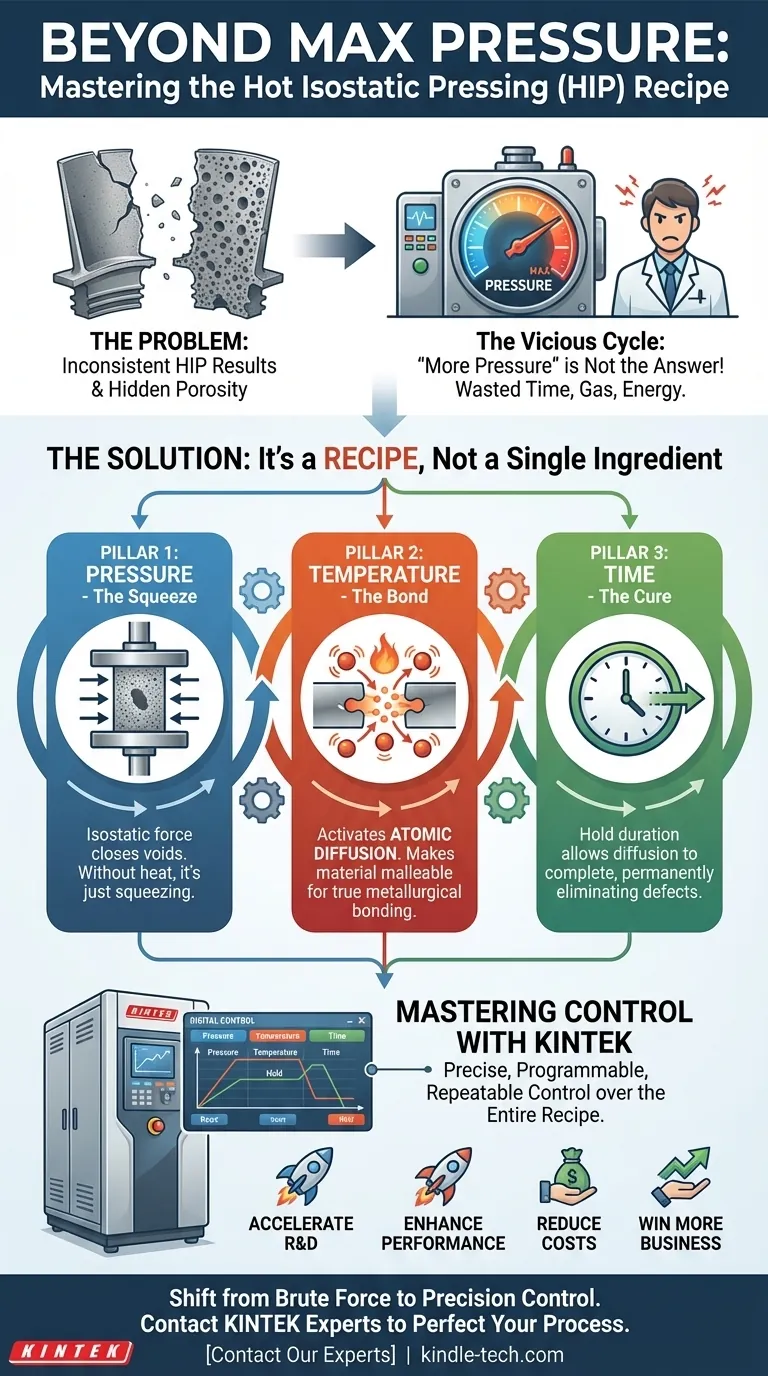
Focusing on pressure alone is like trying to bake a cake by only focusing on the oven temperature. The true power of HIP lies in the precise, simultaneous control of three interconnected variables: Pressure, Temperature, and Time.
Pillar 1: Pressure - The Squeeze
Isostatic pressure, applied uniformly from all directions, is the force that physically closes the internal voids. Think of it as a powerful, all-encompassing squeeze. But by itself, it's not enough. Squeezing two cold, hard pieces of metal together won't make them one.
Pillar 2: Temperature - The Bond
This is the game-changer. Elevating the temperature makes the material malleable on a microscopic level. It lowers its internal strength and, critically, it activates atomic diffusion. Heat gives the atoms at the surface of a void the energy they need to migrate across the gap and form a true, permanent metallurgical bond. Without the right temperature, you're just pressing the void shut; you're not healing the material.
Pillar 3: Time - The Cure
Diffusion is not instantaneous. The material must be held at the target temperature and pressure for a sufficient duration—the "hold time." This gives the atoms the time they need to travel and complete the bonding process, ensuring the defect is permanently eliminated, not just temporarily hidden.
The "more pressure" approach fails because it ignores this fundamental science. Using excessive pressure without the right temperature is like squeezing a rock—it's ineffective. Using the wrong temperature can damage the material's delicate microstructure. Success isn't about brute force; it's about executing the perfect thermodynamic recipe.
The Right Tool for the Recipe: Mastering Control
To solve this problem for good, you don't need a machine with the absolute highest pressure rating. You need a system that gives you precise, repeatable, and programmable control over the entire recipe.
This is the core philosophy behind KINTEK's advanced laboratory equipment. Our HIP systems are engineered not simply to achieve high pressure, but to master the entire process. They are precision instruments designed for scientists and engineers who understand that control is everything.
- Integrated Process Control: Our systems provide fine-tuned, programmable control over pressure, temperature, and time ramps and holds. This allows you to design and execute the exact recipe your specific material requires, cycle after cycle, with unwavering consistency.
- Versatility for Innovation: Whether you are densifying a titanium casting, consolidating a novel superalloy powder, or diffusion bonding dissimilar materials, our equipment provides the operational window and fidelity you need. It empowers you to stop guessing and start engineering the perfect material properties.
KINTEK's equipment isn't just a "solution" by chance; it's the purpose-built tool for implementing the correct scientific approach to material densification.
From Fixing Flaws to Forging the Future
When you move beyond fixing defects and achieve true process control, you unlock entirely new possibilities. The conversation shifts from "Can we make this part usable?" to "What can we create now that we have total confidence in our material?"
With a reliable and repeatable HIP process, you can:
- Accelerate R&D: Confidently develop next-generation alloys and composites, knowing you can produce fully dense samples for accurate testing.
- Enhance Product Performance: Engineer components with superior fatigue life, strength, and reliability for the most demanding applications.
- Reduce Costs: Drastically cut down on scrap, rework, and wasted machine time, directly improving your bottom line.
- Win More Business: Take on more ambitious and lucrative projects, secure in your ability to deliver materials that meet and exceed the strictest quality standards.
Mastering Hot Isostatic Pressing is about shifting from a mindset of brute force to one of precision control. This control is the key to unlocking faster innovation, ensuring component reliability, and gaining a true competitive edge. Our team of material science experts is ready to go beyond a simple equipment quote; we're here to help you perfect your process. Let's discuss the unique challenges of your project, from achieving perfect density in critical components to developing next-generation materials. Contact Our Experts
Visual Guide
Related Products
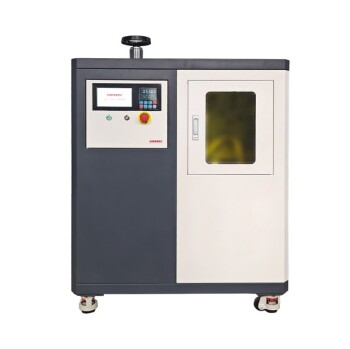
- Warm Isostatic Press for Solid State Battery Research
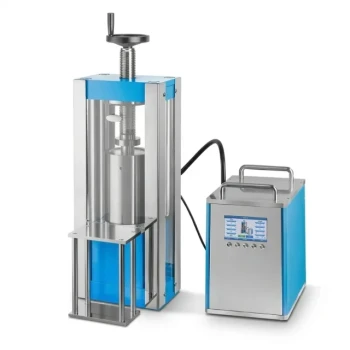
- Electric Split Lab Cold Isostatic Press CIP Machine for Cold Isostatic Pressing
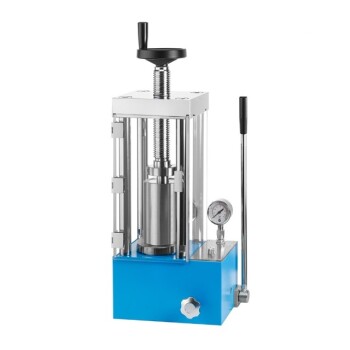
- Manual Cold Isostatic Pressing Machine CIP Pellet Press
- Automatic High Temperature Heated Hydraulic Press Machine with Heated Plates for Lab
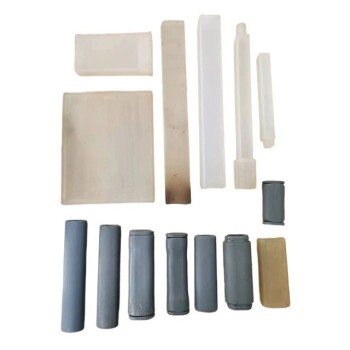
- Isostatic Molding Pressing Molds for Lab
Related Articles
- WIP – Warm Isostatic Press Equipment: Design, Features, and Benefits
- Beyond the Spec Sheet: Mastering the Thermal Dynamics of Warm Isostatic Pressing
- Warm Isostatic Pressing An Overview of the Process and Equipment
- Warm Isostatic Pressing: An Advanced Manufacturing Technology
- Choosing the Right Warm Isostatic Press: Key Factors to Consider