Blog Exploring the Ashing Process and Ashing Furnace: A Comprehensive Guide
Exploring the Ashing Process and Ashing Furnace: A Comprehensive Guide

Exploring the Ashing Process and Ashing Furnace: A Comprehensive Guide

3 years ago

WHAT IS ASHING PROCESS?

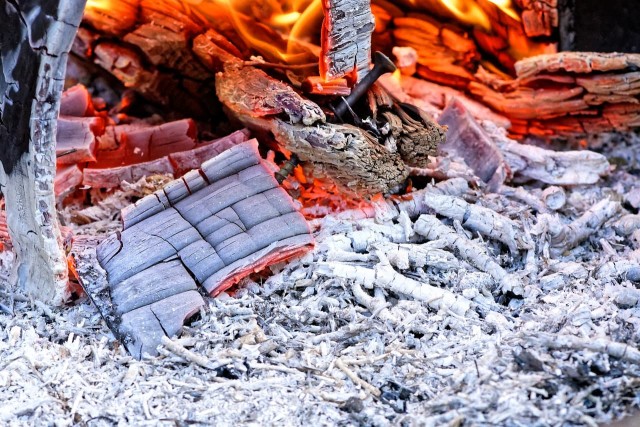
the ashing process involves heating a sample in the presence of oxygen to burn off organic compounds and leave behind the inorganic, non-combustible ash.

The ashing furnace is a specialized piece of equipment used to carry out this process, and there are different types available that are designed to meet specific testing standards or have features such as an integral balance to weigh samples during the heating process.

WHAT IS ASHING FURNACE?

Ashing furnaces are designed to carefully control the temperature and airflow during the ashing process in order to accurately and effectively burn off organic compounds and leave behind the inorganic ash.

The pre-heated airflow helps to evenly distribute the heat throughout the chamber and prevent cooling of the samples, which can affect the accuracy of the ashing process.

The tall chimney and insulation layers also help to prevent byproducts from attacking the furnace elements and ensure the ashing furnace remains in good working condition.

An optional afterburner or thermal catalytic oxidizer can be fitted to the exhaust to further reduce emissions into the surrounding environment.

Ashing furnaces are designed to carefully control the temperature and airflow during the ashing process in order to accurately and effectively burn off organic compounds and leave behind the inorganic ash. However, there is a risk that exhaust fumes and volatiles emitted from the samples could damage the heating elements of the furnace. To mitigate this risk, ashing furnaces are often fitted with silicon carbide (SiC) protection tiles that sit within the furnace chamber and provide a barrier between the samples and the heating elements.

In smaller models, the heating elements may be wrapped around the outside of a ceramic muffle, into which the samples are placed. The muffle contains the smoke and volatiles produced during the ashing process, while also protecting the heating elements from contamination.

For tests or processes where alumina/silica dust could contaminate the results, or react with the sample to produce corrosive vapours, a fused quartz chamber may be necessary to protect both the furnace and the ashing process. This type of chamber is resistant to corrosion and contamination, ensuring accurate and reliable results.

APPLICATIONS OF ASHING FURNACE

Ashing furnaces are commonly used in a variety of applications, including the testing of foods, plastics, and hydrocarbon materials such as coal.

These furnaces are used to perform tests that are defined by standard test methods, such as ISO 1171:2010 and ASTM D3174-12. In these tests, samples of the materials are heated in the presence of oxygen to burn off organic compounds and leave behind the inorganic, non-combustible ash.

The ashing furnace allows the process to be carried out at a carefully controlled temperature and with a high level of airflow to ensure accurate and reliable results.

THE DIFFERENCE BETWEEN CHAMBER FURNACE AND ASHING FURNACE

The main difference between a standard laboratory chamber furnace and an ashing furnace is the way that the sample is heated.

In a standard laboratory chamber furnace, samples may be heated, but the airflow is not specifically designed to promote combustion and ashing. In contrast, an ashing furnace is specifically designed to facilitate the combustion and ashing of materials through the use of preheated airflow.

Ashing furnaces are equipped with tall chimneys and insulation layers to preheat the airflow and ensure that it is evenly distributed throughout the chamber.

The increased airflow helps to carry smoke and volatile byproducts out of the chamber and through the exhaust, while also promoting the combustion of the samples. This specialized design allows for the ashing process to be carried out accurately and effectively.

INDUSTRIES THAT USE ASHING PROCESSES

The ashing process is widely used in various industries to analyze and test the composition of materials. In the food production and pharmaceutical industries, ashing is often used as part of quality control checks to determine the amount of inorganic, indigestible matter in samples of products.

These samples may be ground down or milled to increase the surface area and facilitate mixing with other compounds prior to heating in an ashing furnace.

The petrochemical industry also frequently uses ashing to analyze samples of hydrocarbon materials and determine the amounts of metals and other inorganic chemicals present.

This is important because certain metals and minerals may cause damage to refining equipment or later processes, and ashing allows the industry to identify and address these potential issues.

APPLICATIONS

There are a wide variety of materials and processes that make use of an ashing furnace. Some examples of materials that are commonly ashed in furnaces include food, soil and peat, plastic containers, rubber, animal feed and cereals, wool and natural fiber, paper, flour, pharmaceutical products, vegetable oils, paint, polyester and fiberglass, gelatin, sewage sludge, wood, and ceramics.

Other processes that may use an ashing furnace include sulphated ash determination, combustion of coke and sulfur in spent catalysts, loss on ignition measurement, removal of mercury chloride residues, filler content determination in paper, removal of soot from samples of fumed silica grease, cleaning ICP torches, volatile suspended solids analysis in effluent, ash determination of coal samples, and resin burn-off of CFC test specimens. These are just a few examples of the many uses of ashing furnaces in a variety of industries and applications.

KINDLE TECH ASH FURNACE

Thank you for considering Kindle Tech for your ashing furnace and related product and service needs. We are a global company with a network of daughter companies and trained distributors who are ready to assist you with any inquiries you might have.

If you would like to speak with a product specialist and receive a free consultation, please don't hesitate to contact us. We are dedicated to helping our customers find the most suitable solution for their application needs and will be happy to assist you in any way we can.

Related Products

Related Articles

Related Products

High Temperature Muffle Oven Furnace for Laboratory Debinding and Pre Sintering

High Temperature Muffle Oven Furnace for Laboratory Debinding and Pre Sintering

KT-MD High temperature debinding and pre-sintering furnace for ceramic materials with various molding processes. Ideal for electronic components such as MLCC and NFC.

Graphite Vacuum Furnace High Thermal Conductivity Film Graphitization Furnace

Graphite Vacuum Furnace High Thermal Conductivity Film Graphitization Furnace

The high thermal conductivity film graphitization furnace has uniform temperature, low energy consumption and can operate continuously.

Ultra-High Temperature Graphite Vacuum Graphitization Furnace

Ultra-High Temperature Graphite Vacuum Graphitization Furnace

The ultra-high temperature graphitization furnace utilizes medium frequency induction heating in a vacuum or inert gas environment. The induction coil generates an alternating magnetic field, inducing eddy currents in the graphite crucible, which heats up and radiates heat to the workpiece, bringing it to the desired temperature. This furnace is primarily used for graphitization and sintering of carbon materials, carbon fiber materials, and other composite materials.

Vertical High Temperature Graphite Vacuum Graphitization Furnace

Vertical High Temperature Graphite Vacuum Graphitization Furnace

Vertical high temperature graphitization furnace for carbonization and graphitization of carbon materials up to 3100℃.Suitable for shaped graphitization of carbon fiber filaments and other materials sintered in a carbon environment.Applications in metallurgy, electronics, and aerospace for producing high-quality graphite products like electrodes and crucibles.

Large Vertical Graphite Vacuum Graphitization Furnace

Large Vertical Graphite Vacuum Graphitization Furnace

A large vertical high-temperature graphitization furnace is a type of industrial furnace used for the graphitization of carbon materials, such as carbon fiber and carbon black. It is a high-temperature furnace that can reach temperatures of up to 3100°C.

Laboratory Muffle Oven Furnace Bottom Lifting Muffle Furnace

Laboratory Muffle Oven Furnace Bottom Lifting Muffle Furnace

Efficiently produce batches with excellent temperature uniformity using our Bottom Lifting Furnace. Features two electric lifting stages and advanced temperature control up to 1600℃.

2200 ℃ Graphite Vacuum Heat Treat Furnace

2200 ℃ Graphite Vacuum Heat Treat Furnace

Discover the power of the KT-VG Graphite Vacuum Furnace - with a maximum working temperature of 2200℃, it's perfect for vacuum sintering of various materials. Learn more now.

Non Consumable Vacuum Arc Induction Melting Furnace

Non Consumable Vacuum Arc Induction Melting Furnace

Explore the benefits of Non-Consumable Vacuum Arc Furnace with high melting point electrodes. Small, easy to operate & eco-friendly. Ideal for laboratory research on refractory metals & carbides.

Horizontal High Temperature Graphite Vacuum Graphitization Furnace

Horizontal High Temperature Graphite Vacuum Graphitization Furnace

Horizontal Graphitization Furnace: This type of furnace is designed with the heating elements placed horizontally, allowing for uniform heating of the sample. It's well-suited for graphitizing large or bulky samples that require precise temperature control and uniformity.

Graphite Vacuum Continuous Graphitization Furnace

Graphite Vacuum Continuous Graphitization Furnace

High-temperature graphitization furnace is a professional equipment for graphitization treatment of carbon materials. It is a key equipment for the production of high-quality graphite products. It has high temperature, high efficiency and uniform heating. It is suitable for various high-temperature treatments and graphitization treatments. It is widely used in metallurgy, electronics, aerospace, etc. industry.

Dental Porcelain Zirconia Sintering Ceramic Furnace Chairside with Transformer

Dental Porcelain Zirconia Sintering Ceramic Furnace Chairside with Transformer

Experience top-notch sintering with Chairside Sintering Furnace with Transformer. Easy to operate, noise-free pallet, and automatic temperature calibration. Order now!

Vacuum Heat Treat and Pressure Sintering Furnace for High Temperature Applications

Vacuum Heat Treat and Pressure Sintering Furnace for High Temperature Applications

Vacuum pressure sintering furnaces are designed for high temperature hot pressing applications in metal and ceramic sintering. Its advanced features ensure precise temperature control, reliable pressure maintenance, and a robust design for seamless operation.

1700℃ Controlled Atmosphere Furnace Nitrogen Inert Atmosphere Furnace

1700℃ Controlled Atmosphere Furnace Nitrogen Inert Atmosphere Furnace

KT-17A Controlled atmosphere furnace: 1700℃ heating, vacuum sealing technology, PID temperature control, and versatile TFT smart touch screen controller for laboratory and industrial use.

Rotary Tube Furnace Split Multi Heating Zone Rotating Tube Furnace

Rotary Tube Furnace Split Multi Heating Zone Rotating Tube Furnace

Multi zone rotary furnace for high-precision temperature control with 2-8 independent heating zones. Ideal for lithium ion battery electrode materials and high-temperature reactions. Can work under vacuum and controlled atmosphere.

1200℃ Controlled Atmosphere Furnace Nitrogen Inert Atmosphere Furnace

1200℃ Controlled Atmosphere Furnace Nitrogen Inert Atmosphere Furnace

Discover our KT-12A Pro Controlled atmosphere furnace - high precision, heavy duty vacuum chamber, versatile smart touch screen controller, and excellent temperature uniformity up to 1200C. Ideal for both laboratory and industrial application.

Vacuum Heat Treat Furnace with Ceramic Fiber Liner

Vacuum Heat Treat Furnace with Ceramic Fiber Liner

Vacuum furnace with polycrystalline ceramic fiber insulation liner for excellent heat insulation and uniform temperature field. Choose from 1200℃ or 1700℃ max. working temperature with high vacuum performance and precise temperature control.

Spark Plasma Sintering Furnace SPS Furnace

Spark Plasma Sintering Furnace SPS Furnace

Discover the benefits of Spark Plasma Sintering Furnaces for rapid, low-temperature material preparation. Uniform heating, low cost & eco-friendly.

Graphite Vacuum Furnace Bottom Discharge Graphitization Furnace for Carbon Materials

Graphite Vacuum Furnace Bottom Discharge Graphitization Furnace for Carbon Materials

Bottom-out graphitization furnace for carbon materials, ultra-high temperature furnace up to 3100°C, suitable for graphitization and sintering of carbon rods and carbon blocks. Vertical design, bottom discharging, convenient feeding and discharging, high temperature uniformity, low energy consumption, good stability, hydraulic lifting system, convenient loading and unloading.

1800℃ Muffle Oven Furnace for Laboratory

1800℃ Muffle Oven Furnace for Laboratory

KT-18 muffle furnace with Japan Al2O3 polycrystalline fibe and Silicon Molybdenum heating element, up to 1900℃, PID temperature control and 7" smart touch screen. Compact design, low heat loss, and high energy efficiency. Safety interlock system and versatile functions.

Mesh belt controlled atmosphere furnace

Mesh belt controlled atmosphere furnace

Discover our KT-MB mesh belt sintering furnace - perfect for high-temperature sintering of electronic components & glass insulators. Available for open air or controlled atmosphere environments.


Leave Your Message







