Generally speaking, no; sintered metal parts are usually not stronger than components created through forging or machining stock material. While high-quality sintered parts can achieve mechanical properties very close to their machined equivalents, they typically reach 80–90% of the fatigue strength found in wrought or cast parts.
This reduction in strength is primarily caused by trace porosity (tiny voids within the metal) and larger crystal grain sizes, both of which are inherent to the standard sintering process.
The Bottom Line Sintering is rarely chosen for maximum raw strength alone. Its true value lies in the balance of efficiency, complex geometry creation, and material control. Advanced variations like Hot Isostatic Pressing (HIP) can bridge the gap, offering performance comparable to forging when standard sintering falls short.
Understanding the Strength Deficit
To evaluate whether sintering is right for your application, you must understand the micro-structural differences that limit its strength compared to other methods.
The Impact of Grain Size
In metallurgy, smaller grain sizes often equate to higher strength.
Standard sintering processes tend to result in larger crystal grain sizes compared to the refined grain structures achieved through forging. This micro-structural difference places a natural ceiling on the mechanical performance of the part.
The Porosity Factor
Even well-manufactured sintered parts retain microscopic gaps between the bonded particles.
These trace imperfections act as stress concentrators. Under heavy load or cyclic stress (fatigue), these pores can serve as initiation points for cracks, resulting in the 80–90% fatigue strength metric often cited for Metal Injection Molded (MIM) stainless steel.
When Sintering is Superior
If sintering is technically "weaker," why is it a dominant manufacturing method? The answer lies in versatility and efficiency.
Unmatched Material Control
Sintering allows you to bind materials with extremely high melting points that are difficult to cast.
It also enables the combination of materials with vastly different properties, offering a level of metallurgical fine-tuning that melting cannot achieve.
Geometric Complexity
Sintering can produce complex shapes that would require expensive, time-consuming secondary machining if produced from solid stock.
This capability reduces the need for subsequent processing, significantly increasing productivity for intricate component designs.
Operational Efficiency
The process is highly sustainable and cost-effective.
It produces minimal waste compared to machining (which subtracts material) and consumes less energy than melting, as the process occurs at lower temperatures with faster cycle times.
Bridging the Gap: Hot Isostatic Pressing (HIP)
It is critical to note that not all powder-based processes are created equal. If you require the benefits of powder metallurgy but cannot sacrifice strength, Hot Isostatic Pressing (HIP) is the solution.
Comparable to Forging
HIP subjects the component to elevated temperature and high gas pressure simultaneously.
This process eliminates internal porosity and increases density. Consequently, a component manufactured via HIP will be significantly stronger than standard powder metallurgy parts and can rival the mechanical properties of parts created by combined casting and forging.
Understanding the Trade-offs
Every manufacturing choice involves compromise. Here are the specific trade-offs when selecting sintering over traditional methods.
Strength vs. Reproducibility
While you may sacrifice the absolute peak strength of a forged part, sintering offers exceptional reproducibility.
The high degree of process control ensures that size, hardness, and performance remain consistent across large production runs, which is often more critical than raw strength in high-volume applications.
Surface Quality vs. Internal Structure
Sintering reduces surface porosity, leading to cleaner, brighter parts with improved corrosion resistance and conductivity.
However, do not confuse surface quality with internal integrity. A sintered part may look better and resist corrosion better than a rough cast part, even if its internal fatigue limit is lower.
Making the Right Choice for Your Goal
Select your manufacturing method based on the specific mechanical demands of the final component.
- If your primary focus is maximum fatigue strength: Stick to forging or machining from wrought stock to ensure the tightest grain structure and zero porosity.
- If your primary focus is complex geometry and cost: Choose standard sintering or MIM to reduce waste and eliminate machining steps, accepting a slight reduction in ultimate strength.
- If your primary focus is high strength and complex material blends: Utilize Hot Isostatic Pressing (HIP) to achieve properties comparable to forging without the limitations of casting.
Ultimately, while sintered parts are not the strongest option by the numbers, they are frequently the "smartest" option for complex, high-volume precision components.
Summary Table:
| Feature | Standard Sintering | Forging/Machining | Hot Isostatic Pressing (HIP) |
|---|---|---|---|
| Relative Strength | 80–90% Fatigue Strength | 100% (Baseline) | Comparable to Forging |
| Porosity | Trace Micropores | Zero/Minimal | Near-Zero Density |
| Geometric Flexibility | High (Complex Shapes) | Limited/Secondary | High (Complex Shapes) |
| Material Waste | Minimal (Sustainability) | High (Subtracting) | Minimal |
| Primary Benefit | Cost & Efficiency | Maximum Raw Strength | High Strength + Material Control |
Elevate Your Material Performance with KINTEK
Don't compromise on precision or structural integrity. Whether you are aiming for the complex geometries of standard sintering or the maximum density achieved through Hot Isostatic Pressing (HIP), KINTEK provides the specialized equipment needed to succeed.
Our extensive portfolio includes high-performance high-temperature furnaces (muffle, vacuum, and atmosphere), isostatic presses, and crushing and milling systems designed to refine your powder metallurgy workflow. From battery research tools to advanced ceramics and crucibles, we empower laboratory and industrial professionals to achieve consistent, high-quality results.
Ready to optimize your production? Contact our experts today to find the perfect equipment solution for your specific application requirements!
Related Products
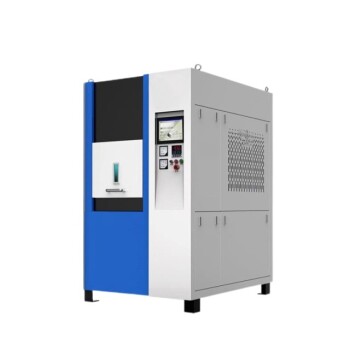
- Vacuum Heat Treat and Molybdenum Wire Sintering Furnace for Vacuum Sintering
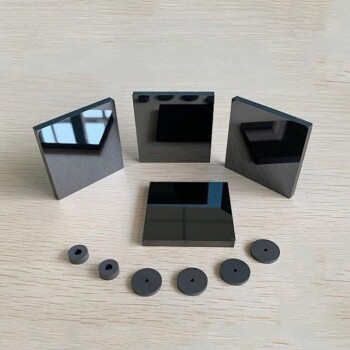
- Silicon Carbide (SIC) Ceramic Sheet Wear-Resistant Engineering Advanced Fine Ceramics
- Spark Plasma Sintering Furnace SPS Furnace
- High Purity Gold Platinum Copper Iron Metal Sheets
- Precision Machined Silicon Nitride (SiN) Ceramic Sheet for Engineering Advanced Fine Ceramics
People Also Ask
- What is the pressure for vacuum sintering? Achieve Optimal Material Purity and Density
- What are the critical functions of the vacuum system in a sintering furnace for Cu/Ti3SiC2/C/MWCNTs composites?
- How does a vacuum environment benefit the purification of matrix powders? Optimize Diamond Tool Sintering Efficiency
- What critical process conditions does a vacuum sintering furnace provide for titanium? Expert Diffusion Bonding Guide
- What is vacuum hardness? Unlock Superior Material Performance with Vacuum Processing