Beyond serving as a containment vessel, a high-quality graphite mold functions as an active thermal and mechanical component that is critical to the structural integrity of Silicon Carbide (SiC) and Zirconia Toughened Alumina (ZTA) ceramics.
In the hot-press sintering process, the mold acts as a thermal conductor to prevent cracking and a high-strength pressure vessel to force densification. It is not merely a passive shape-holder; it is the primary interface for the energy and force required to consolidate the ceramic powder.
Core Takeaway Graphite molds are essential for managing the thermal gradient and mechanical transmission within the sintering furnace. They ensure the ceramic body reaches full density without deforming or cracking by acting as a uniform heat exchanger and a rigid, creep-resistant pressure transmitter.
The Critical Thermal Role
The most overlooked function of the graphite mold is its ability to regulate heat distribution within the ceramic sample.
Facilitating Uniform Heat Transfer
Graphite possesses excellent thermal conductivity. During sintering, this allows the mold to act as a heat exchanger, rapidly and evenly distributing thermal energy from the furnace elements to the ceramic powder.
Eliminating Thermal Gradients
For large-scale samples (e.g., 50mm diameter), uneven heating is a major risk. A high-quality graphite mold ensures a consistent temperature field throughout the entire volume of the powder.
Preventing Structural Defects
By maintaining thermal uniformity, the mold minimizes internal thermal stresses. This is directly responsible for preventing thermal stress cracks in complex composites like SiC/ZTA, ensuring a homogeneous final structure.
The Mechanical Role under Load
Hot-press sintering subjects the material to extreme conditions where most containment materials would fail. The graphite mold must serve as a structural load-bearing component.
Transmitting Uniaxial Pressure
The mold acts as the medium for pressure transmission, transferring force from the hydraulic rams directly to the powder.
This pressure (often reaching 40 MPa or more) is essential for driving particle rearrangement and plastic flow, mechanisms required to remove pores and achieve full densification.
Resisting High-Temperature Creep
Standard metals or lower-grade ceramics would soften or deform under high pressure at sintering temperatures.
High-strength graphite molds are unique in their ability to withstand these pressures at extreme temperatures without undergoing creep. This rigidity ensures the final ceramic retains precise dimensional tolerances.
Understanding the Trade-offs
While graphite is the standard for these applications, relying on it requires understanding its limitations and quality requirements.
Material Quality is Non-Negotiable
Not all graphite is equal. The primary reference emphasizes the need for high-strength graphite. Lower-grade graphite may suffer from micro-deformation, which will result in warped ceramic parts or inconsistent density.
The "Consumable" Nature
Graphite molds are subject to wear. They are generally treated as core consumables because they endure significant mechanical abrasion and thermal cycling.
Repeated use can degrade the inner surface finish, which will eventually transfer imperfections to the ceramic sample or alter the precise fit of the punch and die, leading to flash formation or pressure leakage.
Making the Right Choice for Your Goal
When selecting mold materials or designing your hot-press profile, consider these specific objectives:
- If your primary focus is Defect Reduction (Cracking): Prioritize graphite with the highest possible thermal conductivity ratings. This maximizes heat dissipation and minimizes the thermal gradients that cause stress fractures in ZTA matrices.
- If your primary focus is Dimensional Precision: Prioritize graphite with high compressive strength and creep resistance. This ensures the mold walls do not bow under the 40 MPa load, maintaining the exact geometric shape of the sintered body.
Summary: The graphite mold is a functional tool that enables the simultaneous application of extreme heat and pressure; its quality directly dictates the density, homogeneity, and survival of your SiC/ZTA ceramic.
Summary Table:
| Function | Role in Sintering Process | Impact on SiC/ZTA Ceramics |
|---|---|---|
| Thermal Conductor | Distributes heat from elements to powder | Eliminates thermal gradients & prevents stress cracks |
| Pressure Transmitter | Transfers uniaxial force (up to 40 MPa) | Drives densification and removes internal porosity |
| Creep Resistance | Maintains rigidity at extreme temperatures | Ensures dimensional precision and prevents deformation |
| Structural Interface | Resists mechanical abrasion/thermal cycling | Directs energy for uniform material consolidation |
Elevate Your Material Research with KINTEK Precision Engineering
Don't let subpar tooling compromise your advanced ceramics. At KINTEK, we specialize in high-performance laboratory equipment designed for the most demanding sintering environments. Whether you are working with Silicon Carbide (SiC) or Zirconia Toughened Alumina (ZTA), our high-strength graphite molds and hot-press systems provide the thermal stability and mechanical integrity required for full densification.
From high-temperature furnaces and hydraulic presses to precision crushing and milling systems, KINTEK delivers the comprehensive tools and consumables—including ceramics and crucibles—needed to achieve defect-free results.
Ready to optimize your sintering workflow? Contact our technical experts today to find the perfect solution for your lab's unique requirements.
Related Products
- Ball Press Mold for Lab
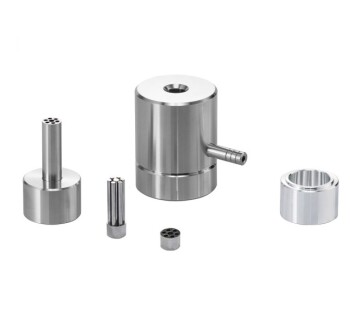
- Anti-Cracking Press Mold for Lab Use
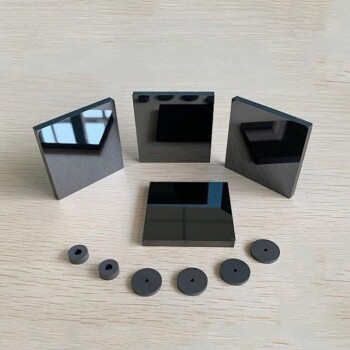
- Silicon Carbide (SIC) Ceramic Sheet Wear-Resistant Engineering Advanced Fine Ceramics
- Special Shape Press Mold for Lab
- Lab Infrared Press Mold
People Also Ask
- What are the advantages of using a laboratory hydraulic press for hot pressing? Achieve Peak Nano-Composite Density
- How to use a press mold? Master the Art of Creating Consistent Ceramic Forms
- What is the press mould method? A Guide to Consistent, Detailed Ceramic Forms
- What is the purpose of specialized pressure devices in sulfide solid-state batteries? Ensure Chemo-Mechanical Stability
- Why are pressure molds with non-conductive resin inner walls required for battery testing? Ensure Data Accuracy