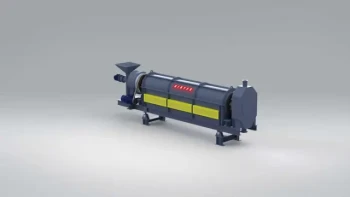
Alkali activation reactors act as the catalyst for structural transformation. By applying intense mechanical shear force, this mixing equipment blends high-concentration sodium hydroxide solutions with solid precursors like fly ash, pozzolans, and blast furnace slag. This physical agitation is the prerequisite for the chemical reaction that converts loose radioactive components into a solid, stable geopolymer.
The mixing equipment provides the essential mechanical energy to dissolve silicon and aluminum species, triggering the formation of a three-dimensional N-A-S-(H) gel network that securely encapsulates radioactive waste.
The Mechanics of Chemical Activation
Promoting Rapid Dissolution
The primary function of the mixing equipment is not merely homogenization, but the facilitation of chemical breakdown.
The reactor applies mechanical shear force to the mixture of liquid activators and solid precursors.
This physical stress exposes the surface area of the precursors to the high-concentration sodium hydroxide.
Consequently, this environment promotes the rapid dissolution of Si4+ (silicon) and Al3+ (aluminum) species from the solid materials.
Initiating Polycondensation
Once the silicon and aluminum species are liberated into the solution, the mixing environment allows them to interact.
These species undergo polycondensation, a chemical reaction where small molecules join to form larger, structural chains.
This is the foundational step in transitioning the mixture from a slurry into a solid matrix.
Building the Containment Matrix
Formation of the N-A-S-(H) Gel
The result of the polycondensation process is the creation of a robust alumino-silicate gel network.
Technical documentation refers to this specific structure as the N-A-S-(H) gel.
This gel acts as the binder, creating a dense, three-dimensional framework that gives the final waste form its mechanical strength.
Encapsulation of Radioactive Ash
The ultimate goal of this process is the immobilization of hazardous material.
As the N-A-S-(H) network forms and hardens, it grows around the radioactive ash particles.
The ash is not just mixed in; it is securely encapsulated within the molecular structure of the gel.
This ensures the radioactive contaminants are physically locked away, preventing leaching or dispersion.
Understanding the Trade-offs
The Criticality of Shear Force
The effectiveness of this process is entirely dependent on the energy input of the equipment.
Insufficient mechanical shear will result in incomplete dissolution of the precursor materials.
If the Si4+ and Al3+ species are not fully released, the resulting gel network will be weak and porous.
Chemical Aggressiveness
The process relies on a strongly alkaline environment to function.
While necessary for dissolution, this requires equipment built with materials capable of withstanding high-concentration sodium hydroxide without corroding.
Making the Right Choice for Your Goal
To ensure the safe solidification of radioactive waste, you must prioritize the efficiency of the dissolution and polymerization stages.
- If your primary focus is Structural Integrity: Ensure your mixing equipment delivers high shear force to maximize the dissolution of Si4+ and Al3+ species for a denser gel network.
- If your primary focus is Waste Containment: Verify that the precursors (fly ash, slag) are fully homogenized with the activator to ensure the N-A-S-(H) gel creates a complete seal around the radioactive ash.
By combining mechanical energy with chemical activation, you transform hazardous loose ash into a stable, monolithic solid.
Summary Table:
| Process Stage | Action of Reactor/Equipment | Outcome for Waste Solidification |
|---|---|---|
| Dissolution | Applies intense mechanical shear & high alkalinity | Rapid release of Si4+ and Al3+ species from precursors |
| Polycondensation | Facilitates molecular interaction in the slurry | Formation of a structural three-dimensional polymer chain |
| Hardening | Maintains homogenization during gelation | Creation of a dense N-A-S-(H) alumino-silicate gel network |
| Encapsulation | Ensures complete binder coverage | Radioactive ash is physically locked within the molecular matrix |
Secure Your Nuclear Waste Treatment with KINTEK Precision
Ensure maximum structural integrity and leak-proof containment with KINTEK’s high-performance laboratory equipment. Whether you are developing geopolymer matrices or managing hazardous stabilization, our crushing and milling systems, high-temperature high-pressure reactors, and robust PTFE/ceramic consumables provide the chemical resistance and mechanical power required for alkali activation.
Ready to optimize your solidification process? Contact KINTEK today for specialized solutions in high-temperature research and radioactive waste encapsulation.
References
- Andrea Santi, Mario Mariani. Design of sustainable geopolymeric matrices for encapsulation of treated radioactive solid organic waste. DOI: 10.3389/fmats.2022.1005864
This article is also based on technical information from Kintek Solution Knowledge Base .
Related Products
- Customizable Laboratory High Temperature High Pressure Reactors for Diverse Scientific Applications
- Electric Rotary Kiln Small Rotary Furnace for Activated Carbon Regeneration
- High Pressure Laboratory Autoclave Reactor for Hydrothermal Synthesis
- Customizable High Pressure Reactors for Advanced Scientific and Industrial Applications
- Visual High-Pressure Reactor for In-Situ Observation
People Also Ask
- How do high-pressure and high-temperature reactors ensure the effective treatment of lignocellulosic wastewater in WAO?
- What equipment is required for high-pressure high-temperature reactions? Master Extreme Chemistry Safely
- How do you control high pressure in a reactor? A Guide to Safe & Stable Operation
- Why is argon better than nitrogen for inert atmosphere? Ensure Absolute Reactivity & Stability
- How does initial oxygen pressure affect the wet oxidation of pharmaceutical sludge? Master Your Oxidation Depth